astronauta
“astronauta” means “astronaut” in Spanish (a person who travels into space).
astronaut
Also: spaceman / spacewoman, cosmonaut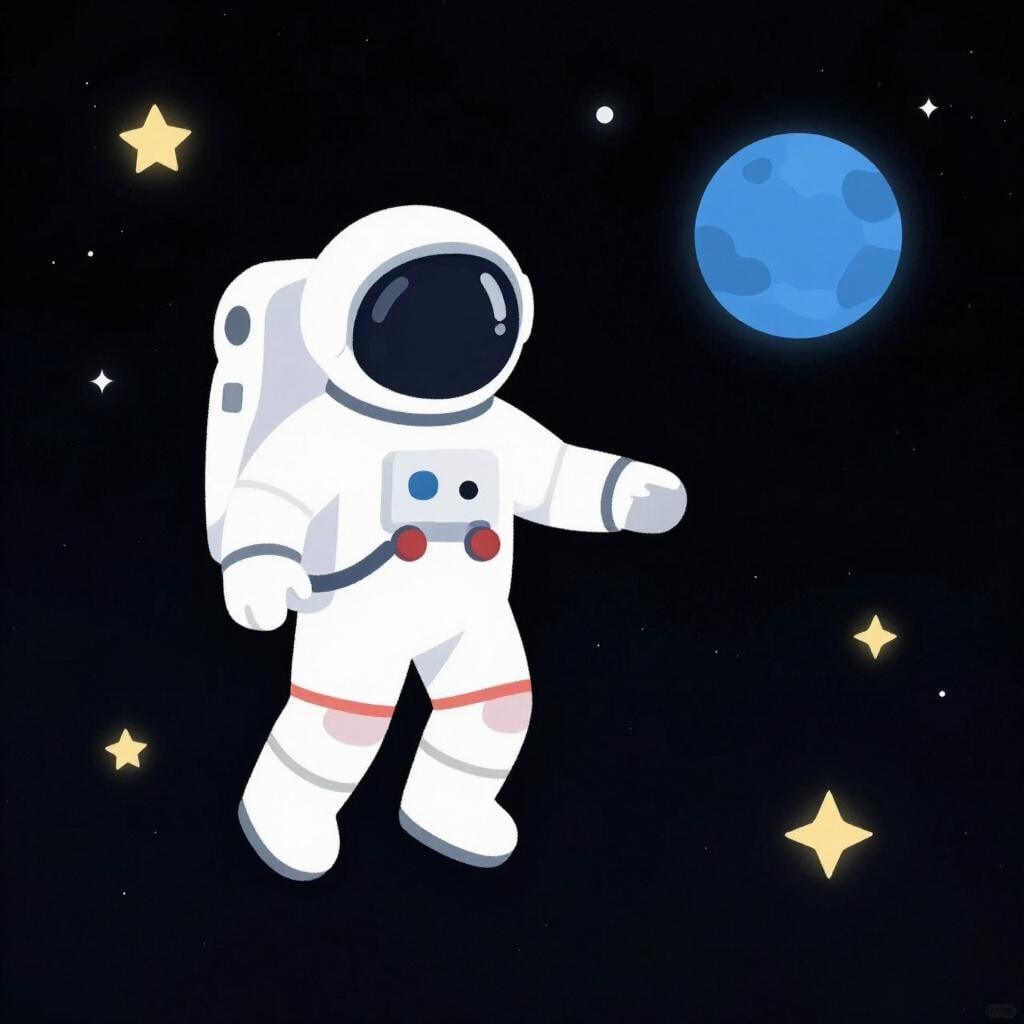
📝 In Action
El astronauta salió de la nave espacial.
A1The astronaut left the spacecraft.
Ella es la primera astronauta de su país.
A2She is the first female astronaut from her country.
Muchos niños sueñan con ser astronautas.
B1Many children dream of being astronauts.
Translate to Spanish
✏️ Quick Practice
Quick Quiz: astronauta
Question 1 of 2
How would you say 'the female astronaut' in Spanish?
📚 More Resources
👥 Word Family▼
📚 Etymology▼
From the Greek words 'astron' (meaning star) and 'nautes' (meaning sailor).
First recorded: 20th century (modern era of space exploration)
Cognates (Related words)
💡 Master Spanish
Take your Spanish to the next level. Read 200+ illustrated and narrated Spanish stories tailored to your level with the Inklingo app!
Frequently Asked Questions
Is it ever 'astronauto'?
No, 'astronauto' is not a real word in Spanish. Whether the person is male or female, we always use 'astronauta'.
What is the difference between 'astronauta' and 'cosmonauta'?
They mean the same thing (a space traveler), but 'cosmonauta' is more commonly used when referring to space programs from Russia or the former Soviet Union.