borrar
“borrar” means “erase” in Spanish. It has 2 different meanings depending on context:


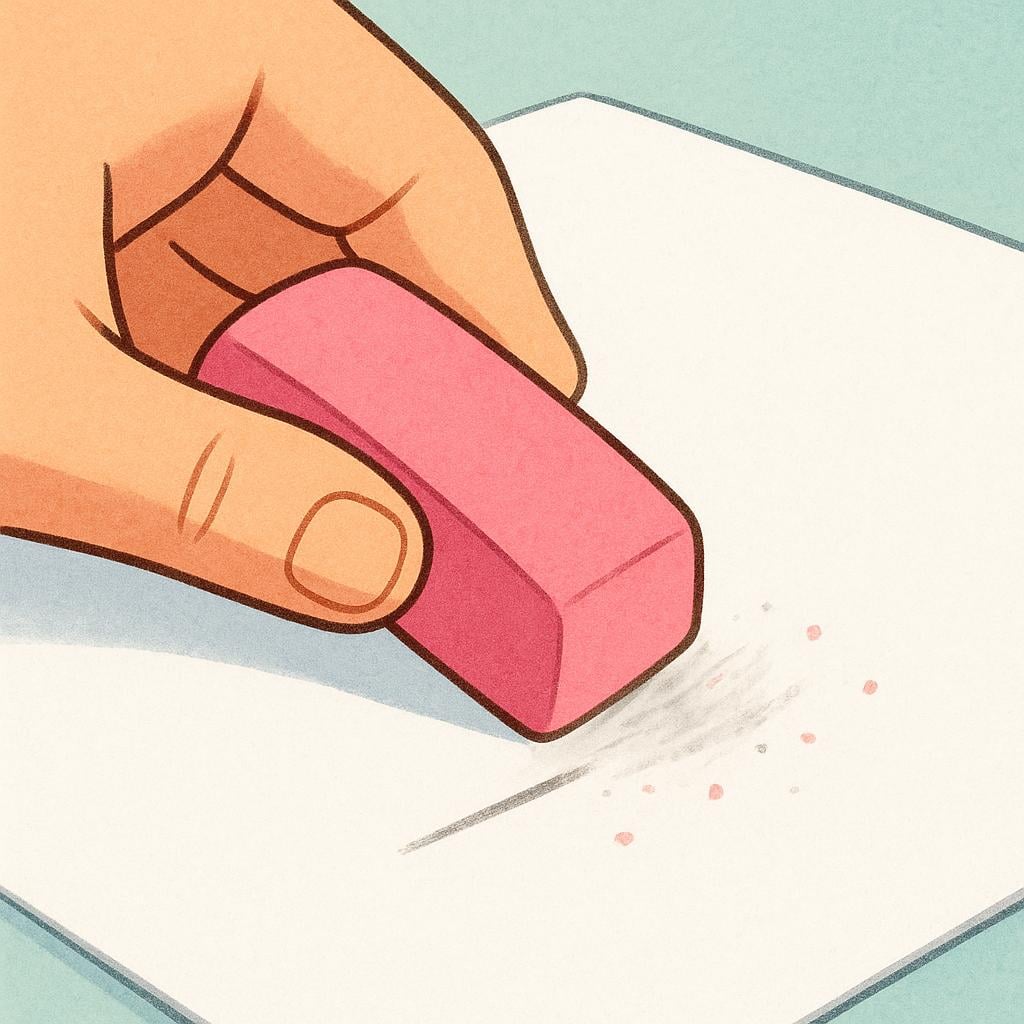
erase, rub outAlso: wipe off
📝 In Action
Por favor, borra lo que escribiste en la pizarra.
A1Please, erase what you wrote on the whiteboard.
El lápiz se borra fácilmente, pero la tinta no.
A2Pencil is erased easily, but ink is not.
Tienes que borrar los errores antes de entregar el examen.
B1You have to rub out the mistakes before handing in the test.
Word Connections
delete, wipe outAlso: clear, remove

📝 In Action
Borra todas las fotos antiguas de tu teléfono para liberar espacio.
A2Delete all the old photos from your phone to free up space.
Intenté borrar su número de mi memoria, pero fue imposible.
B1I tried to wipe his number from my memory, but it was impossible.
Si borras la caché, la aplicación debería funcionar mejor.
B2If you clear the cache, the application should work better.
Word Connections
Indicative
Present
Imperfect
Preterite
Subjunctive
Present Subjunctive
Imperfect Subjunctive
Translate to Spanish
✏️ Quick Practice
Quick Quiz: borrar
Question 1 of 2
Which sentence correctly uses 'borrar' in the context of digital technology?
📚 More Resources
👥 Word Family
📚 Etymology
'Borrar' comes from the Latin word *burra*, which meant 'coarse wool' or 'fleece.' The original connection was to the action of rubbing or wiping something away using a rough cloth.
First recorded: 13th century
Cognates (Related words)
💡 Master Spanish
Take your Spanish to the next level. Read 200+ illustrated and narrated Spanish stories tailored to your level with the Inklingo app!
Frequently Asked Questions
Is 'borrar' a common verb in daily conversation?
Yes, absolutely! It is used constantly, whether you are talking about rubbing out pencil marks or deleting emails and files on your computer or phone.
How do I say 'I need an eraser'?
You would say, 'Necesito un borrador.' Remember that the tool used to perform the action ('borrar') is the noun 'el borrador'.