comemos
“comemos” means “we eat” in Spanish. It has 4 different meanings depending on context:


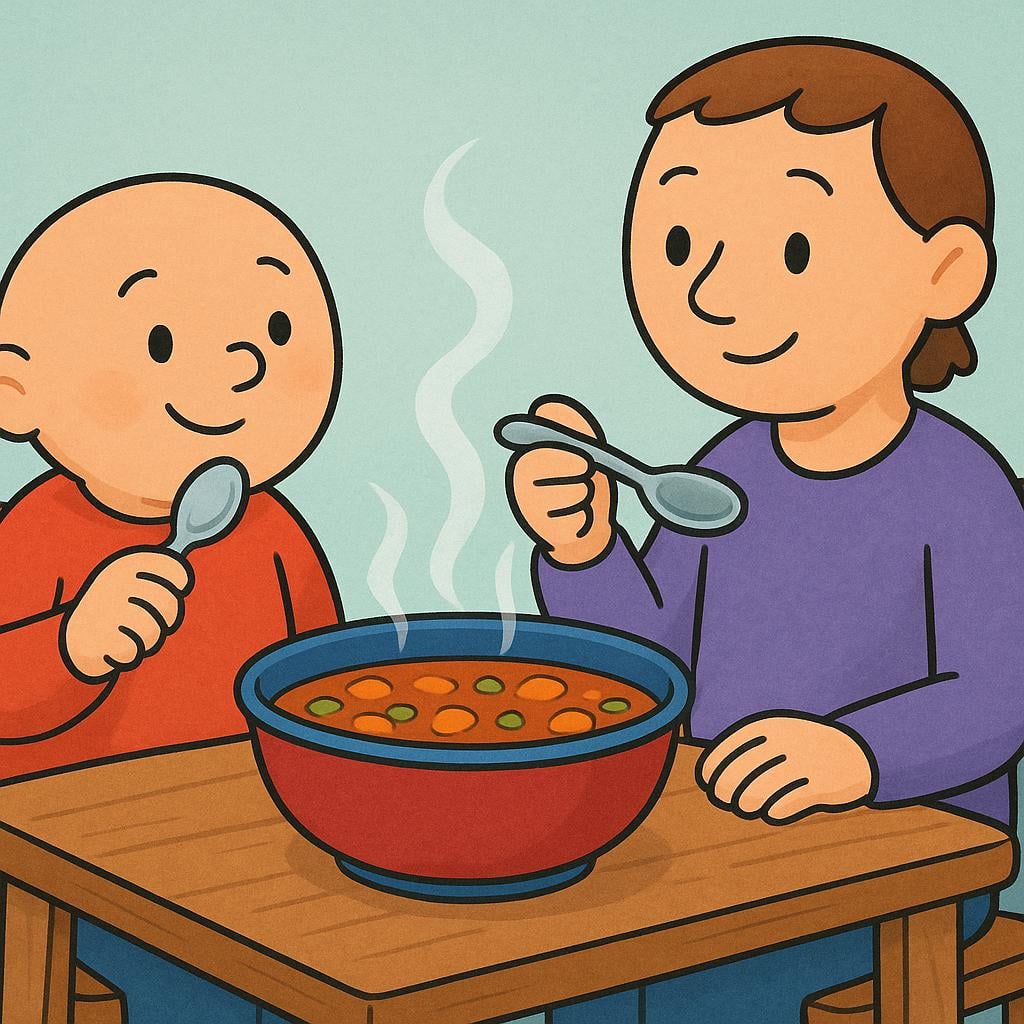
we eat, we are eating
📝 In Action
Todos los días comemos juntos en la oficina.
A1Every day we eat together in the office.
¿Qué comemos hoy? Tengo mucha hambre.
A1What are we eating today? I'm very hungry.
we consume, we use up
Also: we drain
📝 In Action
Comemos mucha electricidad con este viejo calentador.
B1We consume a lot of electricity with this old heater.
Si no nos organizamos bien, comemos todo el tiempo en reuniones inútiles.
B2If we don't organize well, we use up all the time in useless meetings.
we corrode, we eat away at

📝 In Action
Si mezclamos estos ácidos, comemos el metal rápidamente.
B2If we mix these acids, we corrode the metal quickly.
we capture, we take (a piece)

📝 In Action
Si movemos el peón aquí, comemos su caballo.
B2If we move the pawn here, we capture their knight.
Indicative
Present
Imperfect
Preterite
Subjunctive
Present Subjunctive
Imperfect Subjunctive
Translate to Spanish
✏️ Quick Practice
Quick Quiz: comemos
Question 1 of 2
Which sentence uses 'comemos' in its figurative sense of 'consuming resources'?
📚 More Resources
🎵 Rhymes▼
📚 Etymology▼
Comes from the Latin verb *comedere*, which combines *com-* (meaning 'together' or 'with') and *edere* (meaning 'to eat'). It literally meant 'to eat up' or 'to consume entirely.'
First recorded: Old Spanish (around the 10th century)
Cognates (Related words)
💡 Master Spanish
Take your Spanish to the next level. Read 200+ illustrated and narrated Spanish stories tailored to your level with the Inklingo app!
Frequently Asked Questions
Why does 'comemos' sometimes mean 'we are eating'?
In Spanish, the simple present tense ('comemos') is often used to describe actions happening right now, unlike English, which usually requires the continuous form ('we are eating'). If you want to emphasize the ongoing nature, you can use 'estamos comiendo'.
Is 'comemos' regular or irregular?
'Comemos' comes from the verb 'comer,' which is a regular verb. This means its endings follow the standard pattern for -er verbs in all tenses, making it very predictable and easy to learn.