constelación
“constelación” means “constellation” in Spanish. It has 2 different meanings depending on context:
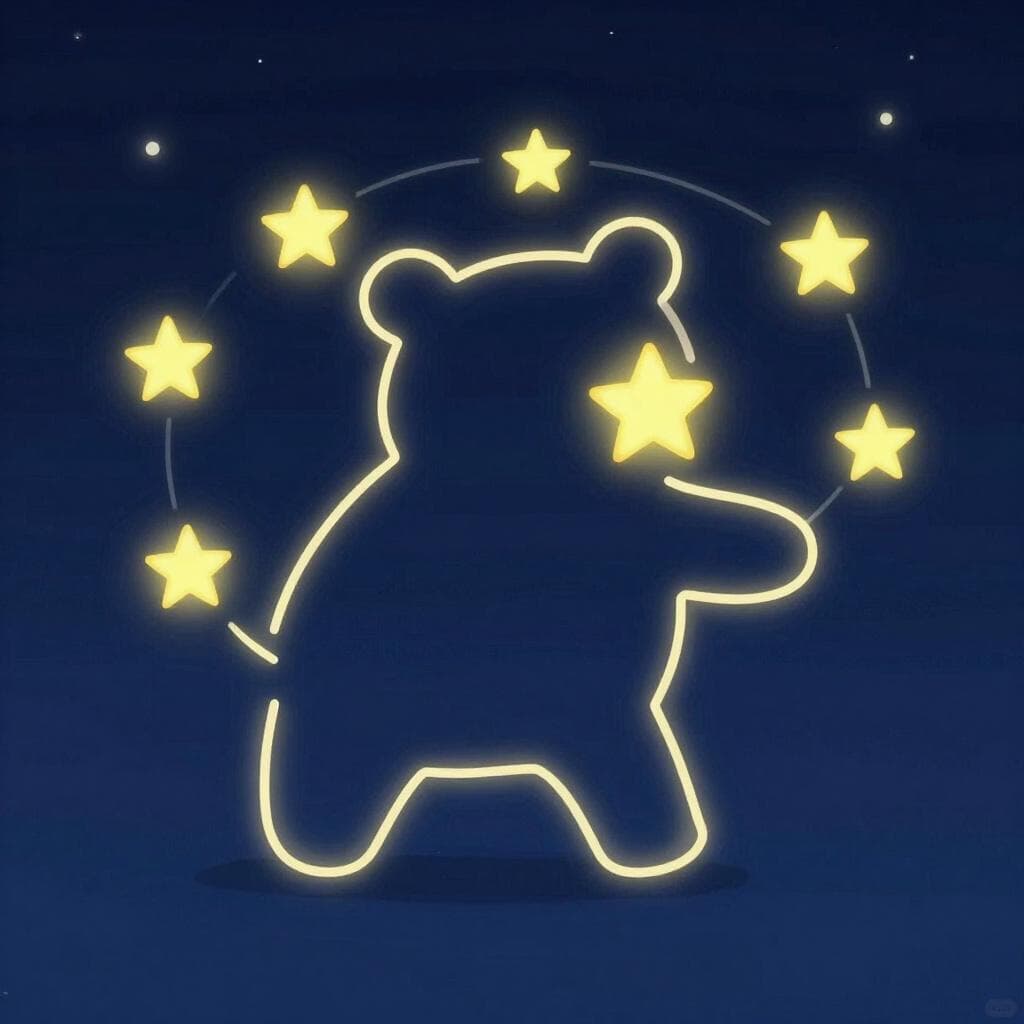

constellation
Also: star pattern
📝 In Action
La Osa Mayor es la constelación más conocida en el hemisferio norte.
A2The Big Dipper is the most well-known constellation in the northern hemisphere.
Anoche el cielo estaba despejado y pudimos ver varias constelaciones.
B1Last night the sky was clear and we could see several constellations.
Los antiguos navegantes usaban las constelaciones para orientarse en el mar.
B2Ancient sailors used the constellations to find their way at sea.
galaxy / array
Also: cluster
📝 In Action
Había una constelación de estrellas de cine en la gala de anoche.
B2There was a galaxy of movie stars at last night's gala.
Una constelación de factores económicos provocó la crisis actual.
C1An array of economic factors caused the current crisis.
Las constelaciones familiares son una técnica en la terapia de grupo.
C2Family constellations are a technique in group therapy.
Translate to Spanish
✏️ Quick Practice
Quick Quiz: constelación
Question 1 of 3
What happens to the accent mark when you make 'constelación' plural?
📚 More Resources
👥 Word Family▼
🎵 Rhymes▼
📚 Etymology▼
From Latin 'constellatio', which combines 'con-' (together) and 'stella' (star). It literally means 'stars together'.
First recorded: 13th century
Cognates (Related words)
💡 Master Spanish
Take your Spanish to the next level. Read 200+ illustrated and narrated Spanish stories tailored to your level with the Inklingo app!
Frequently Asked Questions
Is a constellation the same as a galaxy?
No. In science, a galaxy is a massive physical system of stars and matter, while a constellation is just a pattern of stars as seen from Earth's perspective.
Why is the accent on the 'o'?
The accent on 'constelación' tells you to emphasize the very last syllable when speaking. Without it, the rules of Spanish would make you emphasize the second-to-last syllable.
What is 'constelaciones familiares'?
It is a type of alternative therapy that looks at family patterns and dynamics, comparing them to the way stars are arranged in a pattern.