daga
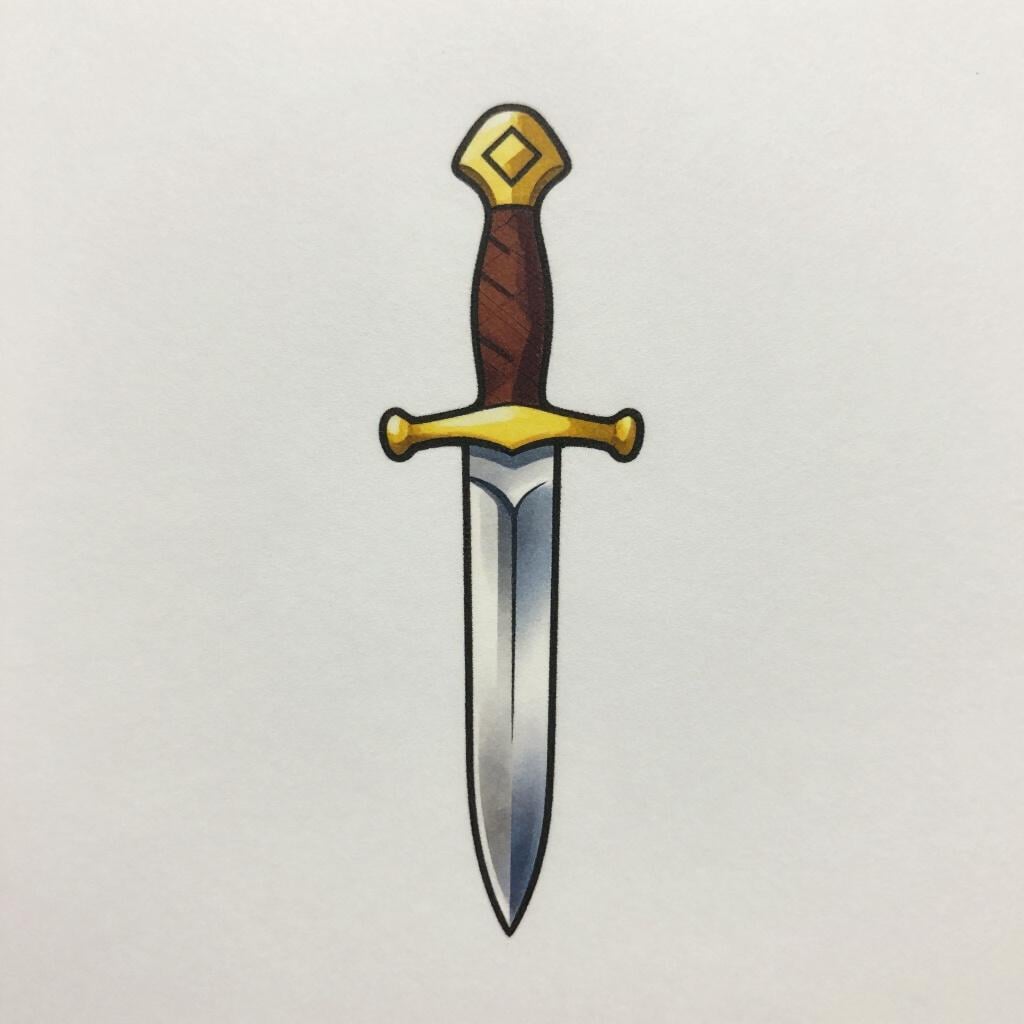
“daga” means “dagger” in Spanish (a short, pointed weapon with two sharp edges).
daggerAlso: dirk
📝 In Action
El museo exhibe una daga de oro del siglo quince.
B1The museum is displaying a gold dagger from the fifteenth century.
Escondió la daga bajo su capa antes de entrar al castillo.
B2He hid the dagger under his cloak before entering the castle.
Sus palabras frías fueron como una daga en mi espalda.
C1Her cold words were like a dagger in my back.
Word Connections
✏️ Quick Practice
Quick Quiz: daga
Question 1 of 1
If you are setting the dinner table, should you put a 'daga' next to the plate?
📚 More Resources
👥 Word Family
📚 Etymology
Comes from the Old French word 'dague', which referred to a short sword. The word entered Spanish hundreds of years ago to describe the same type of weapon.
First recorded: 13th century
Cognates (Related words)
💡 Master Spanish
Take your Spanish to the next level. Read 200+ illustrated and narrated Spanish stories tailored to your level with the Inklingo app!
Frequently Asked Questions
Is a 'daga' different from a 'puñal'?
Technically, a 'daga' usually has two sharp edges and a 'puñal' might only have one, but most Spanish speakers use both words to mean 'dagger' without worrying about the difference.
Is this word used in modern Spain or Latin America?
It is understood everywhere, but you'll mostly hear it in movies, video games, or when visiting historical museums rather than in the grocery store!