delantal
“delantal” means “apron” in Spanish (kitchen or workshop garment).
apron
Also: pinafore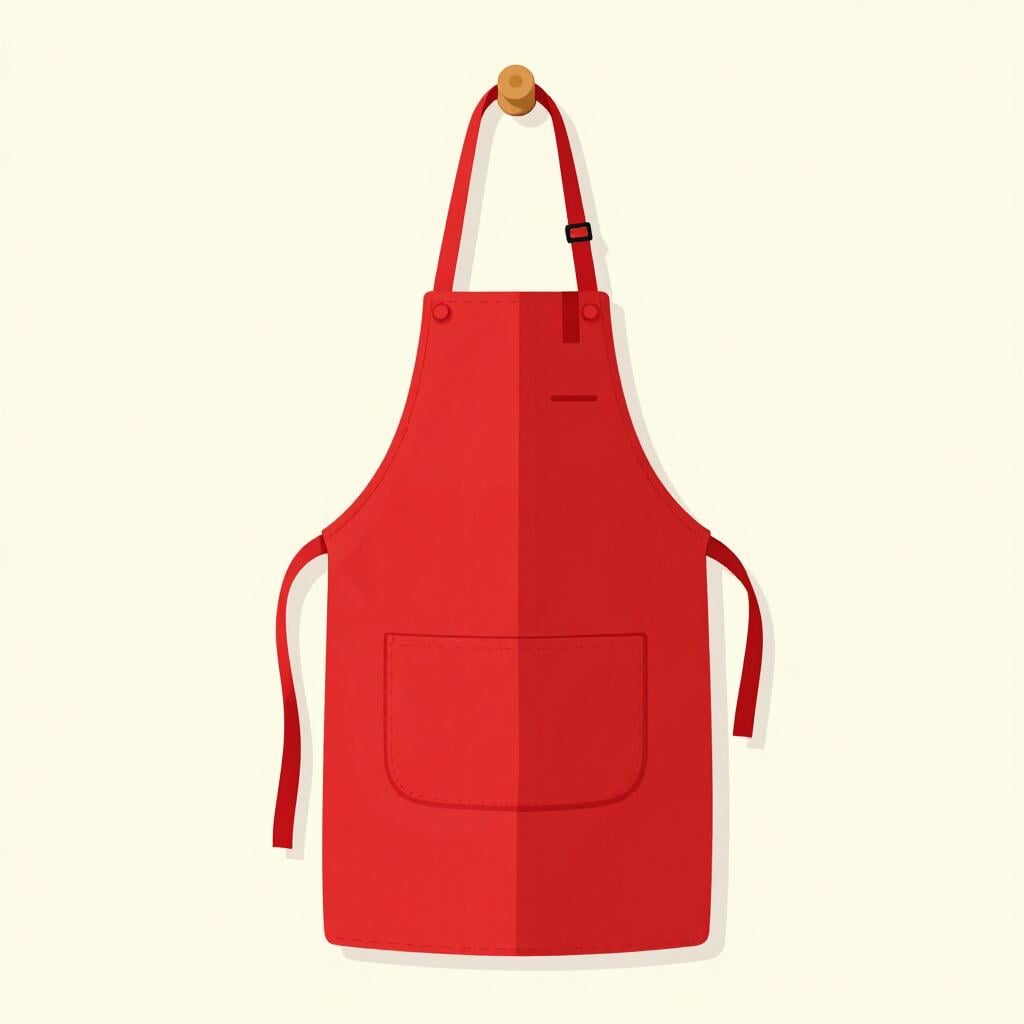
📝 In Action
Me puse el delantal para empezar a cocinar.
A1I put on the apron to start cooking.
El carnicero tiene el delantal manchado de sangre.
A2The butcher has blood stains on his apron.
Ata bien las cintas de tu delantal para que no se caiga.
B1Tie the ribbons of your apron well so it doesn't fall off.
✏️ Quick Practice
Quick Quiz: delantal
Question 1 of 3
How do you say 'the aprons' in Spanish?
📚 More Resources
👥 Word Family▼
📚 Etymology▼
Derived from the Spanish word 'delante' (meaning 'in front'), which comes from the Latin 'de' + 'ante'. It literally describes something worn 'in front'.
First recorded: 13th century
Cognates (Related words)
💡 Master Spanish
Take your Spanish to the next level. Read 200+ illustrated and narrated Spanish stories tailored to your level with the Inklingo app!
Frequently Asked Questions
Is 'delantal' just for women?
No, 'delantal' is a gender-neutral garment used by anyone cooking, crafting, or working in a lab. However, the word itself is grammatically masculine (el delantal).
What's the difference between 'delantal' and 'mandil'?
They mean the same thing. 'Delantal' is more common in Spain and the Southern Cone, while 'mandil' is more common in Mexico.
Is there a verb for 'to put on an apron'?
There isn't a single specific verb. You use the phrase 'ponerse el delantal'.