Inklingo

entierro

/en-TYEH-rroh/

burial

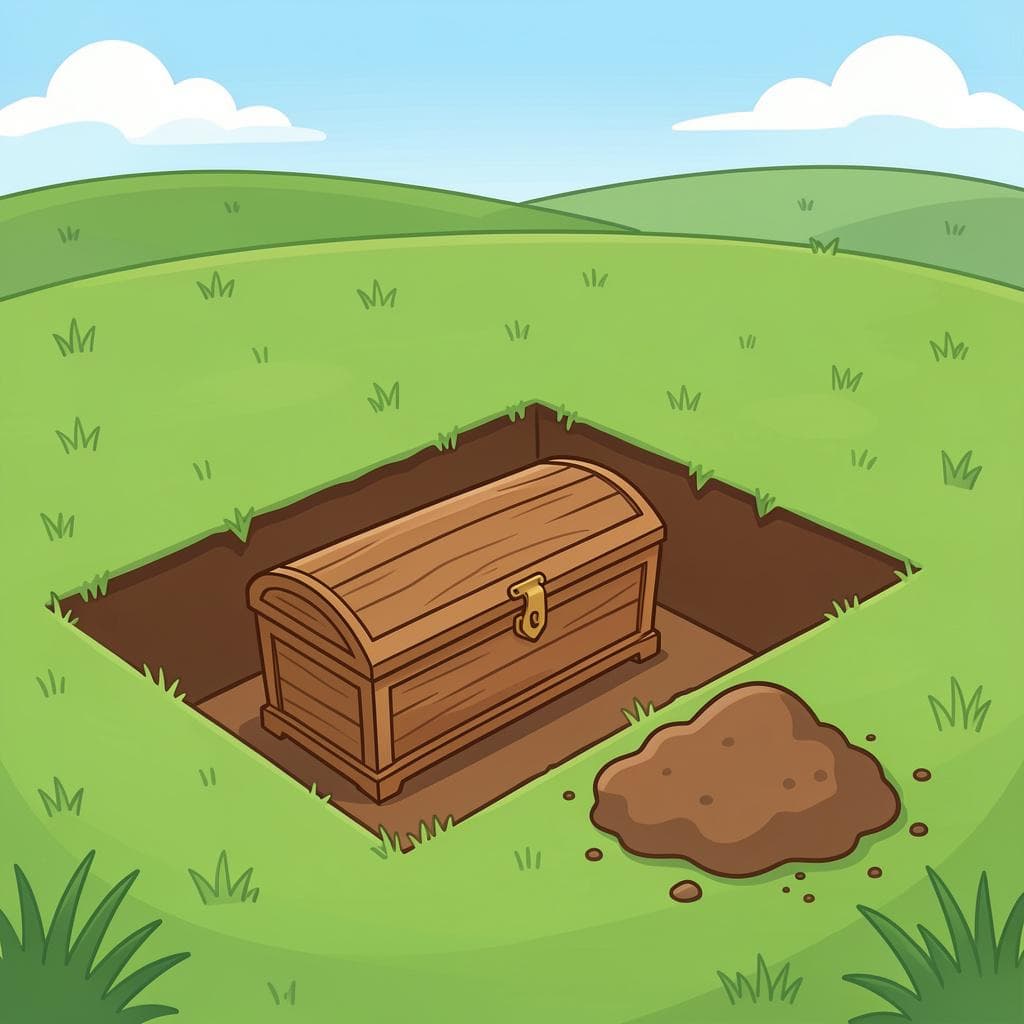
A wooden casket being lowered into a rectangular hole in a green grassy field.

A burial taking place in a quiet field.

entierro(noun)

mB1

burial

?

the act of putting a body in the ground

Also:

funeral

?

the ceremony accompanying a burial

,

buried treasure

?

something hidden or buried, often in legends

📝 In Action

El entierro será mañana a las diez en el cementerio central.

B1

The burial will be tomorrow at ten in the central cemetery.

Cuenta la leyenda que hay un entierro de oro bajo ese árbol.

B2

Legend has it there is a buried treasure of gold under that tree.

Word Connections

Synonyms

  • sepelio (interment/funeral)
  • funeral (funeral)

Antonyms

  • exhumación (digging up/exhumation)
  • nacimiento (birth)

Common Collocations

  • dar entierroto bury
  • entierro dignodignified burial

Idioms & Expressions

  • el entierro de la sardinaa traditional ceremony ending the Carnival season in Spain

💡 Grammar Points

Word Roots

Notice that 'entierro' has the word 'tierra' (earth/dirt) inside it. This helps you remember it means putting something into the earth.

❌ Common Pitfalls

One 'r' vs. Two

Mistake: "entiero"

Correction: entierro (with a double 'rr'). Spanish needs the double 'rr' for that strong rolling sound between vowels.

⭐ Usage Tips

Burial vs. Funeral

While often used for the whole ceremony, 'entierro' specifically focuses on the physical act of burial, whereas 'funeral' refers to the religious or social ceremony.

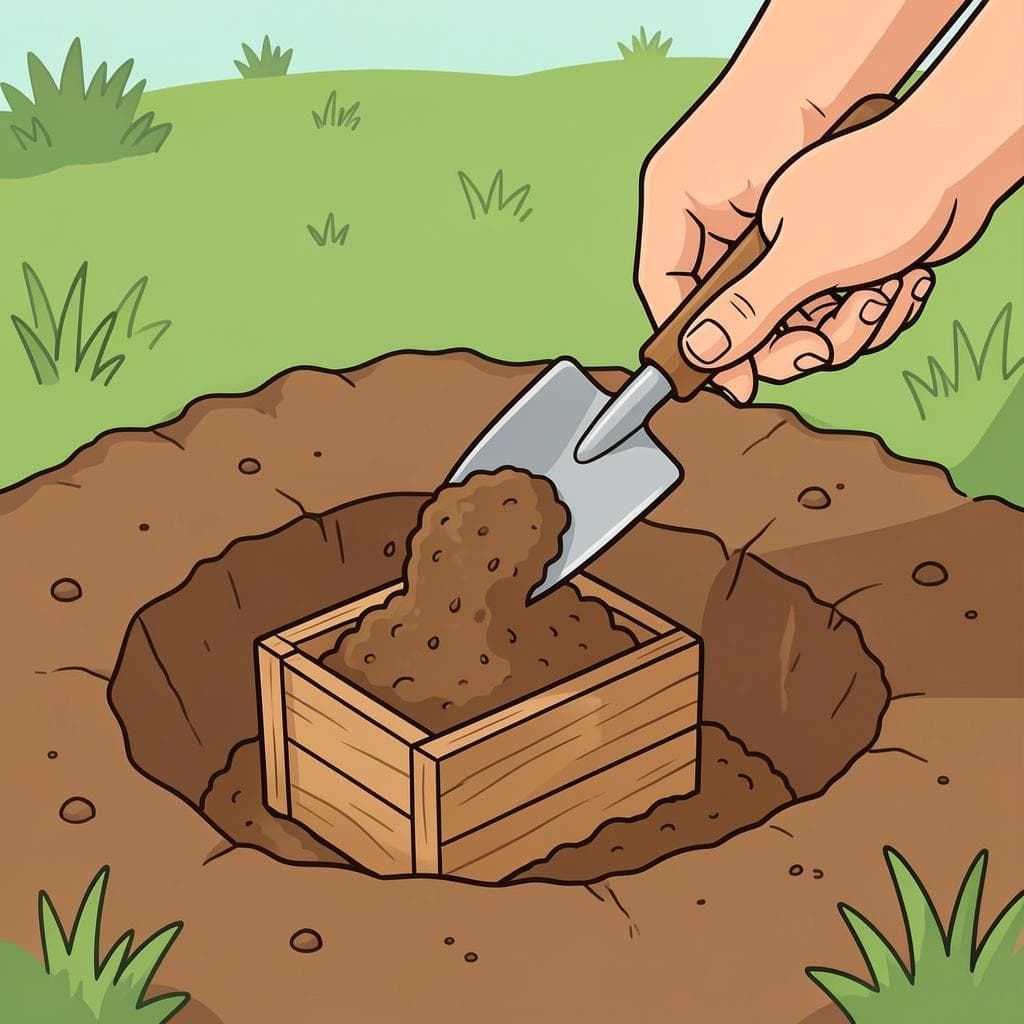
A person's hands using a small shovel to cover a small wooden box with dirt in a garden.

The act of burying a small treasure box in the earth.

entierro(verb)

A2irregular (stem-changing) ar

I bury

?

the current action of putting something in the ground

Also:

I hide

?

covering something up so it cannot be found

📝 In Action

Yo siempre entierro los huesos del perro en el jardín.

A2

I always bury the dog's bones in the garden.

Si entierro mi pasado, podré ser feliz.

B1

If I bury my past, I will be able to be happy.

Word Connections

Synonyms

  • sepultar (to sepulcher/bury)
  • ocultar (to hide)

Antonyms

  • desenterrar (to dig up)

💡 Grammar Points

Boot Verbs

This verb changes its middle 'e' to 'ie' in most present-tense forms, including 'yo entierro'. This doesn't happen in the 'we' (nosotros) or 'you all' (vosotros) forms.

❌ Common Pitfalls

Forgetting the 'i'

Mistake: "Yo enterro."

Correction: Yo entierro. The verb 'enterrar' changes its spelling in the present tense.

⭐ Usage Tips

Pronunciation Tip

Remember to roll the 'rr' at the end of the word to sound like a native speaker.

🔄 Conjugations

subjunctive

imperfect

ellos/ellas/ustedesenterraran
yoenterrara
enterraras
vosotrosenterrarais
nosotrosenterráramos
él/ella/ustedenterrara

present

ellos/ellas/ustedesentierren
yoentierre
entierres
vosotrosenterréis
nosotrosenterremos
él/ella/ustedentierre

indicative

preterite

ellos/ellas/ustedesenterraron
yoenterré
enterraste
vosotrosenterrasteis
nosotrosenterramos
él/ella/ustedenterró

imperfect

ellos/ellas/ustedesenterraban
yoenterraba
enterrabas
vosotrosenterrabais
nosotrosenterrábamos
él/ella/ustedenterraba

present

ellos/ellas/ustedesentierran
yoentierro
entierras
vosotrosenterráis
nosotrosenterramos
él/ella/ustedentierra

✏️ Quick Practice

💡 Quick Quiz: entierro

Question 1 of 2

If you are talking about a funeral ceremony specifically involving putting someone in the ground, which word is most accurate?

📚 More Resources

Word Family

Frequently Asked Questions

Is 'entierro' the same as 'funeral'?

Not exactly. While they are often used as synonyms, 'entierro' is the specific act of burial (putting into the ground), whereas 'funeral' is the broader term for the commemorative ceremony.

Why does the 'e' change to 'ie' in the verb form?

It is a common pattern in Spanish called a 'stem-change.' Many verbs with an 'e' in their root change to 'ie' when that syllable is stressed.