escoge
“escoge” means “he/she/it chooses” in Spanish. It has 2 different meanings depending on context:
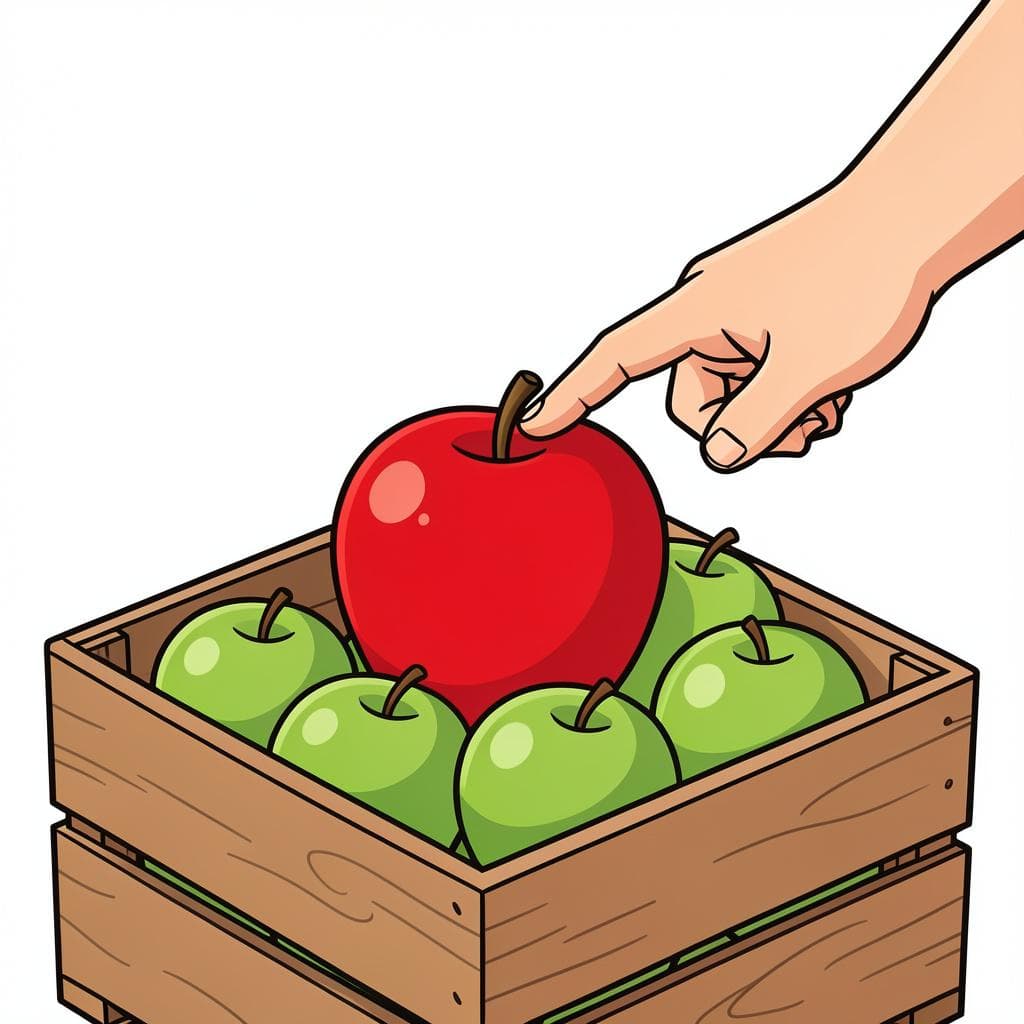

he/she/it chooses, you (formal) chooseAlso: picks, selects
📝 In Action
Ella siempre escoge el camino más largo.
A1She always chooses the longer path.
Usted escoge el color de la pintura.
A2You choose the color of the paint.
Word Connections
choose!, pick!

📝 In Action
Escoge una carta, la que quieras.
A1Pick a card, whichever one you want.
¡Escoge rápido! No tenemos tiempo.
A1Choose fast! We don't have time.
Word Connections
Subjunctive
Imperfect Subjunctive
Present Subjunctive
Indicative
Preterite
Imperfect
Present
✏️ Quick Practice
Quick Quiz: escoge
Question 1 of 2
If you want to tell a friend to 'Pick a color', what should you say?
📚 More Resources
👥 Word Family
📚 Etymology
From the Latin word 'excolligere', which combines 'ex-' (out) and 'colligere' (to gather or collect). It literally means to gather something out from a group.
First recorded: 13th century
Cognates (Related words)
💡 Master Spanish
Take your Spanish to the next level. Read 200+ illustrated and narrated Spanish stories tailored to your level with the Inklingo app!
Frequently Asked Questions
Is 'escoge' formal or informal?
It can be both! If you are telling a friend to do something, it is informal. If you are stating a fact about what a boss or a stranger (usted) is doing, it is used in a formal context.
Why does the spelling change to a 'j' in other forms?
In Spanish, the letter 'g' sounds soft (like an 'h') before 'e' or 'i', but hard (like 'go') before 'a' or 'o'. To keep the soft 'h' sound in words like 'escojo' (I choose), we have to switch the 'g' to a 'j'.