fruta
“fruta” means “fruit” in Spanish (edible produce).
fruit
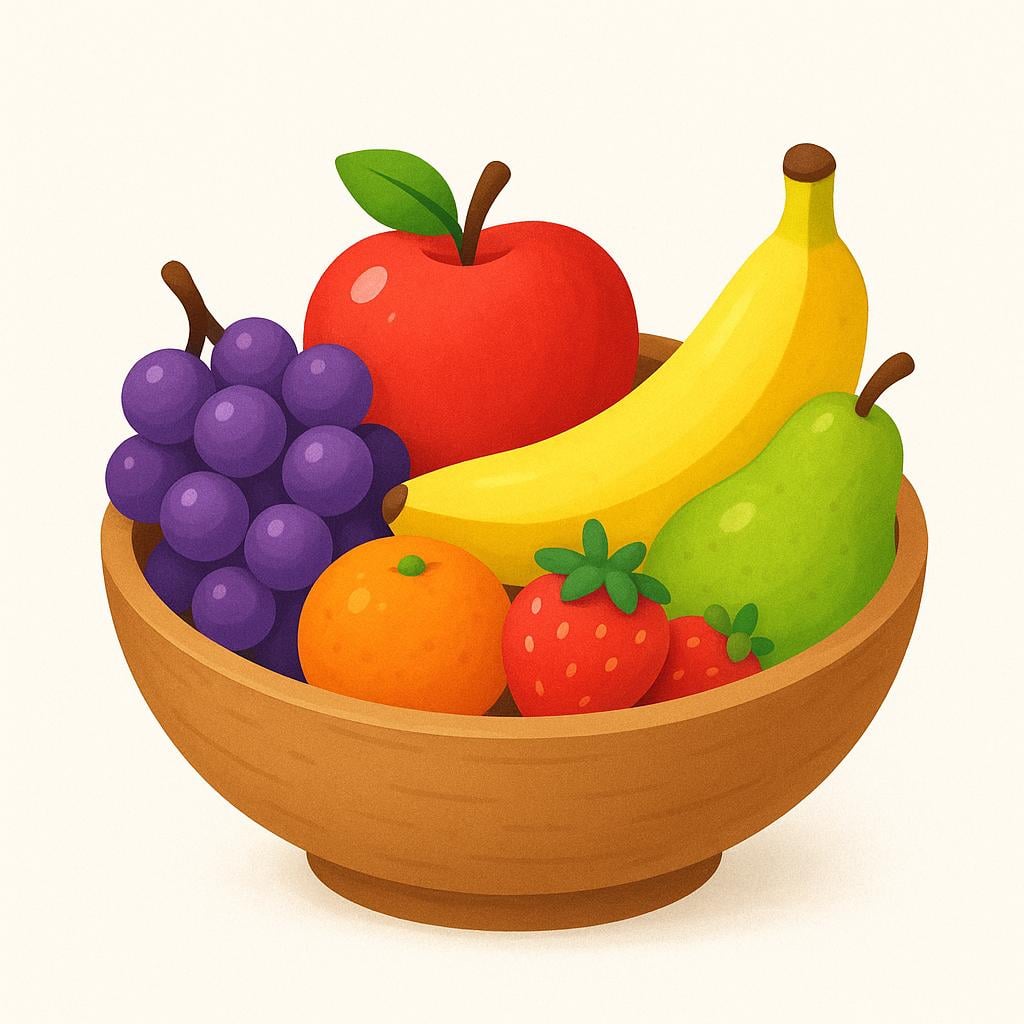
📝 In Action
Me gusta comer mucha fruta fresca en el desayuno.
A1I like to eat a lot of fresh fruit for breakfast.
Mi fruta favorita es la sandía.
A1My favorite fruit is watermelon.
La frutería vende diferentes tipos de fruta de temporada.
A2The fruit store sells different types of seasonal fruit.
Vocabulary Collections
✏️ Quick Practice
Quick Quiz: fruta
Question 1 of 1
Which sentence correctly uses 'fruta' in Spanish?
📚 More Resources
👥 Word Family▼
🎵 Rhymes▼
📚 Etymology▼
It comes from the Latin word *fructa*, which was the plural form of *fructum*. It originally meant 'product' or 'enjoyment,' but its meaning narrowed over time to focus specifically on the edible harvest we enjoy eating.
First recorded: 13th century
Cognates (Related words)
💡 Master Spanish
Take your Spanish to the next level. Read 200+ illustrated and narrated Spanish stories tailored to your level with the Inklingo app!
Frequently Asked Questions
How do I say 'fruit bowl'?
The most common word for a container designed to hold fruit is 'el frutero'. Be careful, as 'frutero' can also mean the person who sells fruit!
Why is 'fruta' feminine if it doesn't end in -a (like 'el agua')?
'Fruta' *does* end in -a. It is simply a regular feminine noun. Words like 'el agua' (water) are masculine but use 'el' only because they start with a stressed 'a' sound, which isn't the case for 'fruta'.