fuegos
“fuegos” means “fireworks” in Spanish. It has 3 different meanings depending on context:


fireworks
Also: firecrackers, pyrotechnics
📝 In Action
Vamos a ver los fuegos en la playa a medianoche.
A1We are going to watch the fireworks on the beach at midnight.
El espectáculo de fuegos artificiales fue increíble.
A2The fireworks show was incredible.
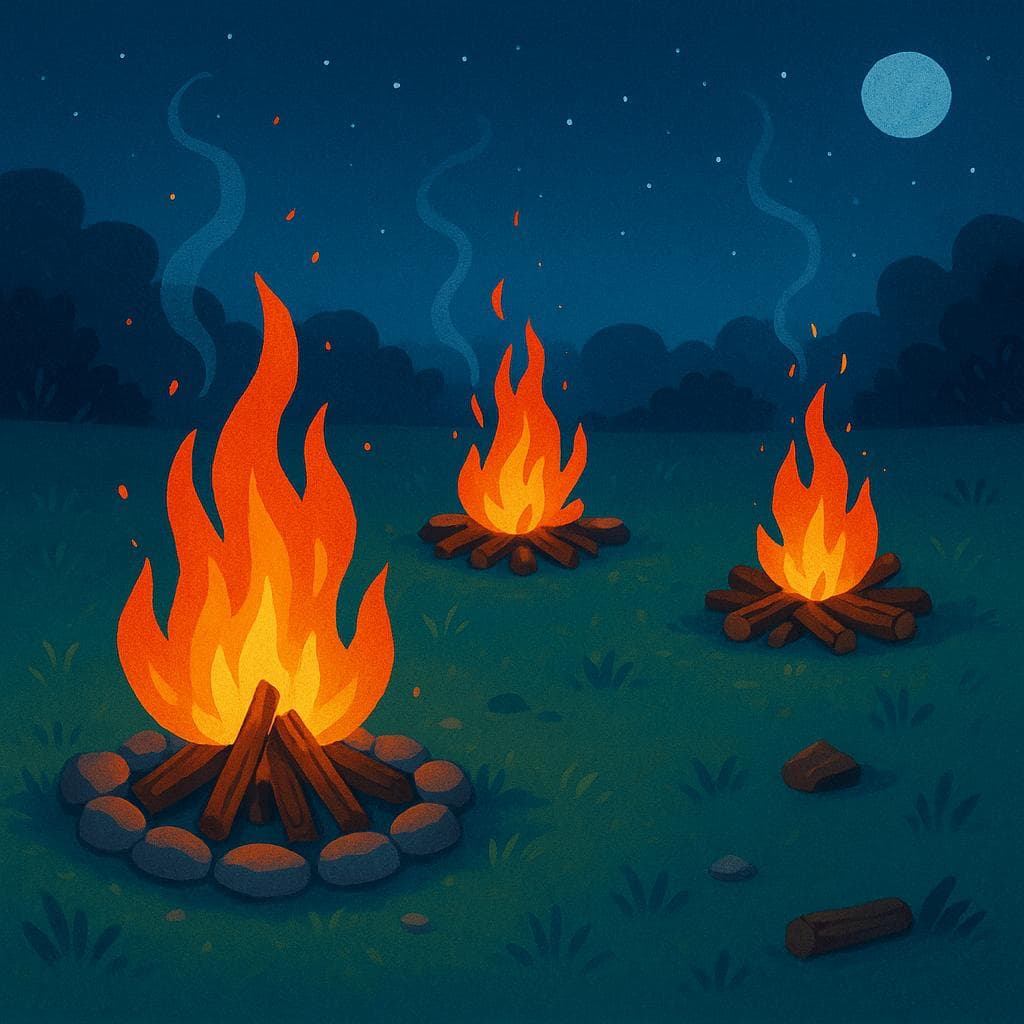
fires
Also: flames
📝 In Action
Los bomberos lucharon contra varios fuegos en el edificio.
A2The firefighters fought against several fires in the building.
Vimos los fuegos de la hoguera desde lejos.
B1We saw the flames of the bonfire from afar.
passion
Also: heat
📝 In Action
Sus palabras estaban llenas de los fuegos de la juventud.
C1His words were full of the passion of youth.
Translate to Spanish
✏️ Quick Practice
Quick Quiz: fuegos
Question 1 of 1
Which sentence uses 'fuegos' to mean 'fireworks'?
📚 More Resources
🎵 Rhymes▼
📚 Etymology▼
The root word, 'fuego,' comes from the Latin word *focus*, which originally meant 'hearth' or 'fireplace.' Over time, it shifted in meaning to refer to the 'fire' itself. 'Fuegos' is simply the plural form of this ancient word.
First recorded: c. 11th century (as 'fuego')
Cognates (Related words)
💡 Master Spanish
Take your Spanish to the next level. Read 200+ illustrated and narrated Spanish stories tailored to your level with the Inklingo app!
Frequently Asked Questions
Why is 'fuegos artificiales' shortened to 'los fuegos'?
It's a very common simplification, similar to how English speakers might say 'the show' instead of 'the fireworks show.' Since 'fuegos' is almost always plural when referring to a display, the context makes the meaning clear.
Is 'fuegos' masculine or feminine?
It is masculine. The singular form is 'el fuego,' so the plural is 'los fuegos.' You must use masculine articles and adjectives with it.