incendios
“incendios” means “fires” in Spanish (uncontrolled blazes).
fires, wildfires
Also: blazes, conflagrations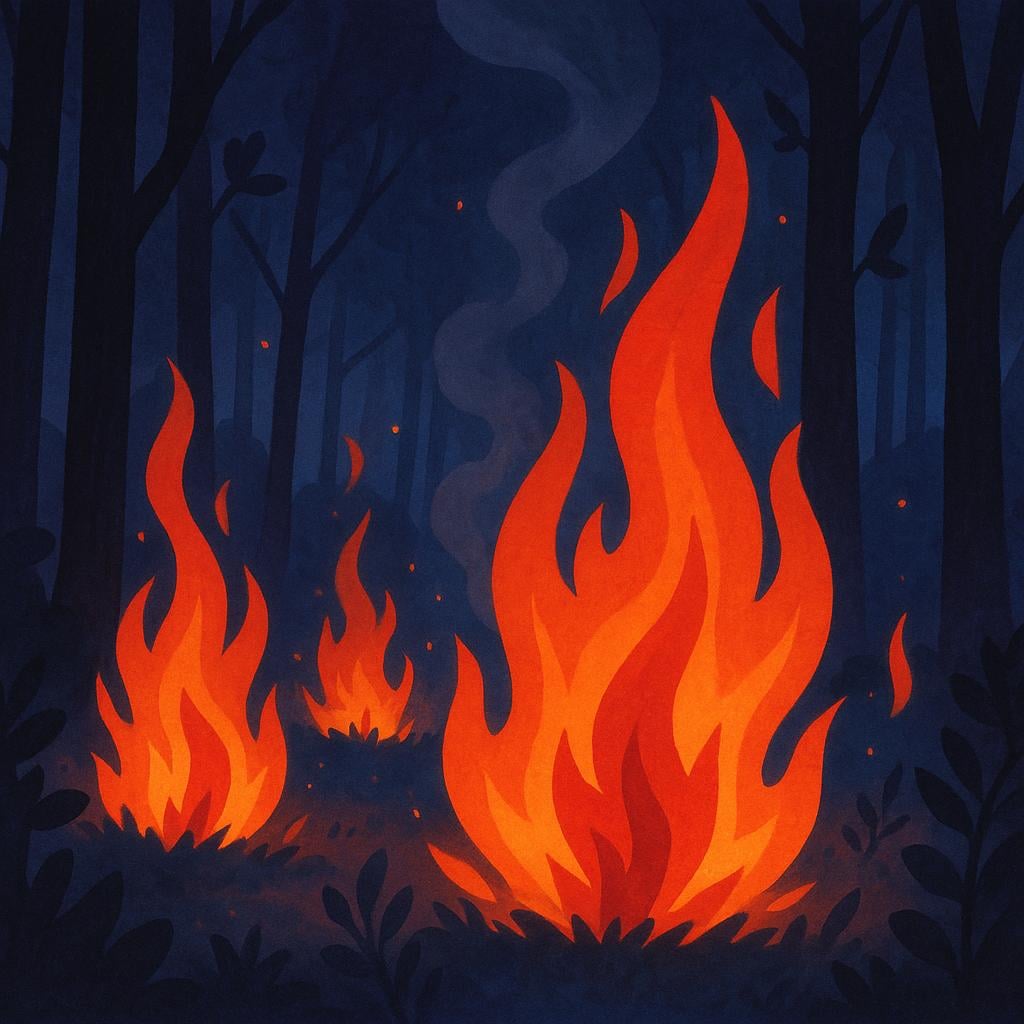
📝 In Action
Los incendios forestales han destruido miles de hectáreas este verano.
B1The wildfires have destroyed thousands of hectares this summer.
La policía investiga la causa de los incendios en el edificio.
A2The police are investigating the cause of the fires in the building.
Los bomberos luchan contra tres incendios simultáneos.
B2The firefighters are fighting three simultaneous fires.
Translate to Spanish
✏️ Quick Practice
Quick Quiz: incendios
Question 1 of 2
Which Spanish word would you use to describe a large forest disaster?
📚 More Resources
👥 Word Family▼
🎵 Rhymes▼
📚 Etymology▼
This word comes from the Latin word *incendium*, which literally meant 'a burning' or 'fire.' Its root relates to the idea of setting something on fire, similar to the English word 'incendiary.'
First recorded: 13th century
Cognates (Related words)
💡 Master Spanish
Take your Spanish to the next level. Read 200+ illustrated and narrated Spanish stories tailored to your level with the Inklingo app!
Frequently Asked Questions
Is 'incendios' related to the word 'ceniza' (ash)?
While fires produce ash, the words are not directly related in their origin. 'Incendios' comes from a root meaning 'to set fire,' and 'ceniza' comes from a different Latin root meaning 'cinders.'
How do I say 'arson' in Spanish?
The act of deliberately setting a fire is called 'el incendio provocado' or 'el delito de incendio.' The person who does it is an 'incendiario' or 'pirómano.'