How to Say "blazes" in Spanish
The most common Spanish word for “blazes” is “incendios” — use 'incendios' when referring to large, destructive fires, especially wildfires or building fires.
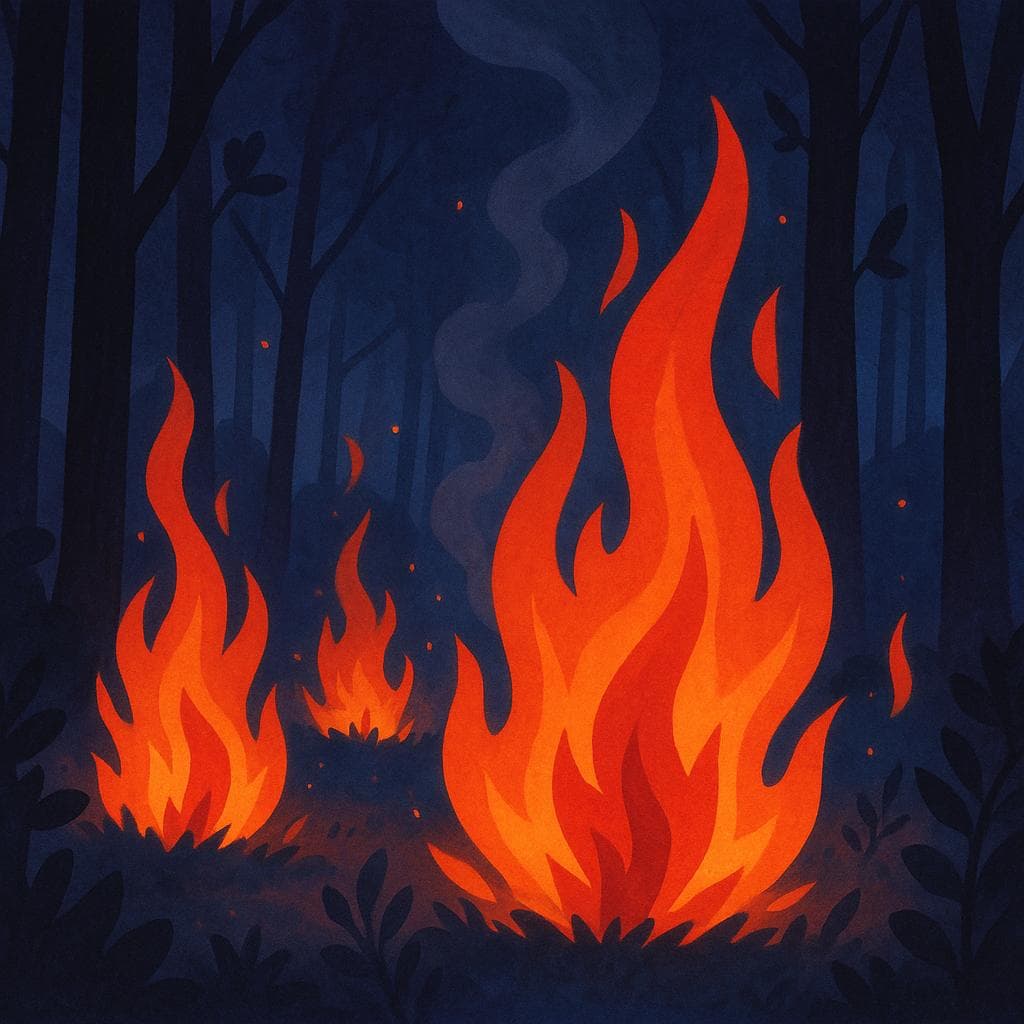

incendios
in-SEN-dee-osinˈsen.djos
Examples
Los incendios forestales amenazan la selva amazónica.
The wildfires threaten the Amazon rainforest.
Los incendios forestales han destruido miles de hectáreas este verano.
The wildfires have destroyed thousands of hectares this summer.
La policía investiga la causa de los incendios en el edificio.
The police are investigating the cause of the fires in the building.
Los bomberos luchan contra tres incendios simultáneos.
The firefighters are fighting three simultaneous fires.
Gender and Plural
This word is the plural of 'incendio' (a masculine noun), so it always takes masculine plural articles and adjectives: 'los incendios grandes' (the big fires).
Using 'Fuegos'
Mistake: “Using 'fuegos' when talking about a disaster, e.g., 'Muchos fuegos en el bosque.'”
Correction: Use 'incendios' for large, destructive, or accidental blazes. 'Fuego' usually means a controlled fire (like a campfire) or the general element/concept.
llamas
YA-mas'ʝa.mas

Examples
Las llamas del hogar creaban un ambiente acogedor.
The flames from the fireplace created a cozy atmosphere.
Las llamas del fuego eran muy altas y anaranjadas.
The flames from the fire were very high and orange.
Los bomberos lucharon para apagar las llamas.
The firefighters fought to put out the flames.
Always Feminine
Just like the animal, 'llama' meaning 'flame' is a feminine word. So you'll always hear 'la llama' for one flame and 'las llamas' for multiple flames.
Confusing with the Verb
Mistake: “¿Cómo te llamas el fuego?”
Correction: This mistake mixes up the verb 'you call' with the noun 'flames'. The question doesn't make sense. To talk about the flames of the fire, you'd say 'Mira las llamas del fuego' (Look at the flames of the fire).
diablo
DEE-ah-blohˈdja.βlo
Examples
¿Qué diablo significa esto?
What the heck does this mean?
¿Qué diablo estás haciendo aquí?
What the heck are you doing here?
¡Vete al diablo!
Go to hell!
No sé cómo diablos lo hizo tan rápido.
I don't know how the devil he did it so quickly.
Question Intensifier
When 'diablo(s)' is placed inside a question (like 'quién,' 'qué,' 'cómo'), it adds emphasis and shows frustration or surprise, much like 'the heck' or 'the hell' in English.
Overusing the Literal Meaning
Mistake: “A literal translation of 'Manda al diablo' to 'He sends the devil' instead of the intended meaning.”
Correction: In context, realize this is an idiom for dismissal: 'He tells them to get lost.'
Confusing Literal Fires with Exclamations
Learn Spanish with Inklingo
Interactive stories, personalized learning, and more.