guisante
“guisante” means “pea” in Spanish (the small, round, green vegetable).
pea
Also: green pea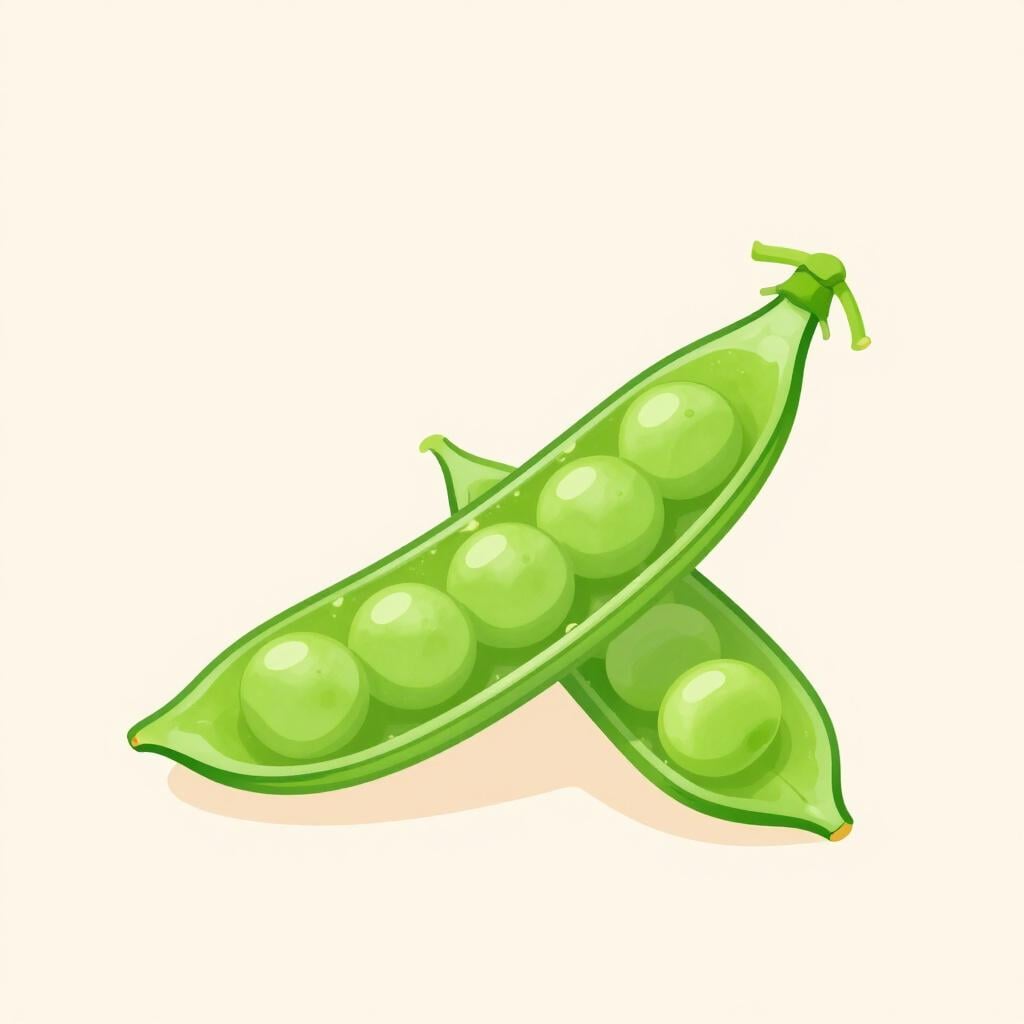
📝 In Action
No me gustan los guisantes.
A1I don't like peas.
Añade un puñado de guisantes a la sopa.
A2Add a handful of peas to the soup.
Los guisantes frescos son mucho más dulces que los de lata.
B1Fresh peas are much sweeter than canned ones.
Vocabulary Collections
Translate to Spanish
✏️ Quick Practice
Quick Quiz: guisante
Question 1 of 3
How do you say 'the peas' (plural) in Spanish?
📚 More Resources
👥 Word Family▼
📚 Etymology▼
From an old Mozarabic word 'biššáuṭ', which eventually transformed into 'guisante' in Spanish, likely influenced by the word 'guisar' (to cook).
First recorded: 13th century
Cognates (Related words)
💡 Master Spanish
Take your Spanish to the next level. Read 200+ illustrated and narrated Spanish stories tailored to your level with the Inklingo app!
Frequently Asked Questions
Are 'guisantes' and 'chícharos' the same thing?
Yes! They are the exact same vegetable. 'Guisante' is used mostly in Spain, while 'chícharo' is used in Mexico and parts of Latin America.
Is 'guisante' masculine or feminine?
It is masculine. You should always say 'el guisante' or 'un guisante'.
Does the 'u' change the sound of the 'g'?
Yes. The 'u' tells you to use a 'hard' G (like 'gas') instead of a 'soft' G (which sounds like an H). However, you don't actually pronounce the 'u' itself.