gusanos
“gusanos” means “worms” in Spanish (General term for earthworms or small larvae).
worms, maggots
Also: grubs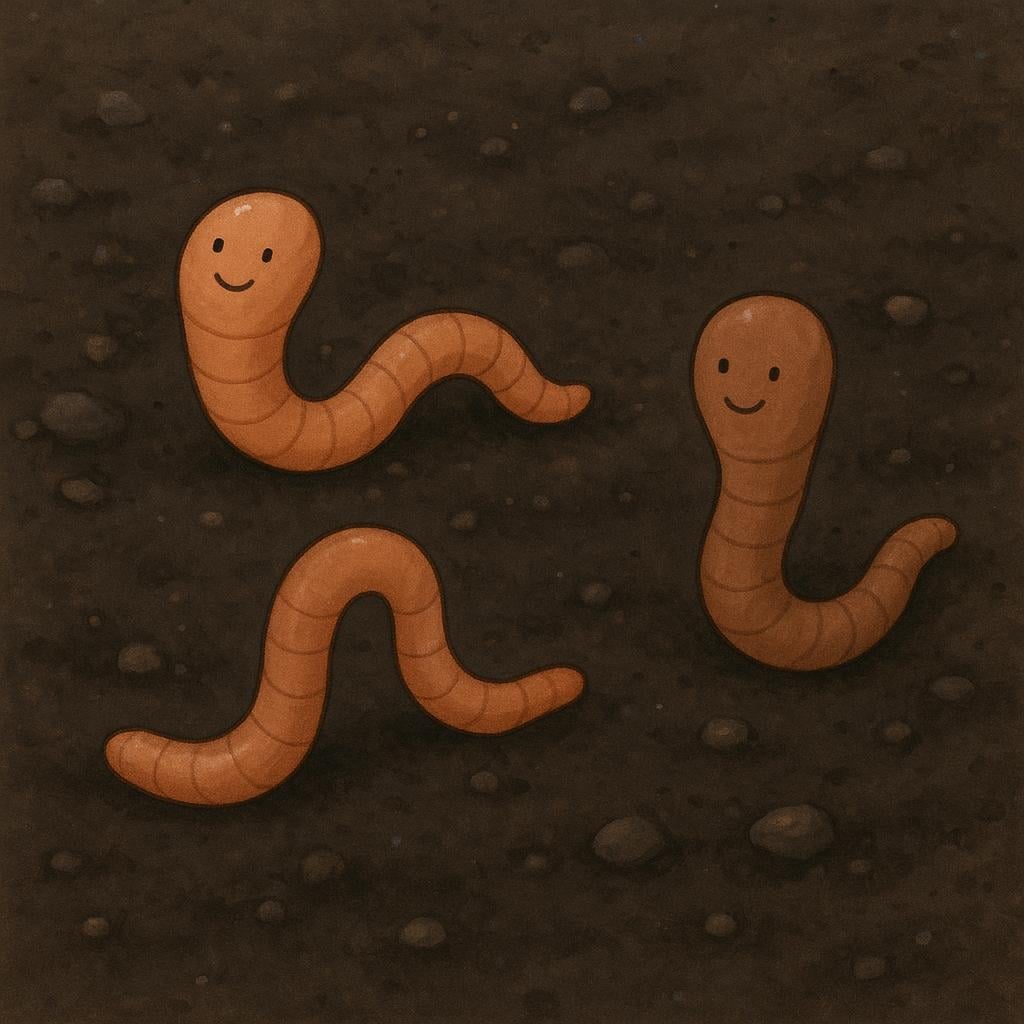
📝 In Action
Mi abuelo usa gusanos como cebo para pescar.
A1My grandfather uses worms as bait for fishing.
Si dejas la fruta afuera mucho tiempo, saldrán gusanos.
A2If you leave the fruit out too long, maggots will appear.
Los gusanos de seda producen fibras muy valiosas.
B1Silkworms produce very valuable fibers.
✏️ Quick Practice
Quick Quiz: gusanos
Question 1 of 2
¿Cuál es la forma singular de 'gusanos'?
📚 More Resources
👥 Word Family▼
📚 Etymology▼
The singular form, 'gusano,' is thought to come from a pre-Roman language in the Iberian Peninsula, possibly replacing the older Latin term for 'worm' (*vermis*). It has been used in Spanish for centuries to describe these crawling creatures.
First recorded: Medieval Spanish texts
Cognates (Related words)
💡 Master Spanish
Take your Spanish to the next level. Read 200+ illustrated and narrated Spanish stories tailored to your level with the Inklingo app!
Frequently Asked Questions
Is 'gusanos' the same as 'lombrices'?
Not exactly. 'Gusanos' is the general term for any worm or maggot. 'Lombrices' specifically refers to earthworms—the kind you find in healthy soil. All 'lombrices' are 'gusanos', but not all 'gusanos' are 'lombrices'.
How do I know if the word is masculine or feminine?
Since 'gusanos' ends in -os, it is masculine. The singular form is 'el gusano.' This means all words describing or pointing to it must also be masculine.