hacéis
“hacéis” means “you do” in Spanish. It has 2 different meanings depending on context:
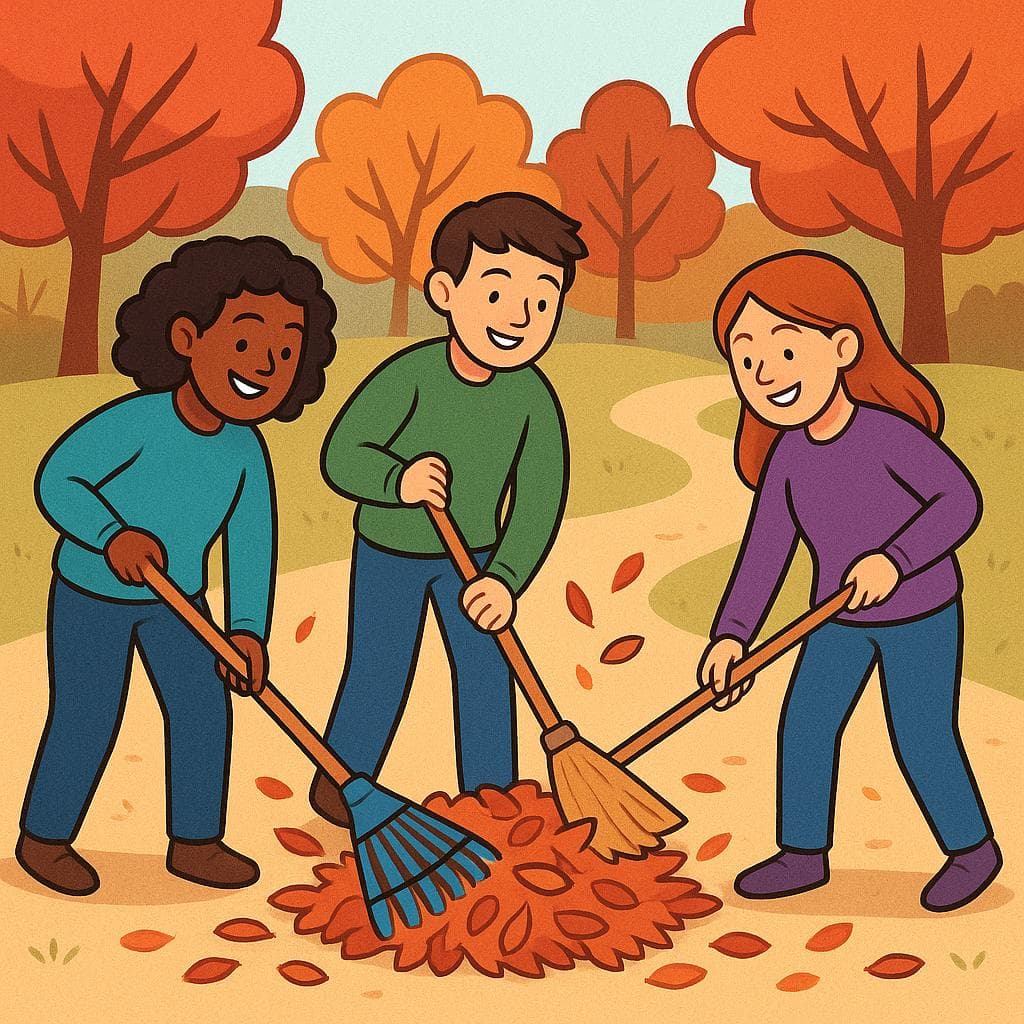

you do
Also: you carry out
📝 In Action
¿Qué hacéis este fin de semana, chicos?
A1What are you guys doing this weekend?
Vosotros siempre hacéis los deberes antes de jugar.
A2You all always do your homework before playing.
you make
Also: you build, you prepare
📝 In Action
¡Qué bien cocináis! ¿Qué hacéis para cenar hoy?
A1You all cook so well! What are you making for dinner today?
Si hacéis ruido, despertaréis al bebé.
A2If you make noise, you will wake up the baby.
🔄 Conjugations
indicative
present
imperfect
preterite
subjunctive
present
imperfect
Translate to Spanish
✏️ Quick Practice
Quick Quiz: hacéis
Question 1 of 2
Which sentence correctly uses 'hacéis' to mean 'you make'?
📚 More Resources
👥 Word Family▼
📚 Etymology▼
The verb 'hacer' comes directly from the Latin verb *facere*, which meant 'to do' or 'to make.' Over time, the 'f' sound weakened and disappeared, resulting in the silent 'h' we use today.
First recorded: Old Spanish (around the 10th-12th century)
Cognates (Related words)
💡 Master Spanish
Take your Spanish to the next level. Read 200+ illustrated and narrated Spanish stories tailored to your level with the Inklingo app!
Frequently Asked Questions
If I am learning Latin American Spanish, do I need to learn 'hacéis'?
It is helpful to recognize 'hacéis' if you read Spanish literature or watch Spanish media, but you will almost never need to use it in conversation. You should use 'hacen' instead.
Why is 'hacer' so irregular?
'Hacer' is irregular because it is one of the oldest and most frequently used verbs in the language. Very common verbs tend to resist simple spelling rules over time, leading to unique forms like 'hago' (I do) and 'haré' (I will do).