intestino
“intestino” means “intestine” in Spanish. It has 2 different meanings depending on context:
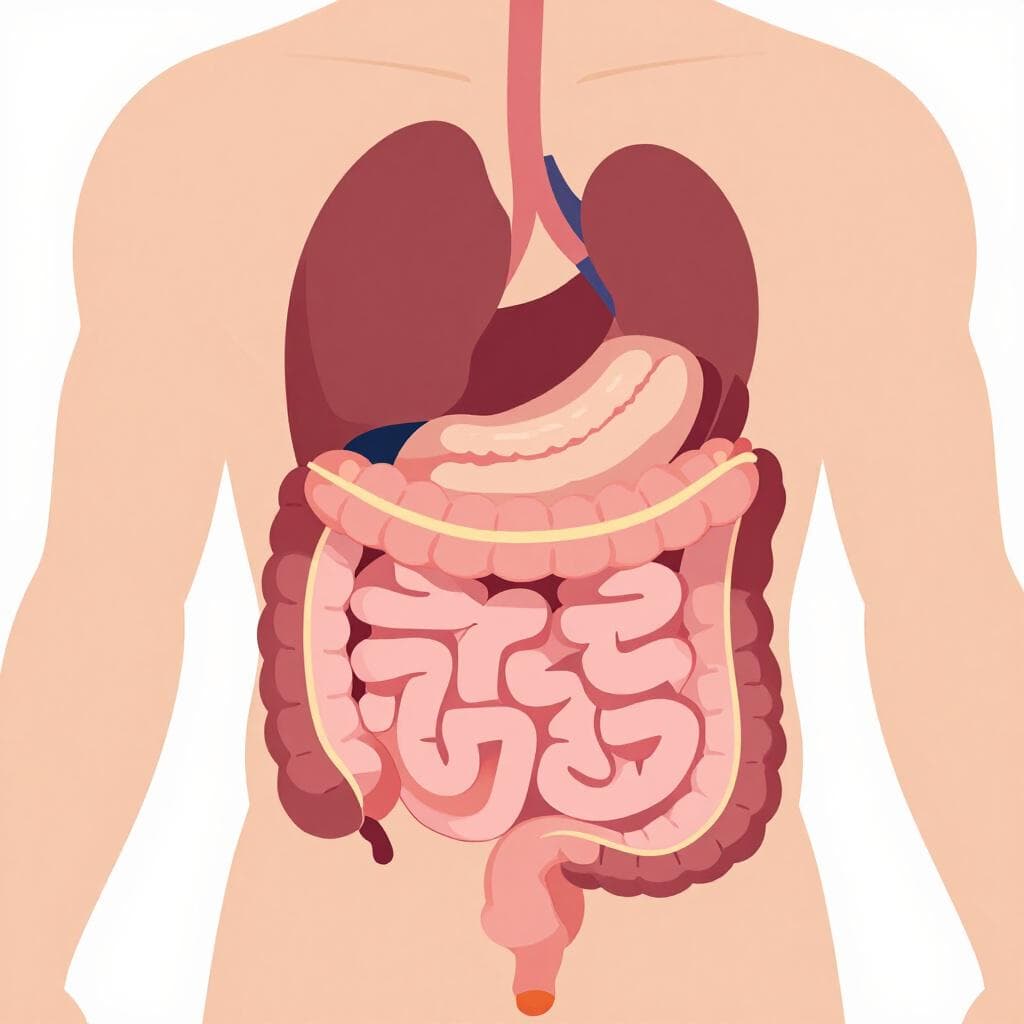

intestine
Also: gut, bowel
📝 In Action
El intestino delgado es donde se absorben la mayoría de los nutrientes.
B1The small intestine is where most nutrients are absorbed.
Tienes que cuidar tu flora intestinal para tener un intestino sano.
B2You have to take care of your gut flora to have a healthy intestine.
El doctor me hizo una revisión del intestino grueso.
B1The doctor did an exam of my large intestine.
internal
Also: civil, domestic
📝 In Action
El partido político colapsó debido a una lucha intestina.
C1The political party collapsed due to internal infighting.
La empresa sufrió una guerra intestina por el control de la directiva.
C2The company suffered an internal war for control of the board.
Translate to Spanish
✏️ Quick Practice
Quick Quiz: intestino
Question 1 of 3
What is the 'intestino delgado'?
📚 More Resources
👥 Word Family▼
📚 Etymology▼
From the Latin 'intestinus', which means 'internal' or 'inward'. This comes from 'intus', meaning 'within'.
First recorded: 13th century
Cognates (Related words)
💡 Master Spanish
Take your Spanish to the next level. Read 200+ illustrated and narrated Spanish stories tailored to your level with the Inklingo app!
Frequently Asked Questions
Is 'intestino' the same as 'estómago'?
No. The 'estómago' (stomach) is where food goes first, and the 'intestino' (intestine) is the long tube where it goes afterward.
Can I use 'intestino' to describe a person?
No, it is only used for the organ or for formal 'internal' conflicts. It does not describe a person's character.
Is 'tripas' a rude word compared to 'intestino'?
It's not exactly rude, but it's very informal. Using 'intestino' is more polite and scientific.