Inklingo

juegas

/HWEH-gahs/

you play

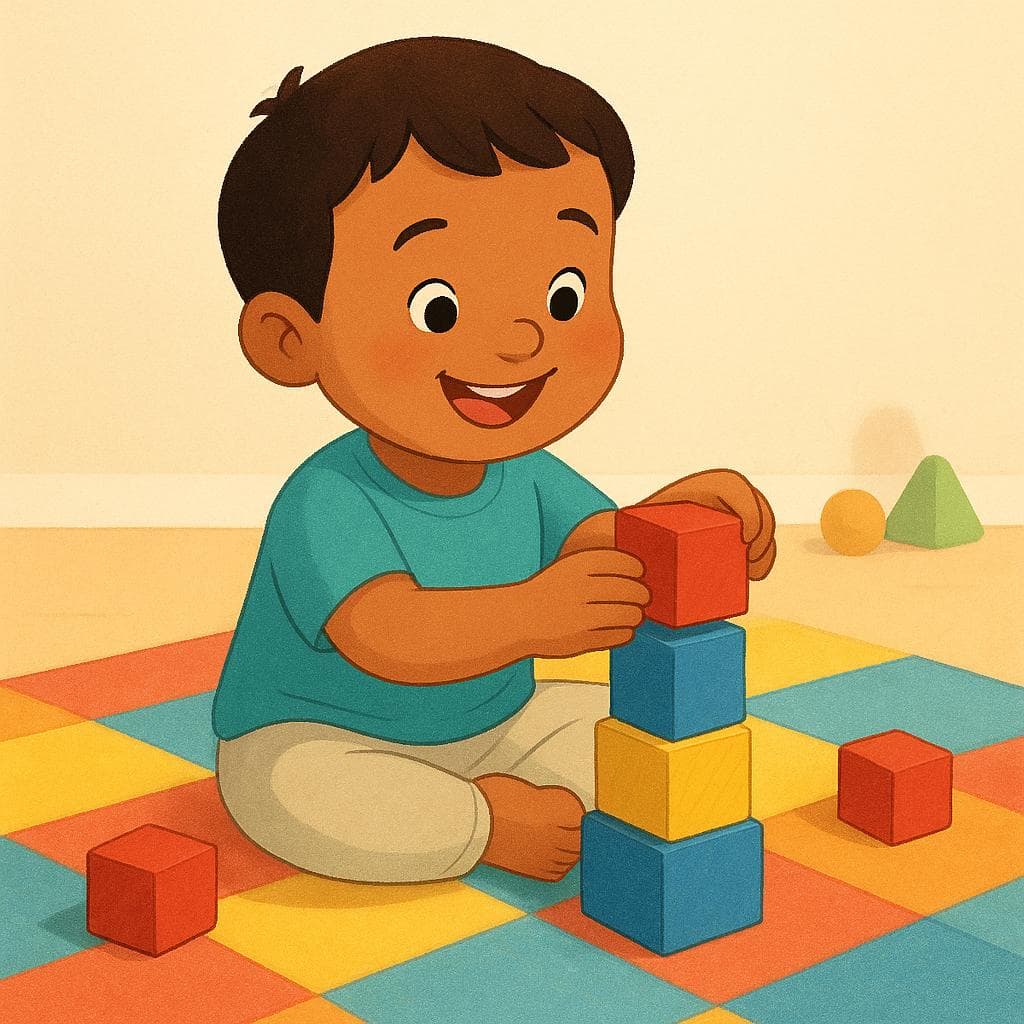
A joyful child sitting on a colorful rug, stacking large wooden building blocks.

When you say juegas, you might be talking about a child who plays with blocks.

juegas(verb)

A1irregular (stem-changing u>ue) ar

you play

?

(present tense, singular informal)

,

you are playing

?

(present continuous equivalent)

Also:

do you play?

?

(when used as a question)

📝 In Action

¿A qué juegas en tu tiempo libre?

A1

What do you play (or what games do you play) in your free time?

Si juegas bien, podemos ganar el partido.

A2

If you play well, we can win the game.

Sé que juegas muy bien al ajedrez.

A2

I know that you play chess very well.

Word Connections

Synonyms

  • competir (to compete)
  • entretenerse (to entertain oneself)

Common Collocations

  • jugar al fútbolto play soccer
  • jugar a las cartasto play cards

Idioms & Expressions

  • jugar limpioto play fair; to be honest

💡 Grammar Points

Using 'jugar a'

When talking about specific games or sports, 'jugar' usually needs the preposition 'a' (to) right before the game: 'Juegas al tenis' (You play tennis).

The Stem-Change

The 'u' inside the word changes to 'ue' in most present tense forms, like in 'juegas'. Remember that 'nosotros' (jugamos) and 'vosotros' (jugáis) are the exceptions and keep the 'u'.

❌ Common Pitfalls

Confusing 'Jugar' and 'Tocar'

Mistake: "Using 'tocar' for sports (e.g., *tú tocas fútbol*)."

Correction: Use 'jugar' for games and sports ('tú juegas fútbol') and 'tocar' for musical instruments or touching objects.

⭐ Usage Tips

Asking About Hobbies

This is a perfect word for getting to know people! Start with '¿Qué juegas?' to ask what games or sports they like.

A hand placing a tall stack of red, blue, and white gambling chips onto a green felt surface.

If the context is betting money, juegas means you gamble.

juegas(verb)

B1irregular (stem-changing u>ue) ar

you gamble

?

betting money

,

you bet

?

wagering

Also:

you take a risk

?

figurative sense of being careless

📝 In Action

¿Juegas mucho en el casino?

B1

Do you gamble a lot at the casino?

Juegas con fuego si sigues mintiendo.

B2

You are playing with fire (taking a big risk) if you keep lying.

Me pregunto cuánto dinero juegas cada semana.

B1

I wonder how much money you bet every week.

Word Connections

Synonyms

  • apostar (to bet)
  • arriesgar (to risk)

Common Collocations

  • jugar dineroto bet money
  • jugar con la vidato play with one's life

Idioms & Expressions

  • jugar sucioto cheat; to fight unfairly

💡 Grammar Points

Jugar con...

When 'jugar' means to mess around or take risks, it is usually followed by the preposition 'con' (with): 'Juegas con mi paciencia' (You are playing with my patience).

⭐ Usage Tips

Figurative Warning

The phrase 'jugar con fuego' (to play with fire) is a very common way to warn someone they are doing something dangerous or reckless.

🔄 Conjugations

indicative

present

él/ella/ustedjuega
yojuego
juegas
ellos/ellas/ustedesjuegan
nosotrosjugamos
vosotrosjugáis

imperfect

él/ella/ustedjugaba
yojugaba
jugabas
ellos/ellas/ustedesjugaban
nosotrosjugábamos
vosotrosjugabais

preterite

él/ella/ustedjugó
yojugué
jugaste
ellos/ellas/ustedesjugaron
nosotrosjugamos
vosotrosjugasteis

subjunctive

present

él/ella/ustedjuegue
yojuegue
juegues
ellos/ellas/ustedesjueguen
nosotrosjuguemos
vosotrosjuguéis

imperfect

él/ella/ustedjugara
yojugara
jugaras
ellos/ellas/ustedesjugaran
nosotrosjugáramos
vosotrosjugarais

✏️ Quick Practice

💡 Quick Quiz: juegas

Question 1 of 2

Which sentence uses 'juegas' in its figurative sense (meaning 'to risk or gamble')?

📚 More Resources

Frequently Asked Questions

If I want to ask someone, 'Are you playing right now?' should I use 'juegas'?

Yes! In Spanish, the simple present tense ('tú juegas') is often used to mean both 'you play' (habitually) and 'you are playing' (right now). So, '¿Juegas ahora?' is perfectly natural.

Is 'juegas' formal or informal?

'Juegas' uses the 'tú' form, which is the informal way to address one person (like a friend, family member, or child). If you need to be formal or address an elder, you would use 'usted juega'.