marchó
“marchó” means “left” in Spanish. It has 3 different meanings depending on context:

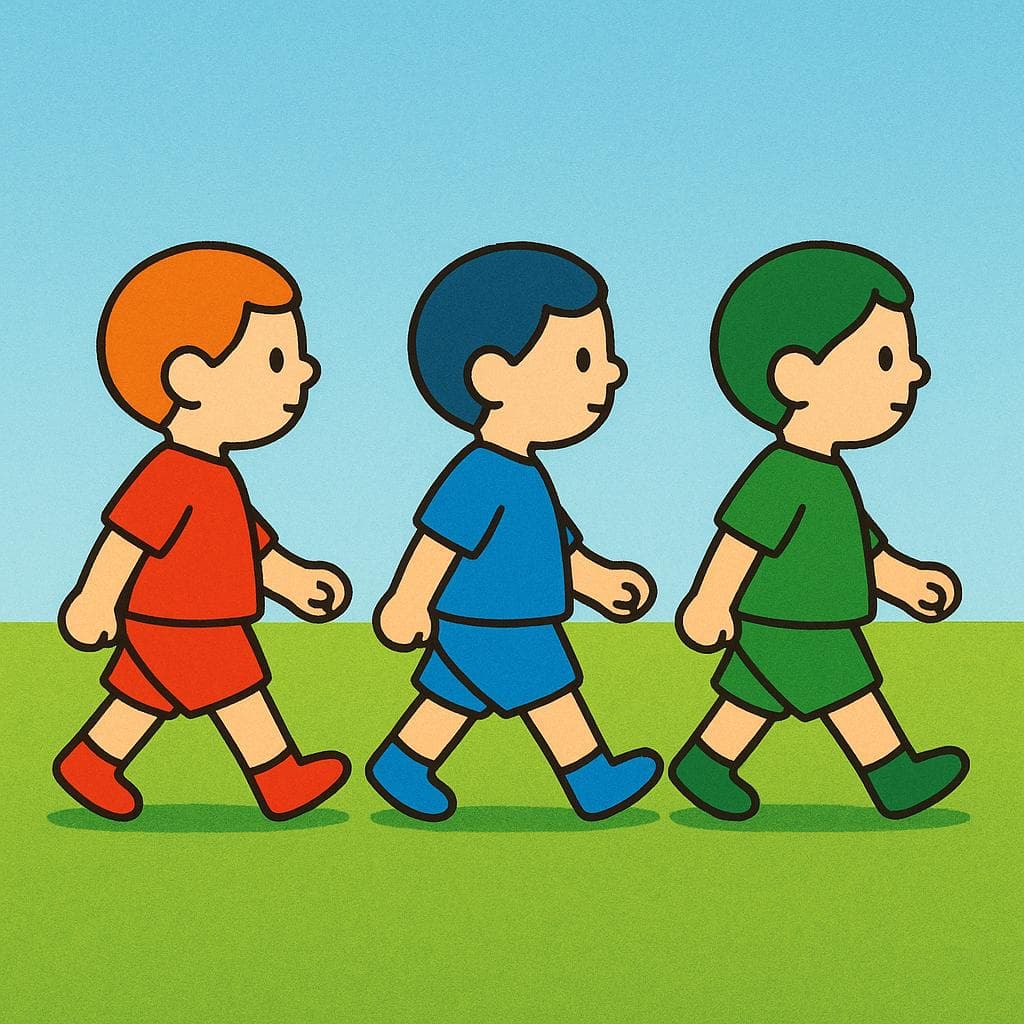

left, went away
Also: walked off
📝 In Action
Ella marchó de la casa sin decir adiós.
A2She left the house without saying goodbye.
El tren marchó justo a tiempo, no pudimos alcanzarlo.
B1The train departed right on time; we couldn't catch it.
Usted marchó rápidamente después de la reunión.
B1You (formal) left quickly after the meeting.
marched
Also: paraded
📝 In Action
El ejército marchó por las calles de la capital.
A1The army marched through the capital's streets.
El grupo de protesta marchó hasta la plaza central.
B2The protest group marched to the central square.
went, worked out
Also: functioned
📝 In Action
La presentación marchó sin ningún problema técnico.
B1The presentation went without any technical problems.
El negocio marchó muy bien el año pasado.
B2The business worked out very well last year.
Indicative
Present
Imperfect
Preterite
Subjunctive
Present Subjunctive
Imperfect Subjunctive
Translate to Spanish
Words that translate to "marchó" in Spanish:
functioned→marched→paraded→walked off→went away→worked out→✏️ Quick Practice
Quick Quiz: marchó
Question 1 of 2
Which English sentence correctly uses the meaning of 'marchó' that describes how a plan or event unfolded?
📚 More Resources
👥 Word Family▼
📚 Etymology▼
Comes from the Old French word 'marchier,' meaning 'to tread' or 'to walk,' which itself likely came from Germanic languages. It has always been connected to physical movement.
First recorded: 13th century
Cognates (Related words)
💡 Master Spanish
Take your Spanish to the next level. Read 200+ illustrated and narrated Spanish stories tailored to your level with the Inklingo app!
Frequently Asked Questions
Is 'marchó' the same as 'se marchó'?
They are very similar! 'Marchó' is the simple past of 'marchar' (to leave). 'Se marchó' is the simple past of 'marcharse' (to go away). 'Se marchó' is often more common in everyday speech and slightly emphasizes the finality of the departure.
How do I know if 'marchó' means 'marched' or 'left'?
Context is key! If the subject is a person, a train, or a vehicle, it usually means 'left' or 'departed.' If the subject is an army, a protest group, or a large organized crowd, it means 'marched' (walking in formation).