pasta
“pasta” means “pasta” in Spanish. It has 4 different meanings depending on context:
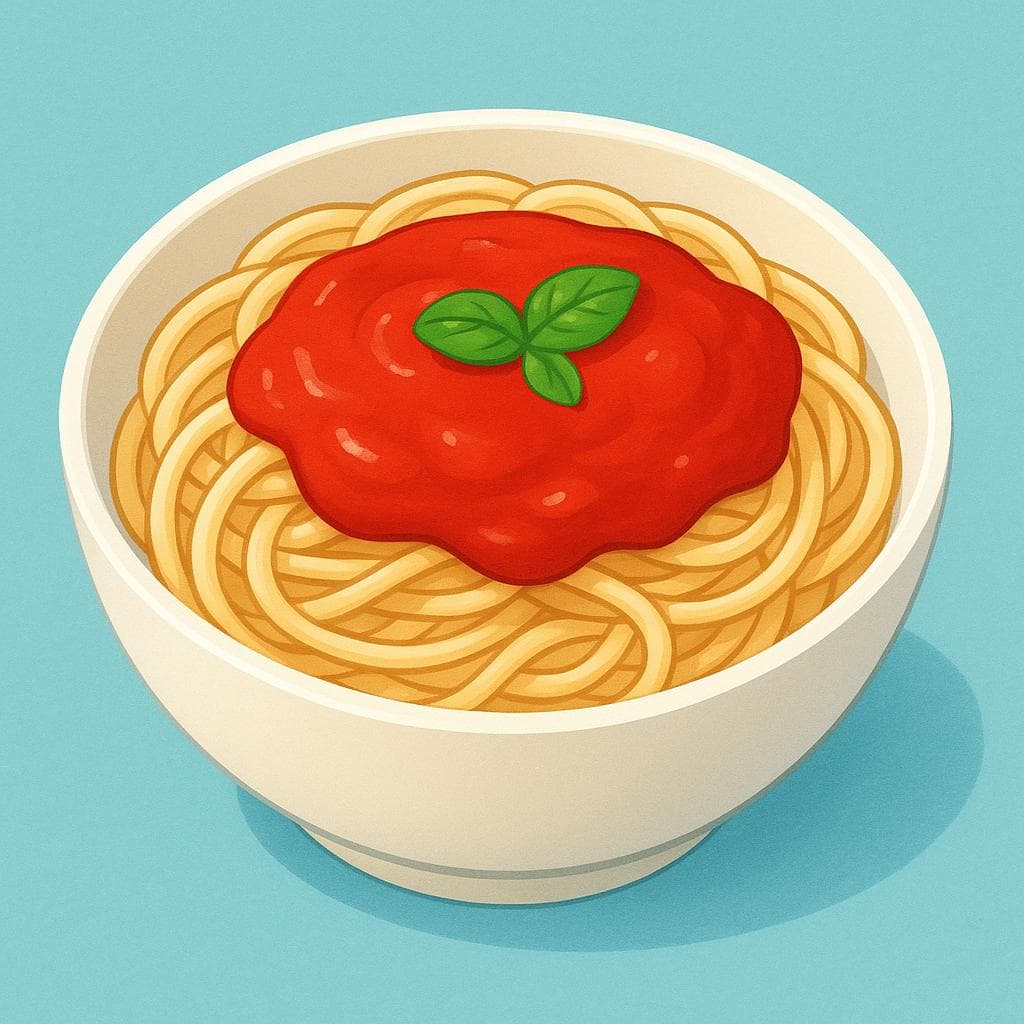



pastaAlso: noodles
📝 In Action
Para la cena, vamos a cocinar pasta con salsa de tomate.
A1For dinner, we are going to cook pasta with tomato sauce.
¿Prefieres la pasta larga o la corta?
A2Do you prefer long pasta or short pasta?
Word Connections
money, doughAlso: cash

📝 In Action
Necesito más pasta para comprar ese coche.
B1I need more dough (money) to buy that car.
¿Tienes suficiente pasta para pagar la cena?
B2Do you have enough cash to pay for dinner?
Word Connections
paste, doughAlso: pulp

📝 In Action
La receta dice que hay que amasar la pasta por diez minutos.
A2The recipe says that you have to knead the dough for ten minutes.
Usa esta pasta de dientes para cepillarte.
A1Use this toothpaste to brush your teeth.
Word Connections
cover, bindingAlso: hardback

📝 In Action
Este diccionario tiene una pasta muy dura y resistente.
B2This dictionary has a very hard and resistant cover.
El libro de texto está disponible en pasta blanda o dura.
C1The textbook is available in softcover or hardcover.
Word Connections
Translate to Spanish
✏️ Quick Practice
Quick Quiz: pasta
Question 1 of 2
Which sentence uses 'pasta' in its most common slang meaning?
📚 More Resources
👥 Word Family
📚 Etymology
The word 'pasta' comes from the Late Latin word 'pasta,' which originally meant 'dough' or 'paste.' This, in turn, came from an ancient Greek word referring to a thick porridge or dough. The meaning of 'money' (dough) is a modern slang extension of the original 'dough' meaning.
First recorded: 13th century (in Spanish)
Cognates (Related words)
💡 Master Spanish
Take your Spanish to the next level. Read 200+ illustrated and narrated Spanish stories tailored to your level with the Inklingo app!
Frequently Asked Questions
Is 'pasta' countable or uncountable when referring to the food?
Generally, it is uncountable, like 'rice' or 'water.' You would say 'mucha pasta' (a lot of pasta). However, when referring to individual cookies or pastries, it becomes plural: 'unas pastas'.
Can I use 'pasta' instead of 'dinero' everywhere?
No. 'Pasta' is informal slang for money and should only be used with friends or in very casual settings. Use 'dinero' (money) or 'plata' (silver/money, common in Latin America) in formal situations.