patán
“patán” means “jerk” in Spanish (A man who is rude or lacks manners.).
jerkAlso: boor, brute
📝 In Action
Ese patán no me pidió perdón después de empujarme.
B1That jerk didn't apologize after pushing me.
No seas patán y ayuda a tu abuela con las bolsas.
B1Don't be a jerk and help your grandmother with the bags.
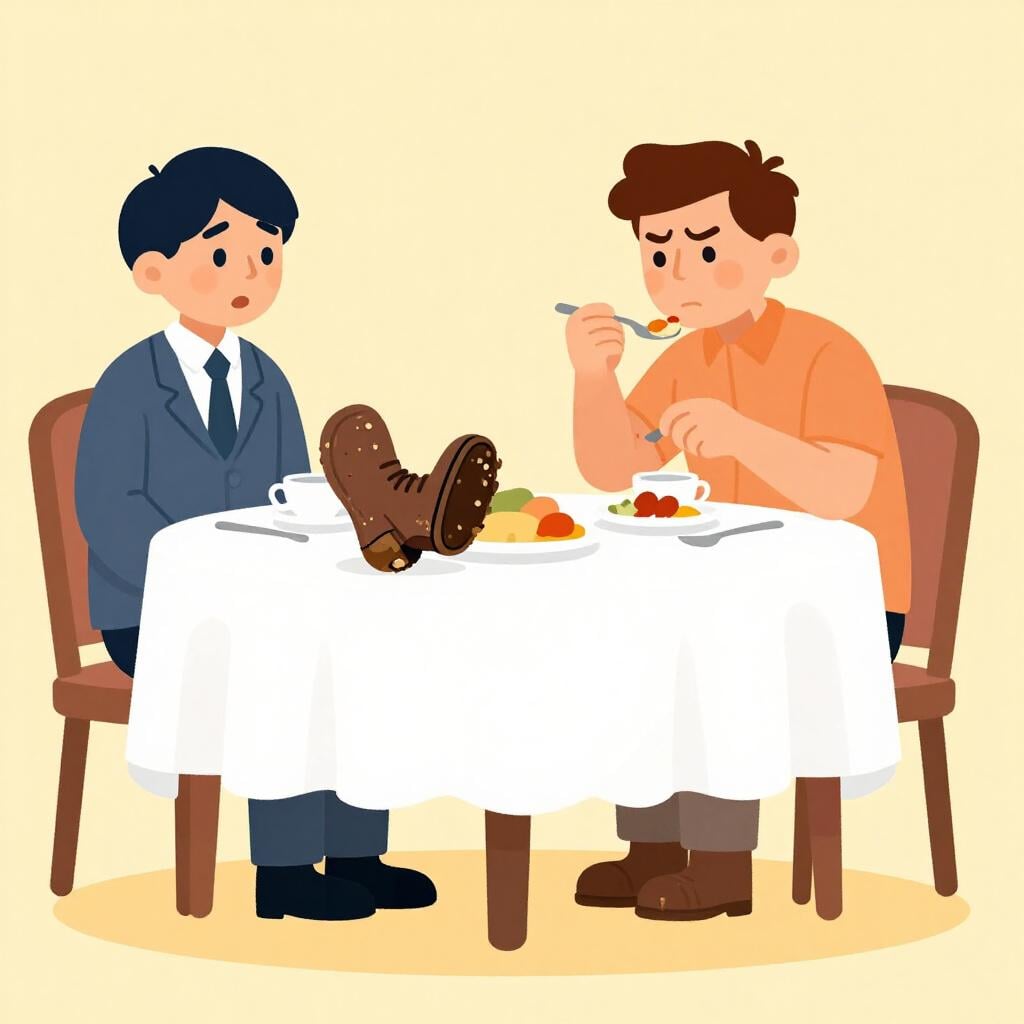
Su comportamiento en la cena fue el de un patán absoluto.
B2His behavior at the dinner was that of an absolute boor.
Word Connections
Translate to Spanish
Words that translate to "patán" in Spanish:
✏️ Quick Practice
Quick Quiz: patán
Question 1 of 3
Which of these people would most likely be called a 'patán'?
📚 More Resources
👥 Word Family
🎵 Rhymes
📚 Etymology
Derived from 'pata' (foot/paw). Originally, it referred to a rustic country person who walked clumsily or with 'big feet,' eventually evolving to describe someone with unrefined or rude manners.
First recorded: 16th century
Cognates (Related words)
💡 Master Spanish
Take your Spanish to the next level. Read 200+ illustrated and narrated Spanish stories tailored to your level with the Inklingo app!
Frequently Asked Questions
Is 'patán' a bad word?
It is an insult, but it's not considered vulgar slang (obscenity). You can say it in most social settings, though it is quite aggressive.
Can I use 'patán' for a woman?
Yes, you can use 'patana,' but it is much less common. Usually, for women, people prefer other words like 'grosera' or 'ordinaria.'
How do you pronounce the accent?
The accent is on the last syllable: pa-TAN. This is why it has a written accent mark on the 'á'.