Inklingo

quedes

/KAY-dehs/

you meet up

Two smiling friends waving hello to each other in a sunny park, illustrating a meeting.

When you arrange a social encounter, you might say "quedes," meaning 'you meet up.'

quedes(verb)

B1regular ar

you meet up

?

Arranging a social encounter

,

you arrange to see

?

Making plans

Also:

don't meet

?

Negative command (Imperative)

📝 In Action

Espero que no quedes con él tan tarde.

B1

I hope you don't meet up with him so late.

No quedes en la estación; es mejor el café.

A2

Don't meet at the station; the café is better.

Necesito que quedes con el jefe mañana.

B1

I need you to arrange a meeting with the boss tomorrow.

Word Connections

Synonyms

Common Collocations

  • quedar para cenarto arrange to meet for dinner
  • quedar a las ochoto arrange to meet at eight

💡 Grammar Points

The Special 'Tú' Form

"Quedes" is the form you use when talking to a friend (tú) about meeting up, but only when you are expressing a wish, doubt, command, or necessity (called the Subjunctive Mood).

Negative Commands

To tell a friend not to meet up, you use 'No quedes' (the Negative Imperative). This form is the same as the present subjunctive 'tú' form.

❌ Common Pitfalls

Mixing Moods

Mistake: "Quiero que tú quedas conmigo."

Correction: Quiero que tú quedes conmigo. (The verb after 'Quiero que' must change to the special form 'quedes'.)

⭐ Usage Tips

Always Intransitive

When talking about meeting up, quedar doesn't take a direct object. You always follow it with 'con' (with): 'Quedo con Juan' (I meet with Juan).

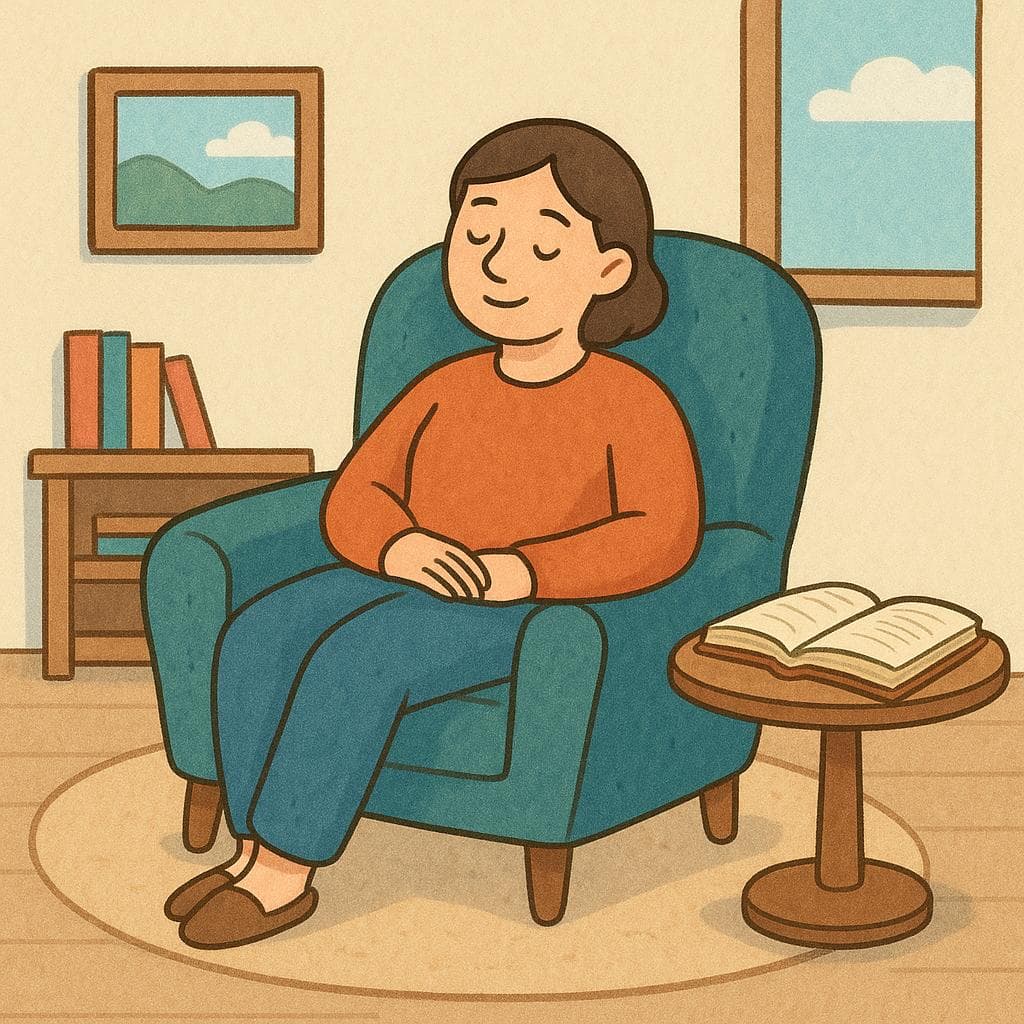
A person sitting relaxed in a cozy armchair next to a small table with a book, indicating they are choosing to remain or 'stay.'

If someone tells you "quedes," they are telling you 'you stay' or remain in a location.

quedes(verb)

A2pronominal ar

you stay

?

To remain in a place (from 'quedarse')

,

you are left

?

To remain, often when something is missing

Also:

don't stay

?

Negative command (Imperative)

📝 In Action

Dudo que te quedes en casa este fin de semana.

A2

I doubt that you will stay home this weekend.

No te quedes sin postre, es delicioso.

B1

Don't be left without dessert; it's delicious. (Literally: Don't stay without dessert.)

Quiero que te quedes con el cambio.

B1

I want you to keep the change. (Literally: I want you to stay with the change.)

Word Connections

Synonyms

Antonyms

Common Collocations

  • quedarse en silencioto remain silent

💡 Grammar Points

The 'Se' makes the difference

When quedar means 'to stay' or 'to keep something,' it becomes the reflexive verb quedarse. 'Quedes' is used here, but the 'te' must be added: 'te quedes' (you stay).

Subjunctive Trigger

Just like the 'meeting' meaning, 'quedes' is used when expressing doubt, emotion, or desire about someone staying: 'Es mejor que te quedes' (It is better that you stay).

❌ Common Pitfalls

Omitting the Pronoun

Mistake: "No quedes en la habitación."

Correction: No te quedes en la habitación. (When meaning 'to stay,' the reflexive pronoun 'te' is essential.)

⭐ Usage Tips

Keeping vs. Staying

To tell someone to keep something, use the pattern 'quedarse con algo': 'Quiero que te quedes con este libro' (I want you to keep this book).

🔄 Conjugations

indicative

present

él/ella/ustedqueda
yoquedo
quedas
ellos/ellas/ustedesquedan
nosotrosquedamos
vosotrosquedáis

imperfect

él/ella/ustedquedaba
yoquedaba
quedabas
ellos/ellas/ustedesquedaban
nosotrosquedábamos
vosotrosquedabais

preterite

él/ella/ustedquedó
yoquedé
quedaste
ellos/ellas/ustedesquedaron
nosotrosquedamos
vosotrosquedasteis

subjunctive

present

él/ella/ustedquede
yoquede
quedes
ellos/ellas/ustedesqueden
nosotrosquedemos
vosotrosquedéis

imperfect

él/ella/ustedquedara
yoquedara
quedaras
ellos/ellas/ustedesquedaran
nosotrosquedáramos
vosotrosquedarais

✏️ Quick Practice

💡 Quick Quiz: quedes

Question 1 of 2

Which sentence correctly uses 'quedes' to mean 'you stay'?

Frequently Asked Questions

Why does 'quedes' look like the Present Subjunctive?

'Quedes' is indeed the Present Subjunctive form for the 'tú' (you informal) pronoun. It is used after expressions of desire, doubt, or necessity (like 'Espero que...' or 'Necesito que...').

Is there a difference between 'quedar' and 'quedarse'?

Yes. 'Quedar' usually means 'to meet up,' 'to be located,' or 'to fit.' 'Quedarse' (with the 'se') means 'to stay in a place,' 'to remain,' or 'to keep something.' If you are using 'quedes' to mean 'you stay,' you must use 'te quedes'.