relojes
“relojes” means “watches” in Spanish (time-telling devices worn on the wrist).
watches, clocks
Also: meters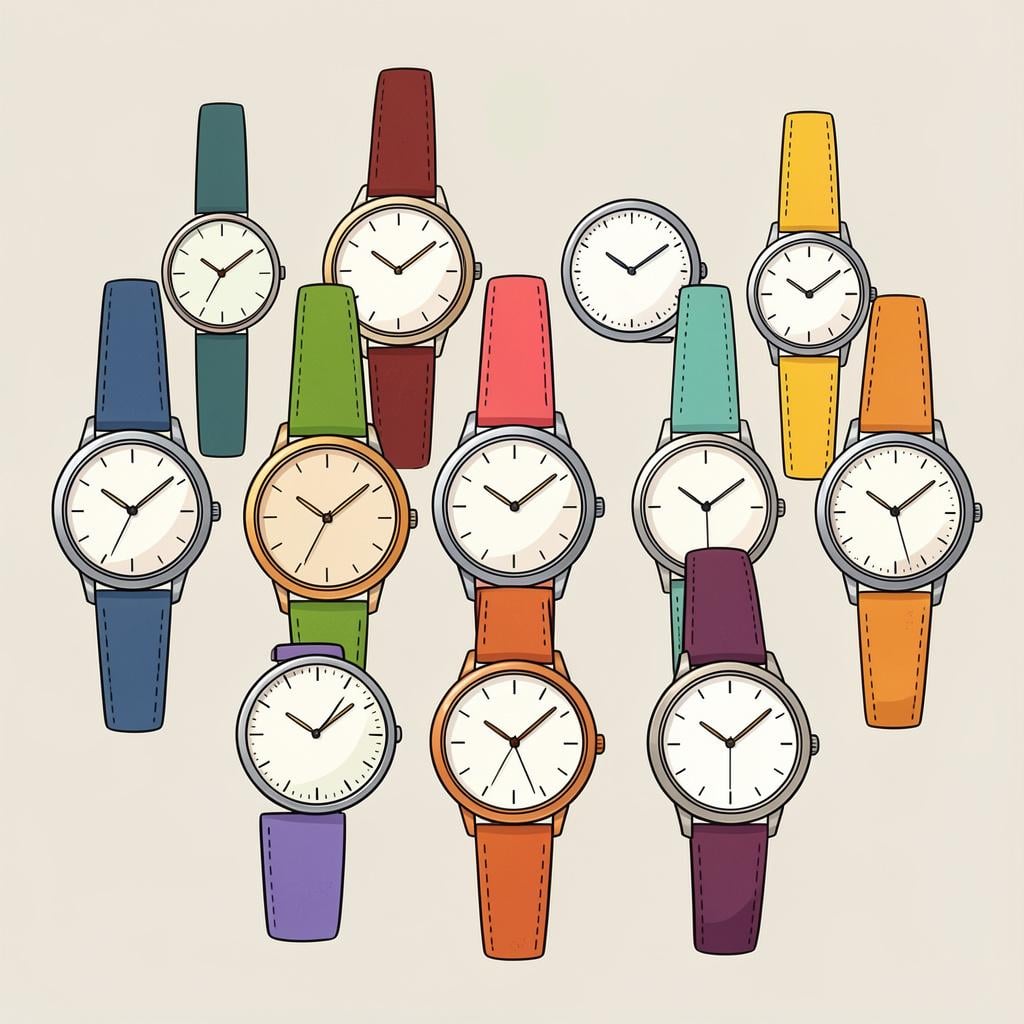
📝 In Action
Me encantan los relojes antiguos.
A1I love antique clocks.
Él tiene una colección de relojes suizos.
A2He has a collection of Swiss watches.
Los relojes de la torre suenan a las doce.
B1The tower clocks ring at twelve.
✏️ Quick Practice
Quick Quiz: relojes
Question 1 of 2
How do you say 'three watches' in Spanish?
📚 More Resources
👥 Word Family▼
🎵 Rhymes▼
📚 Etymology▼
From the Catalan word 'relotge', which comes from the Greek 'horologion', meaning 'something that tells the hour'.
First recorded: 14th century
Cognates (Related words)
💡 Master Spanish
Take your Spanish to the next level. Read 200+ illustrated and narrated Spanish stories tailored to your level with the Inklingo app!
Frequently Asked Questions
Is 'relojes' masculine or feminine?
It is masculine. You should say 'los relojes' or 'esos relojes'.
Why is there an 'e' in 'relojes' compared to 'reloj'?
In Spanish, words ending in 'j' or other consonants usually need '-es' to become plural so that the word is easier to pronounce.