silbato
“silbato” means “whistle” in Spanish (the physical instrument used to make a sound).
whistle
Also: referee's whistle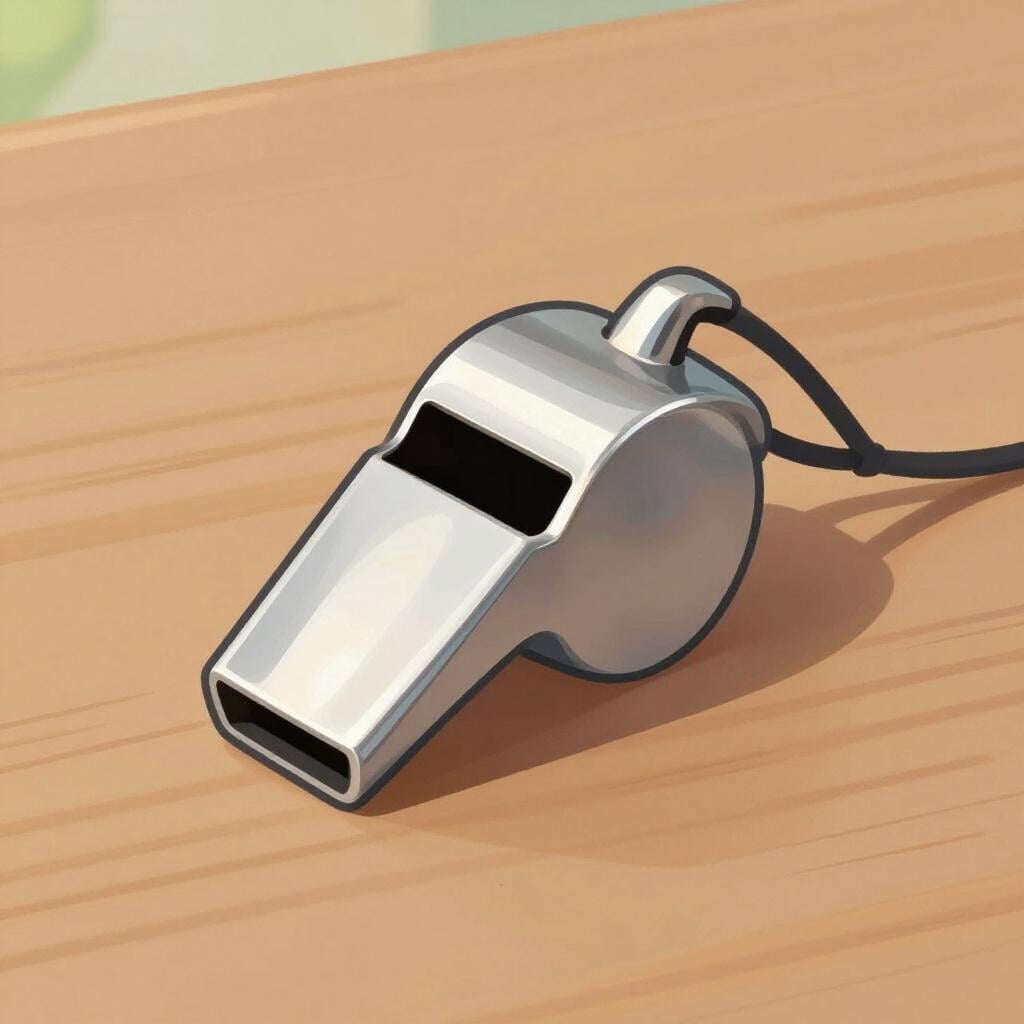
📝 In Action
El árbitro sopló su silbato para terminar el partido.
A2The referee blew his whistle to end the match.
Llevo un silbato en mi mochila por si me pierdo en la montaña.
B1I carry a whistle in my backpack in case I get lost in the mountains.
El sonido del silbato era muy agudo.
B1The sound of the whistle was very high-pitched.
Translate to Spanish
✏️ Quick Practice
Quick Quiz: silbato
Question 1 of 3
Which of these would most likely use a 'silbato'?
📚 More Resources
👥 Word Family▼
📚 Etymology▼
Derived from the Spanish verb 'silbar' (to whistle), which comes from the Latin 'sibilare', meaning to hiss or whistle.
First recorded: 16th century
Cognates (Related words)
💡 Master Spanish
Take your Spanish to the next level. Read 200+ illustrated and narrated Spanish stories tailored to your level with the Inklingo app!
Frequently Asked Questions
Is 'pito' the same as 'silbato'?
Yes, 'pito' is a very common synonym, especially in sports contexts like soccer. However, be careful, as 'pito' can be slang for other things in certain regions!
Can I use 'silbato' to describe the sound a bird makes?
No, for bird sounds or human whistling without an instrument, use 'silbido' or 'canto'.
How do I say 'train whistle'?
You can say 'el silbato del tren' or 'el silbato de vapor' (steam whistle).