áfrica
“áfrica” means “Africa” in Spanish (The continent).
Africa
Also: African continent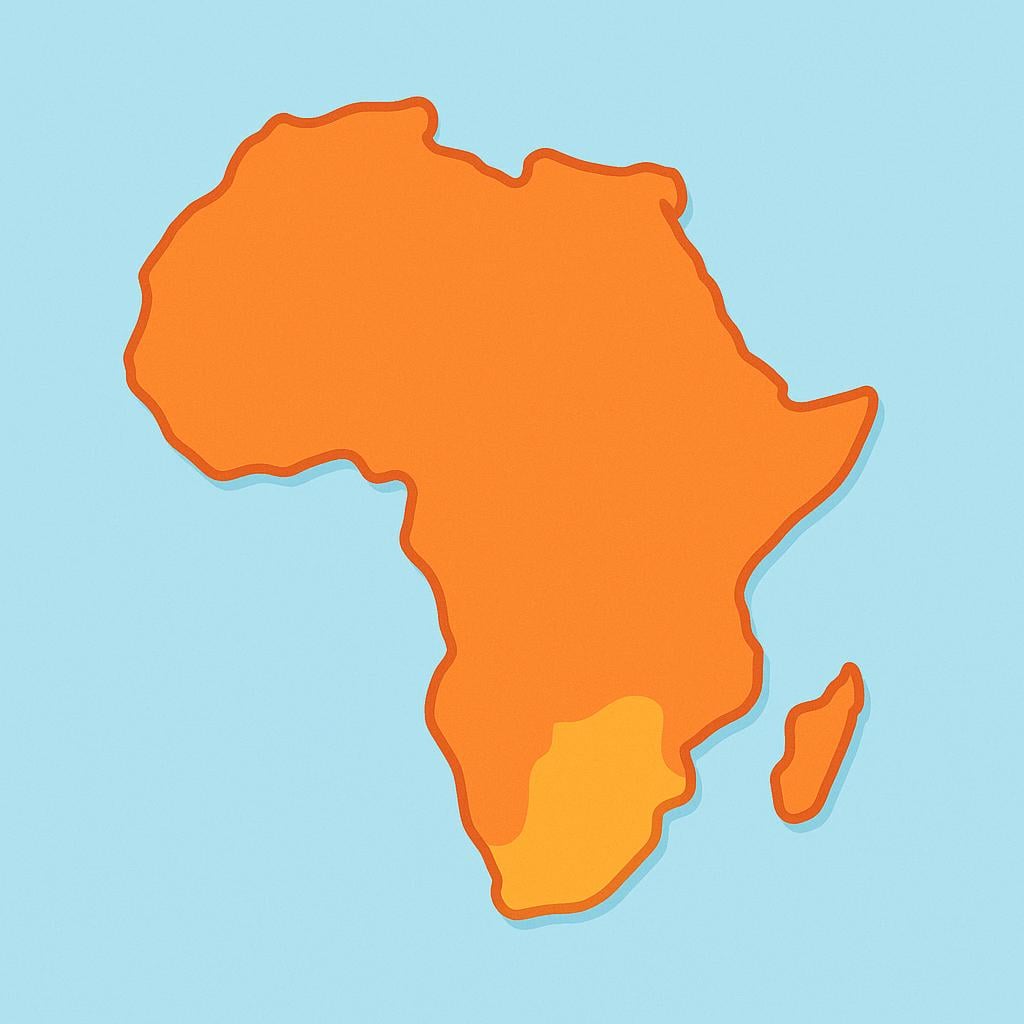
📝 In Action
Mi familia quiere viajar a África el próximo año.
A1My family wants to travel to Africa next year.
África es el segundo continente más grande del mundo.
A2Africa is the second largest continent in the world.
Estudiamos la historia de las civilizaciones antiguas de África.
B1We are studying the history of ancient civilizations in Africa.
Vocabulary Collections
Translate to Spanish
✏️ Quick Practice
Quick Quiz: áfrica
Question 1 of 1
Which sentence correctly uses the Spanish word for the continent?
📚 More Resources
👥 Word Family▼
🎵 Rhymes▼
📚 Etymology▼
The name comes from the Latin word *Africa*, which was originally used by the Romans to refer only to the region around Carthage (modern-day Tunisia). It is believed to have derived from the name of the local 'Afri' people.
First recorded: Used in Latin texts dating back to the 2nd century BCE, adopted into Spanish during the Middle Ages.
Cognates (Related words)
💡 Master Spanish
Take your Spanish to the next level. Read 200+ illustrated and narrated Spanish stories tailored to your level with the Inklingo app!
Frequently Asked Questions
Does 'África' require an article (like 'el' or 'la')?
Generally, no. When talking about travel or location, you usually just say 'a África' (to Africa) or 'en África' (in Africa). You only use 'la' if you are directly modifying the name with an adjective, like 'la moderna África'.