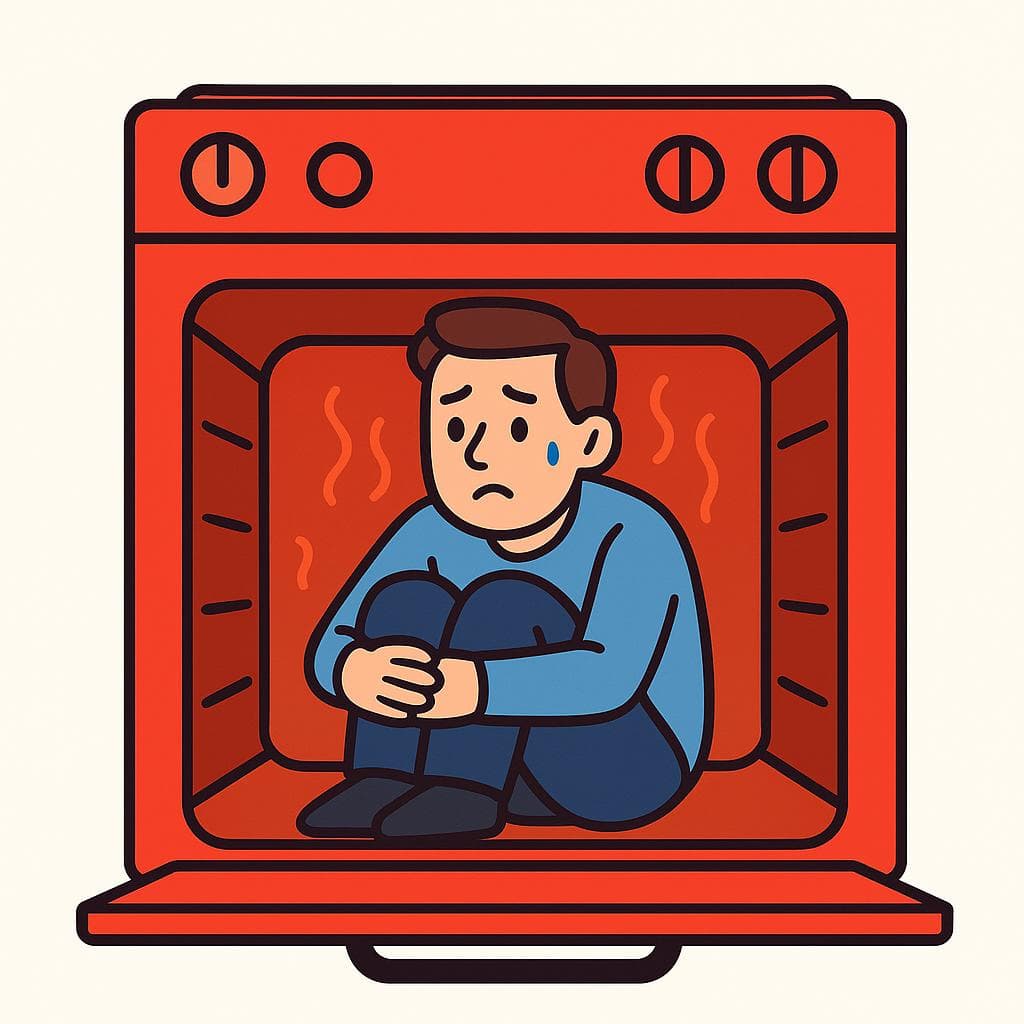


Estar al horno
/es-TAR al OR-noh/
To be in a very difficult, hopeless situation with no easy way out.
💡 Understanding the Idiom
🎨 Literal vs. Figurative

Literally, this means 'to be in the oven'.

In reality, it means you're in a hopeless situation, like facing an exam you didn't study for.
Key Words in This Idiom:
📝 In Action
Si no entrego este informe para mañana, estoy al horno.
B2If I don't turn in this report by tomorrow, I'm toast.
Perdimos el último tren y no tenemos dinero para un taxi. ¡Estamos al horno!
B2We missed the last train and have no money for a taxi. We're screwed!
Con esa lesión, el jugador está al horno para la final del campeonato.
C1With that injury, the player's chances for the championship final are toast.
📜 Origin Story
This idiom paints a very clear picture! Imagine a piece of food in an oven. It's trapped, the heat is on, and its fate is sealed—it's going to be cooked. The expression borrows this powerful image to describe a person in a situation with no escape, where a negative outcome is all but guaranteed. It's especially popular in Argentina, where it's a cornerstone of everyday slang.
⭐ Usage Tips
For Hopeless Situations
Use 'estar al horno' when you're in serious trouble and see no easy way out. It’s perfect for big problems like failing a class, missing a flight, or getting caught in a lie. It conveys a sense of finality and doom.
Add Potatoes for Emphasis
In Argentina, you'll often hear the extended version: 'Estar al horno con papas' ('To be in the oven with potatoes'). Adding 'con papas' makes it even more dramatic and humorous, like saying you're not just cooked, you're a full meal.
❌ Common Pitfalls
Not for Minor Inconveniences
Mistake: "Using it for a small, fixable problem, like 'No encuentro mis llaves, estoy al horno'."
Correction: This phrase is for major jams. For a minor issue like losing keys, you'd sound overly dramatic. A better choice would be '¡Qué lío!' (What a mess!) or 'No encuentro mis llaves por ningún lado' (I can't find my keys anywhere).
🌎 Where It's Used
Argentina
Extremely common and iconic. It's a hallmark of Rioplatense Spanish. The variation 'estar al horno con papas' is also very popular here.
Uruguay & Chile
Widely used and understood, largely due to cultural proximity to Argentina.
Spain
Not common. A Spanish speaker would likely understand it from context but would almost always use 'estar frito' (to be fried) or 'estar en un aprieto' (to be in a tight spot) instead.
🔗 Related Idioms
✏️ Quick Practice
💡 Quick Quiz: Estar al horno
Question 1 of 1
Your friend forgot to study for a huge final exam that's in five minutes. Which phrase best describes his situation?
🏷️ Tags
Frequently Asked Questions
Is 'estar al horno' a rude or vulgar expression?
No, it's not considered vulgar. It's very informal and colloquial, so you'd use it with friends, family, and people you know well. You probably wouldn't say it in a formal business presentation, but it's perfectly fine in everyday conversation.
Can I say 'Estoy en el horno' instead of 'Estoy al horno'?
While people would understand you, the fixed expression is 'estar al horno'. The 'al' is a contraction of 'a + el'. Using 'al horno' is the standard and most natural way to say it, so it's best to stick with that to sound like a native.

