


Inklingo

Poner toda la carne en el asador

/poh-NAIR TOH-dah lah CAR-neh ehn el ah-sah-DOR/

To go all out, give something your maximum effort, or risk everything for a single objective.

Level:B2Register:InformalCommon:★★★★

💡 Understanding the Idiom

Literal Translation:
"To put all the meat on the grill."
What It Really Means:
To go all out, give something your maximum effort, or risk everything for a single objective.
English Equivalents:
To go all outTo give it one's allTo pull out all the stopsTo put all your eggs in one basket

🎨 Literal vs. Figurative

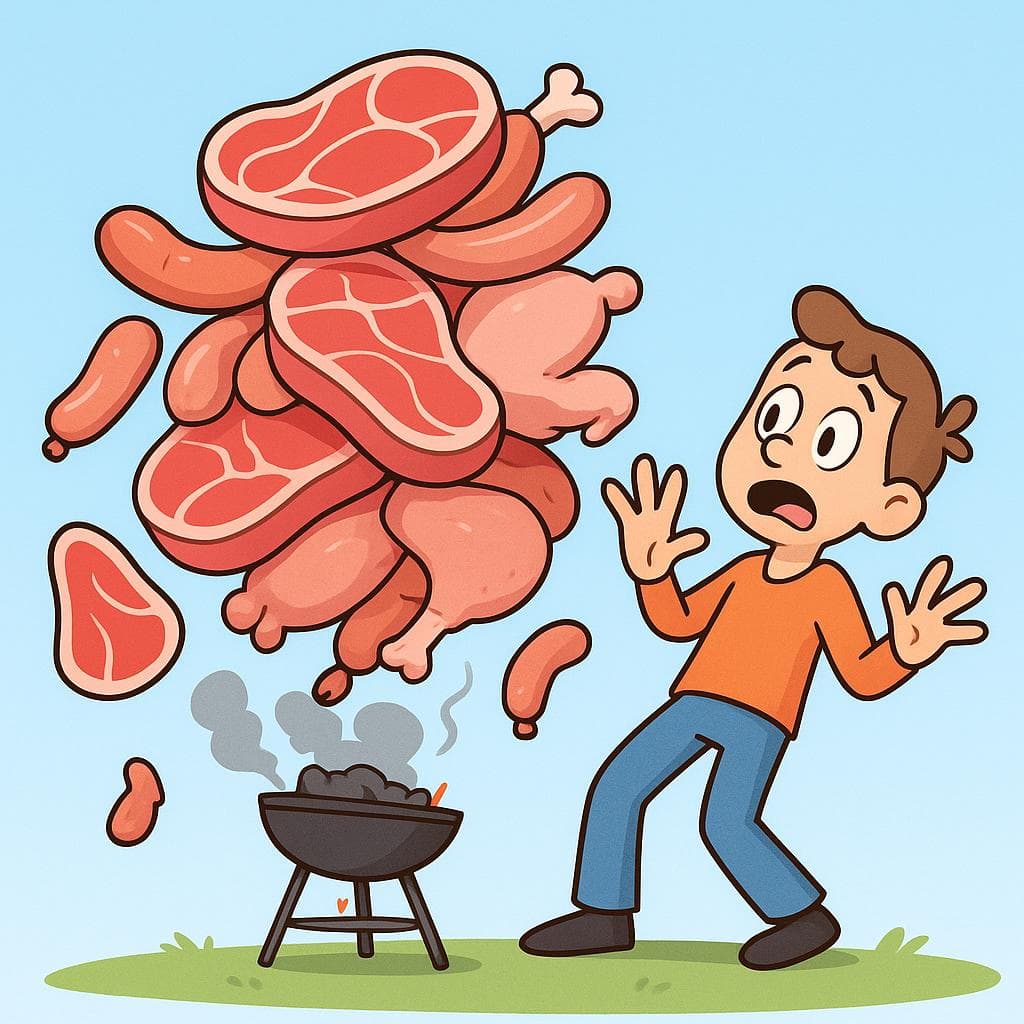
💭 Literal
A literal, humorous depiction of 'poner toda la carne en el asador', showing a person piling a huge mountain of meat onto a tiny barbecue grill.

Literally, this means 'to put all the meat on the grill'.

✨ Figurative
The actual meaning of 'poner toda la carne en el asador', showing an athlete giving their maximum effort to win a race.

In practice, it means to give your maximum effort to achieve a goal.

Key Words in This Idiom:

📝 In Action

Para este examen final, voy a poner toda la carne en el asador y estudiar día y noche.

B2

For this final exam, I'm going to go all out and study day and night.

El equipo puso toda la carne en el asador en el último minuto, pero no fue suficiente para ganar.

B2

The team gave it their all in the last minute, but it wasn't enough to win.

Invirtió todos sus ahorros en el nuevo negocio; realmente puso toda la carne en el asador.

C1

He invested all his savings in the new business; he really put all his eggs in one basket.

📜 Origin Story

This expression comes from the very practical world of barbecues. Imagine you're hosting a big cookout. You could cook the meat in batches to be safe. But if you decide to 'put all the meat on the grill' at once, you're committing all your resources to this single, big effort. You're holding nothing back, hoping for a great feast. It perfectly captures the idea of risking everything you have on one big attempt to achieve the best possible result.

⭐ Usage Tips

For High-Stakes Situations

This idiom is perfect for describing times when you're giving maximum effort because the outcome is very important. Think final exams, championship games, or launching a new business.

It Implies Risk

Part of the meaning is that you're committing everything you have. Just like putting all your meat on the grill at once—if it starts to rain, you could lose it all! The phrase highlights both total commitment and significant risk.

❌ Common Pitfalls

Not for Minor Efforts

Mistake: "Using it for small, everyday tasks, like 'Puse toda la carne en el asador para limpiar mi cuarto.' (I went all out to clean my room.)"

Correction: This sounds like a funny exaggeration. Reserve this phrase for significant, high-effort, or high-risk situations to give it the proper weight. For smaller tasks, you could say 'me esforcé mucho' (I tried really hard).

🌎 Where It's Used

🇪🇸

Spain

Extremely common and widely used in all contexts, from sports to business to personal life.

🌎

Latin America

Understood in many countries, particularly in the Southern Cone (like Argentina), but other expressions like 'echarle todas las ganas' (Mexico) or 'jugársela toda' might be more common depending on the region.

🔗 Related Idioms

↔️ Similar Meanings

echar el resto

To give it all you've got left.

jugárselo todo a una carta

To risk it all on one card; a close equivalent to 'put all your eggs in one basket'.

Opposite Meanings

reservar fuerzas

To save one's strength, to hold back.

ir sobre seguro

To play it safe.

✏️ Quick Practice

💡 Quick Quiz: Poner toda la carne en el asador

Question 1 of 1

If an entrepreneur 'pone toda la carne en el asador' for their new company, what are they doing?

🏷️ Tags

Food & DrinkPersistenceCommonly UsedSpain

Frequently Asked Questions

Can I use this idiom when talking about cooking?

You could, but it would likely be understood as a joke! If you say 'Voy a poner toda la carne en el asador' while standing at a grill, people will probably laugh, understanding the double meaning. In a serious cooking context, you would just say 'Voy a poner toda la carne en la parrilla'.

Is this phrase more positive (about effort) or negative (about risk)?

It's generally positive, emphasizing dedication and maximum effort. It's often used to admire someone's commitment. While it does imply risk, the focus is usually on the admirable level of effort being applied.