How to Say "chime" in Spanish
The most common Spanish word for “chime” is “campana” — use 'campana' when referring to the physical bell itself or the sound it produces, like a church bell.

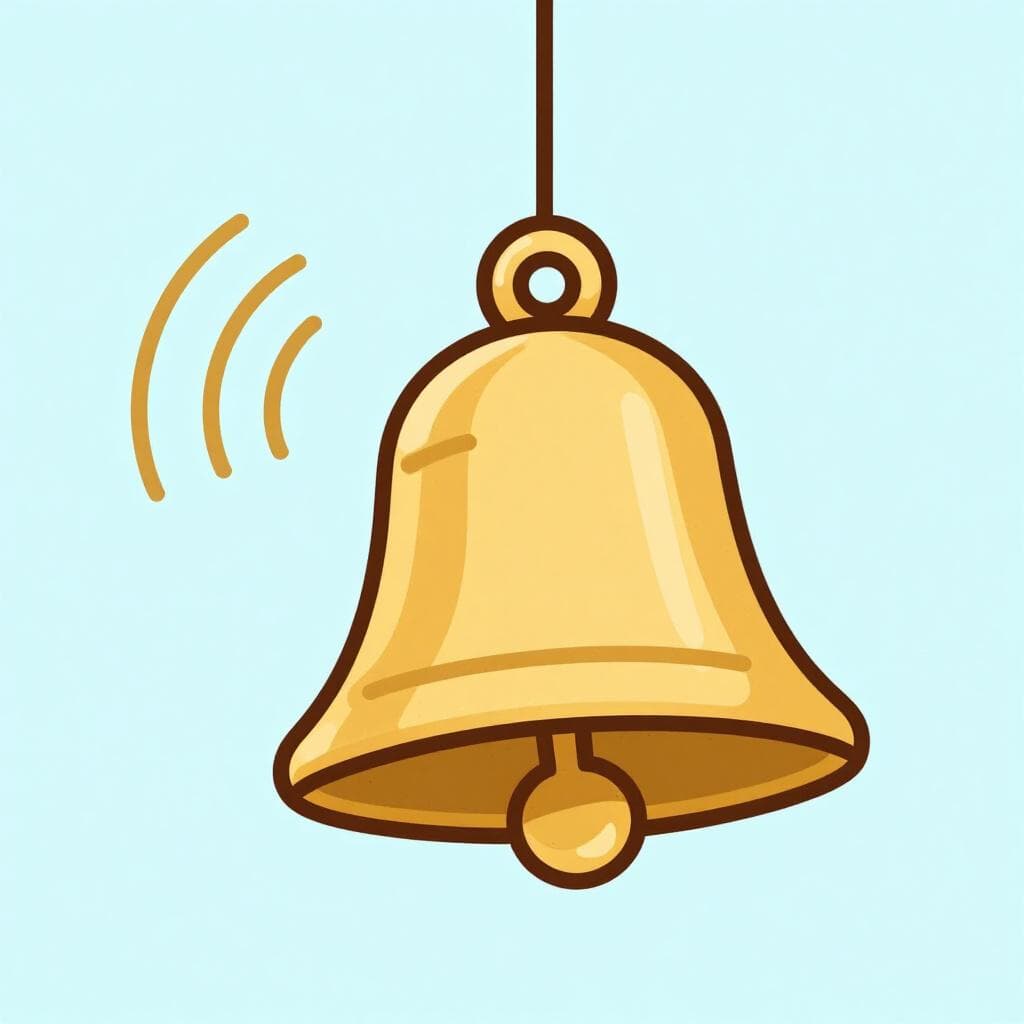
campana
kahm-PAH-nahkamˈpana

Examples
La campana de la iglesia suena cada hora.
The church bell rings every hour.
El carillón está hecho de muchas campanas pequeñas.
The carillon is made of many small bells.
Feminine Noun
Since 'campana' ends in -a, it is feminine. You must use 'la' (the) or 'una' (a) before it.
Confusing Size
Mistake: “Using 'campana' for a tiny bell on a desk.”
Correction: Use 'campanilla' for small, hand-held bells or desk bells. 'Campana' usually implies a larger, fixed bell.
sonó
Examples
El teléfono sonó justo cuando salía de casa.
The phone rang just as I was leaving the house.
toque
TOH-kehˈto.ke
Examples
A las doce sonó el toque de campanas que anunciaba la misa.
At twelve, the chime of the bells rang out announcing the mass.
El toque de trompeta indicó el fin del desfile.
The trumpet signal indicated the end of the parade.
Signal Noun
When used for signals, 'toque' refers to the specific pattern or type of sound (a repeated action of 'touching' the bell/instrument), not just the general noise.
Verb vs. Noun for Bell Sounds
Learn Spanish with Inklingo
Interactive stories, personalized learning, and more.