How to Say "claw" in Spanish
The most common Spanish word for “claw” is “garra” — use 'garra' for the sharp nails of animals like cats, dogs, or birds of prey.
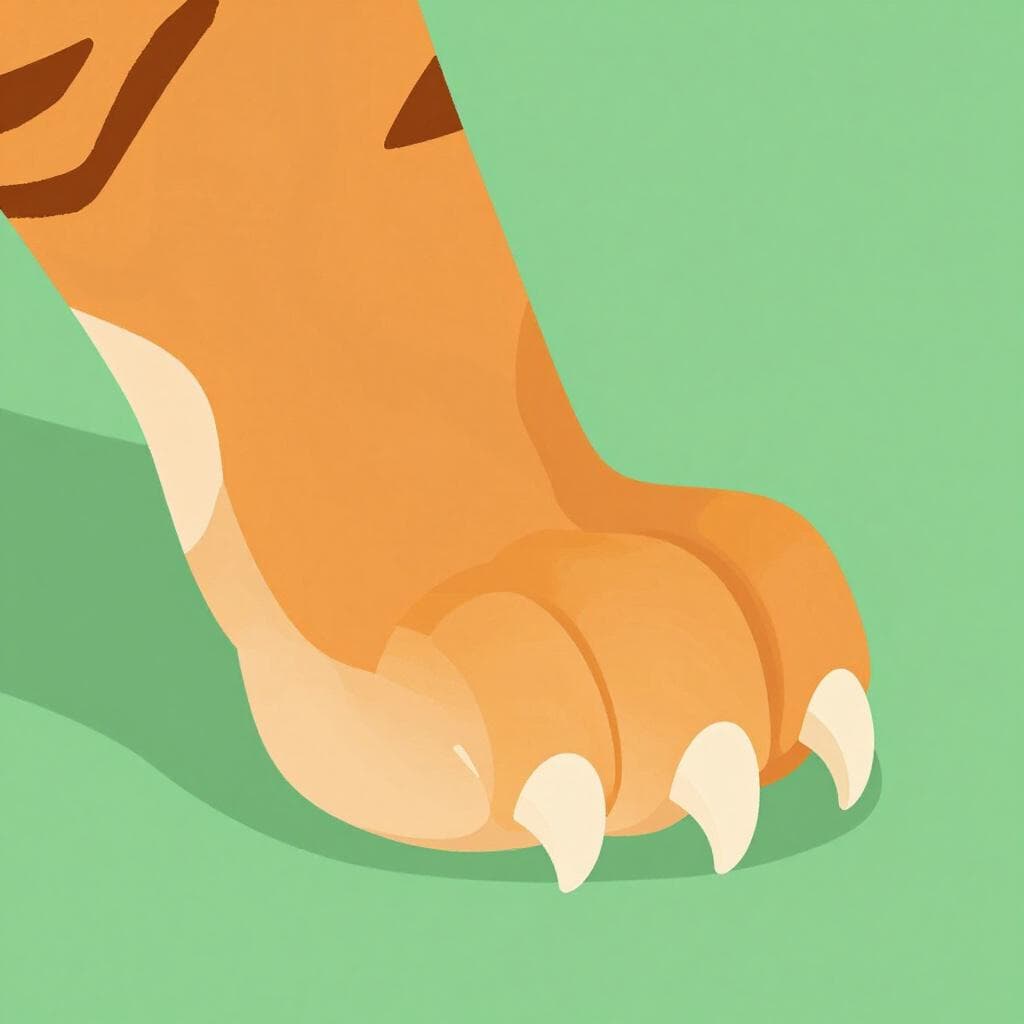

garra
GAH-rrahˈɡara

Examples
El águila agarró a su presa con sus garras afiladas.
The eagle grabbed its prey with its sharp claws.
El gato sacó sus garras cuando vio al perro.
The cat took out its claws when it saw the dog.
El águila atrapó al pez con sus garras.
The eagle caught the fish with its talons.
Ten cuidado, ese oso tiene garras muy grandes.
Be careful, that bear has very big claws.
Always Feminine
Even though 'garra' ends in 'a', it's always feminine. Use 'la garra' or 'las garras' regardless of the animal's gender.
Garra vs. Uña
Mistake: “Using 'uña' for a lion.”
Correction: Use 'garra' for animals with sharp, predatory nails. 'Uña' is usually for humans or flat-nailed animals.
pinza
PEEN-sahˈpinθa

Examples
Ten cuidado de no acercarte demasiado a la langosta, ¡su pinza es muy fuerte!
Be careful not to get too close to the lobster, its claw is very strong!
El cangrejo me dio un pellizco con su pinza.
The crab gave me a pinch with its claw.
Esta falda necesita una pinza en la cintura para que siente mejor.
This skirt needs a dart at the waist so it fits better.
Ten cuidado con las pinzas del bogavante.
Be careful with the lobster's claws.
Animal parts
In Spanish, the sharp 'pincher' part of a crustacean is a 'pinza', while the foot of a bird or cat is a 'garra'.
Garra vs. Pinza
Learn Spanish with Inklingo
Interactive stories, personalized learning, and more.