How to Say "move!" in Spanish
The most common Spanish word for “move!” is “muévete” — use this direct, informal command when telling one person (tú) to start moving or to get going.


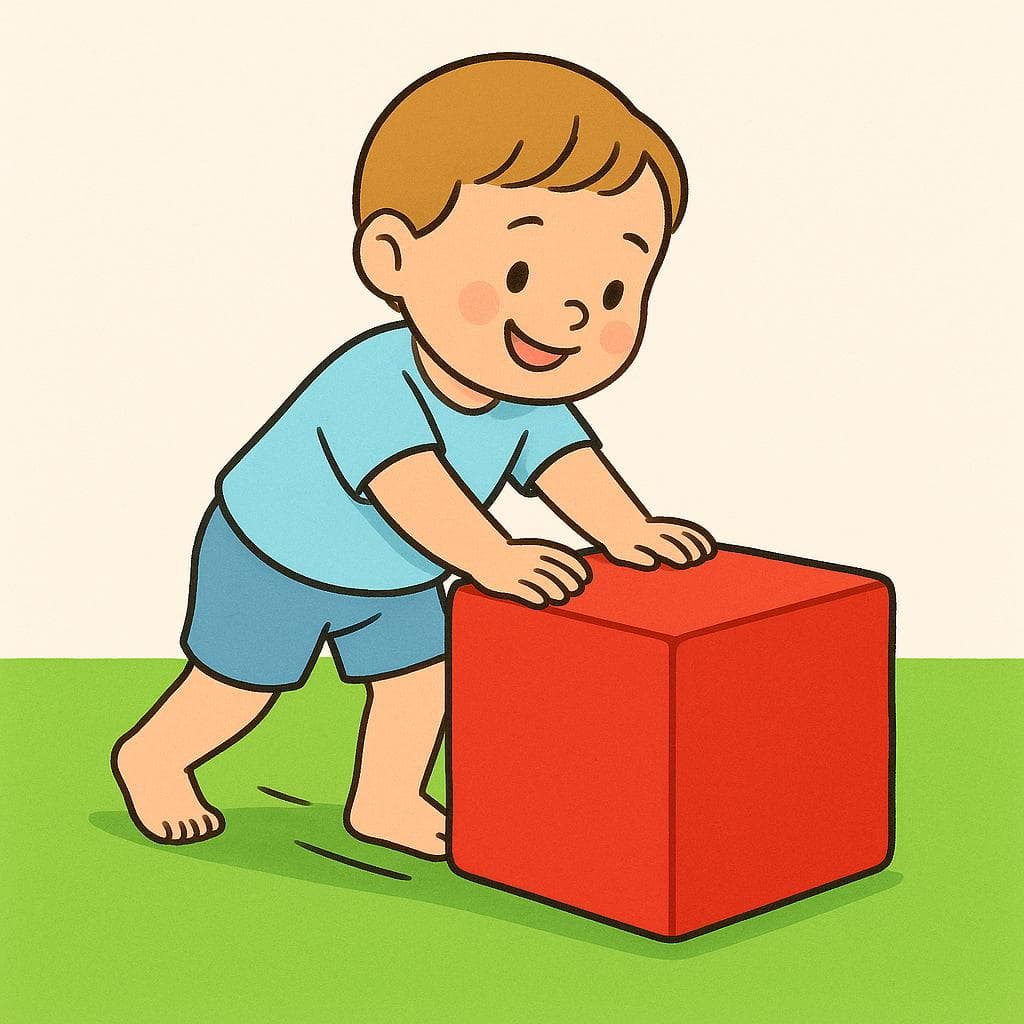


muévete
MWEH-veh-teh'mwe.βe.te

Examples
¡Muévete! La película está a punto de empezar.
Move! The movie is about to start.
Por favor, muévete un poco para que yo pueda pasar.
Please, move a little so I can pass.
El entrenador gritó: «¡Muévete al balón, no esperes!»
The coach yelled: "Move towards the ball, don't wait!"
Command Form Structure
This word is a command addressed to 'tú' (you, informal). The small word 'te' is attached to the end of the verb 'mueve' because you are telling the person to move themselves (it's a reflexive action).
The Accent Mark
When you attach a pronoun (like 'te') to a command, you often need to add an accent mark ('é') to keep the original stress of the verb ('mueve' to 'muévete'). This is essential for correct pronunciation.
Forgetting the 'te'
Mistake: “Using only '¡Mueve!'”
Correction: Use '¡Muévete!' when telling a person to move their own body. 'Mueve' alone usually means 'Move [an object].'
Separating the Pronoun
Mistake: “Saying 'Te mueve'”
Correction: In affirmative commands, the pronoun 'te' must always stick to the end of the verb: 'Muévete.' (The separate form 'Te mueve' means 'He/She moves you.')
muévanse
mweh-vahn-sehmweˈβanse

Examples
¡Muévanse, por favor! Están bloqueando la salida.
Move, please! You are blocking the exit.
Si no se apuran, muévanse al frente de la fila.
If you don't hurry up, move to the front of the line.
El director gritó: '¡Muévanse! Tenemos que terminar esto hoy.'
The director shouted: 'Get moving! We have to finish this today.'
Affirmative Commands and Pronouns
When giving a direct, positive command like this, the little word 'se' (the reflexive pronoun) is always attached to the end of the verb. This makes the word longer.
The Necessary Accent
Because 'se' is added, the original stress of the verb moves back one syllable. The accent mark (é) is added to make sure the stress stays on the 'mue' part: muÉ-van-se.
Who is 'ustedes'?
This command is used when you are telling two or more people to move. It is the plural equivalent of 'muévase' (tell one person to move).
Forgetting the Accent
Mistake: “Muevanse”
Correction: Muévanse. Without the accent, the stress shifts to the 'van' syllable, which sounds incorrect and confuses the listener.
Using the Wrong Pronoun
Mistake: “Muevanlos (when telling people to move themselves)”
Correction: Muévanse. Since the action is performed by the people on themselves (they move *themselves*), you must use the reflexive pronoun 'se'.
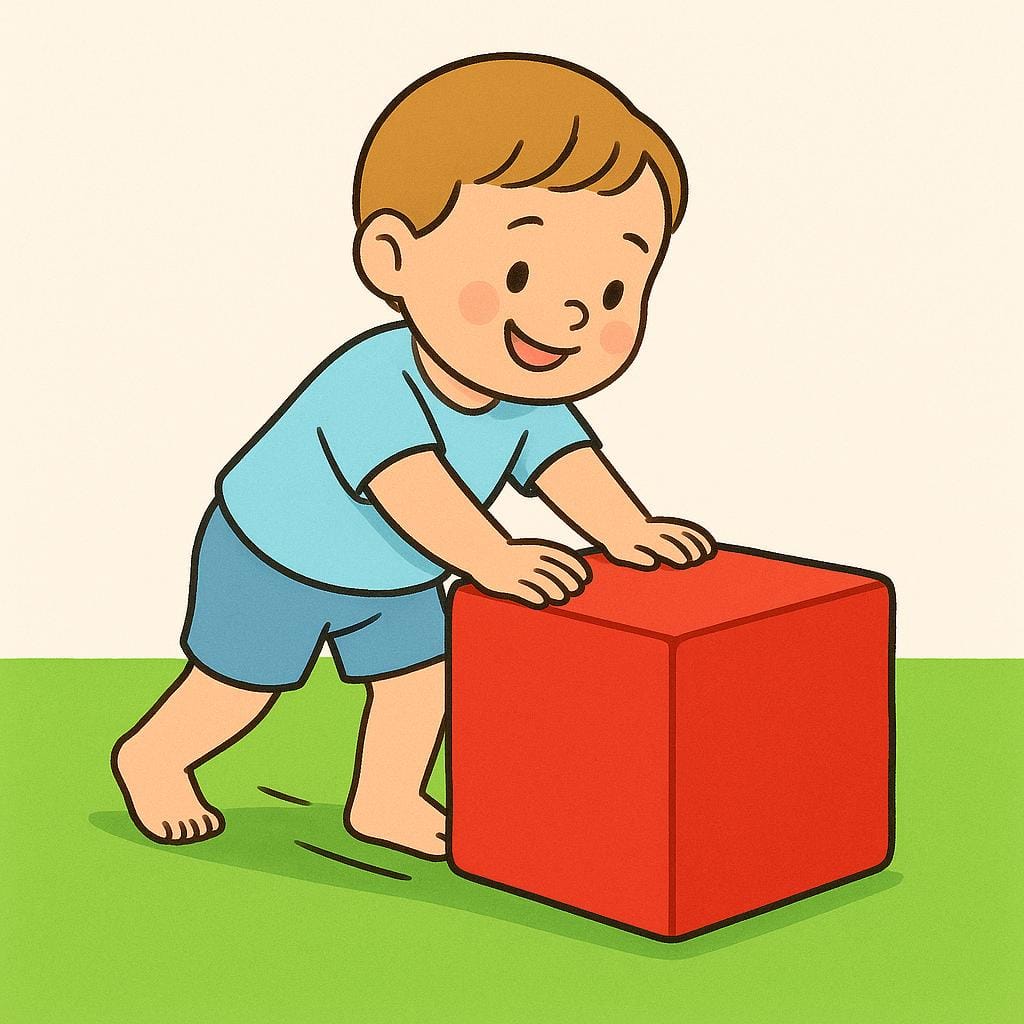
mueve
MOO-eh-veh'mwe.βe
Examples
Mi hermano siempre mueve los muebles de sitio.
My brother always moves the furniture around.
Ella mueve la cabeza para decir que no.
She moves her head to say no.
¡Mueve esa caja, por favor! Está en el camino.
Move that box, please! It's in the way.
The 'O to UE' Change
In the present tenses, the 'o' in the middle of the verb changes to 'ue' (mOve > mUEve). This change happens everywhere EXCEPT the 'nosotros' and 'vosotros' forms.
Forgetting the Stem Change
Mistake: “Él mova la mesa.”
Correction: Él mueve la mesa. (Remember that 'o' changes to 'ue' in this form.)
aparta
ah-PAR-tahaˈpaɾta

Examples
Ella aparta las cortinas para que entre el sol.
She moves the curtains aside so the sun can come in.
¡Aparta! No puedo ver la televisión.
Move! I can't see the TV.
Él siempre aparta un poco de dinero para sus viajes.
He always sets aside a bit of money for his trips.
Two-in-One Word
The word 'aparta' can be a statement ('He moves it') or a command ('Move!'). Use context to tell which is which.
Moving Yourself vs. Moving Things
Use 'aparta' when moving an object. If you want someone to move their body, you'll often hear 'apártate' (move yourself).
Don't confuse with 'aparte'
Mistake: “Using 'aparta' for everything.”
Correction: Use 'aparta' for current actions or commands. Use 'aparte' (ending in e) when talking about possibilities or wishes.
quítate
KEE-tah-tehˈki.ta.te

Examples
¡Quítate de la puerta, por favor!
Get away from the door, please!
Quítate esa gorra; no se permiten sombreros aquí.
Take that cap off; hats are not allowed here.
El coche viene rápido. ¡Quítate!
The car is coming fast. Move!
Command + Pronoun Rule
'Quítate' is a command made of two pieces: 'Quita' (the informal command to remove/take away) and 'te' (the pronoun 'yourself'). When you give a positive command, the pronoun always sticks to the end of the verb.
Adding an Accent Mark
When you attach a pronoun to the command form, you often have to add an accent mark (tílde) to keep the stress on the original syllable. The stress falls on the 'í' in 'quítate'.
Incorrect Pronoun Placement
Mistake: “Te quita.”
Correction: Quítate. The pronoun 'te' must attach to the end of the positive command. 'Te quita' means 'He/She removes you.'
Using the Formal Command
Mistake: “Quítase.”
Correction: Quítese. 'Quítate' is only for 'tú' (informal you). If you need to be formal or address an authority figure, you must use 'Quítese'.
Informal vs. Specific Action
Related Translations
Learn Spanish with Inklingo
Interactive stories, personalized learning, and more.