How to Say "pail" in Spanish
The most common Spanish word for “pail” is “balde” — use 'balde' when referring to a container specifically designed for carrying or holding liquids, like water or sand for play.

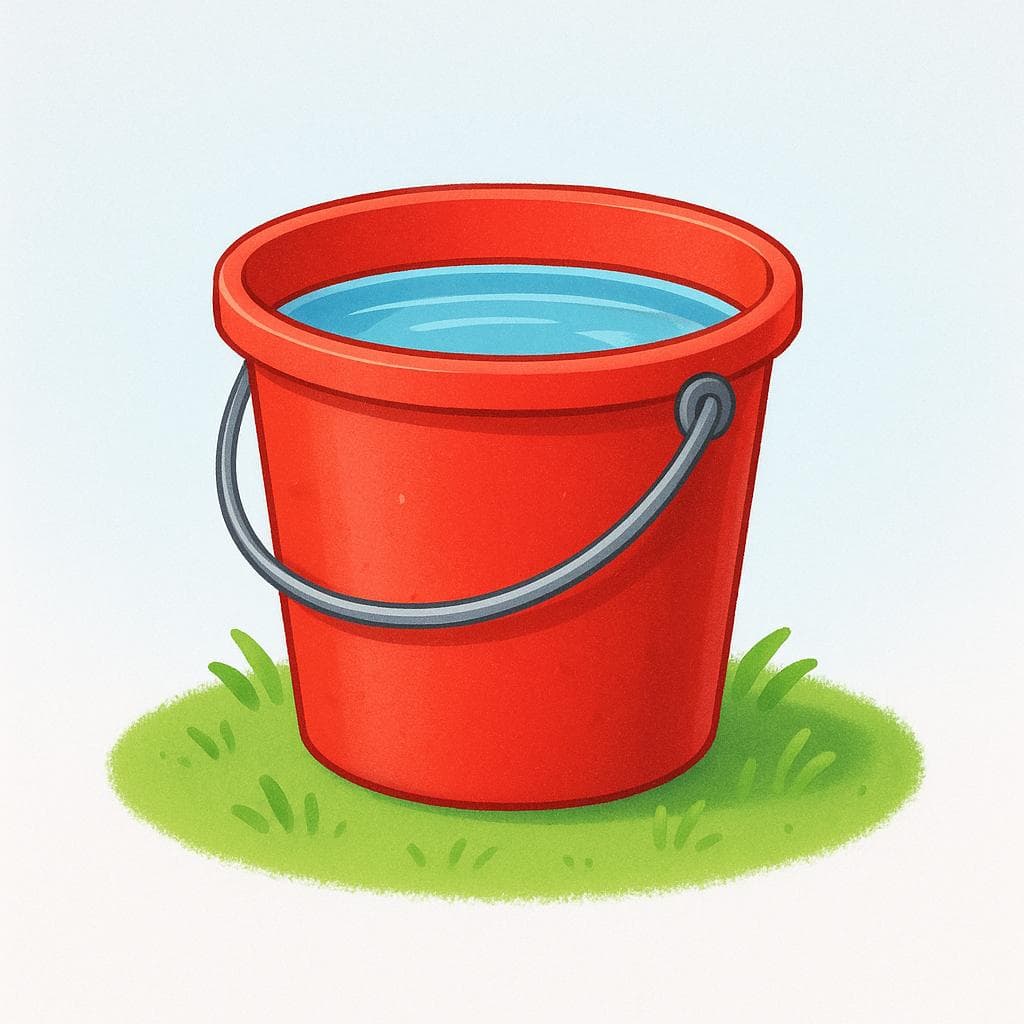
balde
BAHL-dehˈbalde

Examples
El niño lleva un balde azul para recoger arena en la playa.
The boy is carrying a blue bucket to collect sand at the beach.
Todo mi esfuerzo fue en balde; no logré convencerlo.
All my effort was in vain; I didn't manage to convince him.
En esta tienda, si compras dos camisas, la tercera te sale de balde.
In this store, if you buy two shirts, the third one is for free.
Bucket vs. Free vs. Vain
When 'balde' stands alone, it's a bucket. But when you add 'de' or 'en' before it, the meaning changes completely to 'for free' or 'in vain'.
The 'De' and 'En' rule
To say something is free, use 'de balde'. To say something was a waste of time, use 'en balde'. These phrases never change their ending, even if the thing you are talking about is plural.
Using 'balde' alone for 'free'
Mistake: “La entrada es balde.”
Correction: La entrada es de balde (or 'gratis'). You must use 'de' to give it the meaning of 'free of charge'.
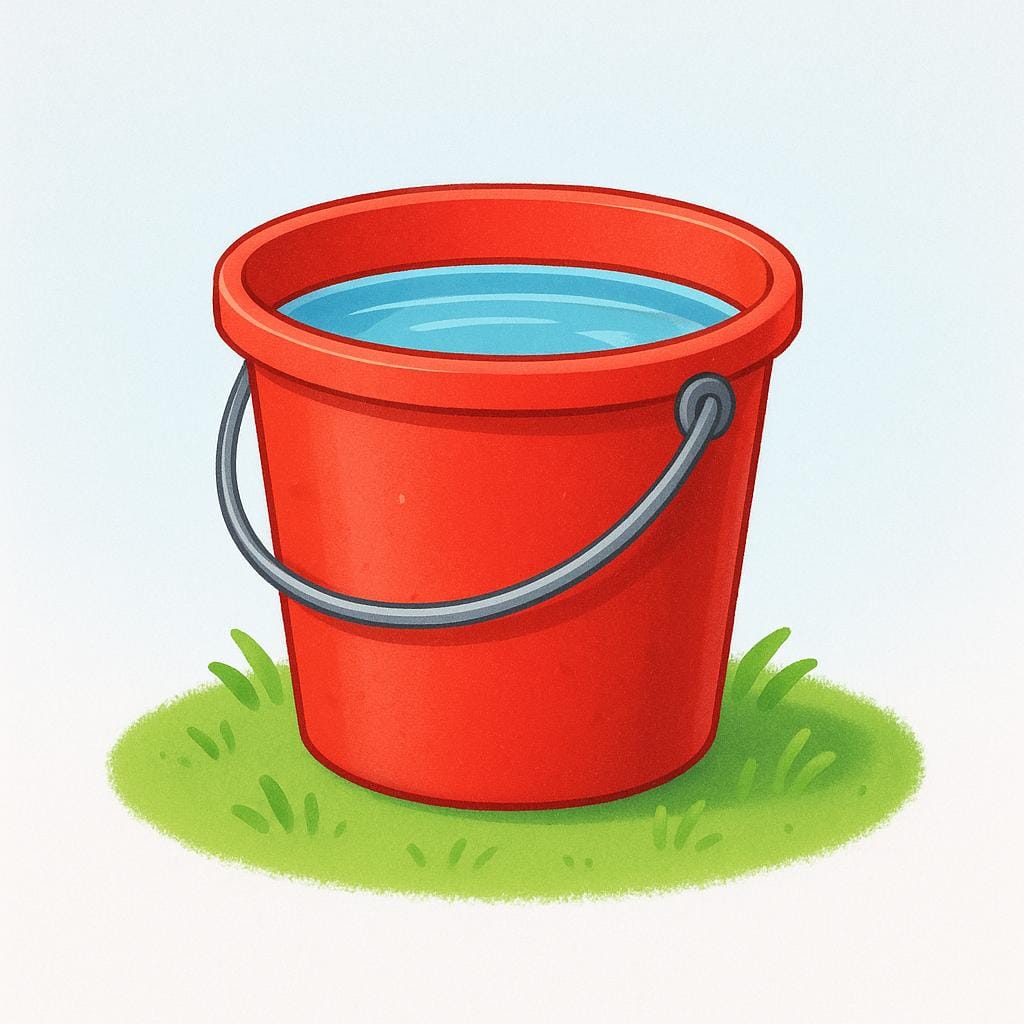
cubo
koo-boˈku.βo
Examples
Por favor, saca el cubo de basura, está lleno.
Please take out the trash bin, it is full.
Necesito un cubo de agua para limpiar el suelo.
I need a bucket of water to clean the floor.
Los niños hicieron castillos de arena con sus cubos en la playa.
The children made sandcastles with their pails at the beach.
Masculine Noun
Remember that 'cubo' is a masculine word, so you must use masculine articles and adjectives with it (e.g., 'el cubo', 'un cubo grande').
Confusing 'cubo' and 'caja'
Mistake: “Using 'caja' when referring to a bucket/pail.”
Correction: 'Caja' means 'box.' Use 'cubo' or 'balde' for the container used for water or trash.
Balde vs. Cubo
Learn Spanish with Inklingo
Interactive stories, personalized learning, and more.