How to Say "to them" in Spanish
The most common Spanish word for “to them” is “les” — use 'les' when 'to them' functions as the indirect object of a verb and is not immediately followed by a direct object pronoun like 'lo', 'la', 'los', or 'las'.

les
lessles

Examples
Les doy el dinero.
I give the money to them.
Ella quiere comprarles un regalo.
She wants to buy a gift for them.
Señores, ¿les traigo algo de beber?
Gentlemen, can I bring you all something to drink?
Who is it for?
'Les' is a tiny word that does a big job. It answers the question "to whom?" or "for whom?" when you're talking about a group of people ('them' or 'you all').
Where does it go?
Usually, 'les' comes right before the action word (the verb). For example, 'Les compro' (I buy for them). It can also hook onto the end of a verb that's in its original '-ar', '-er', or '-ir' form, like 'comprarles'.
The 'les' to 'se' magic trick
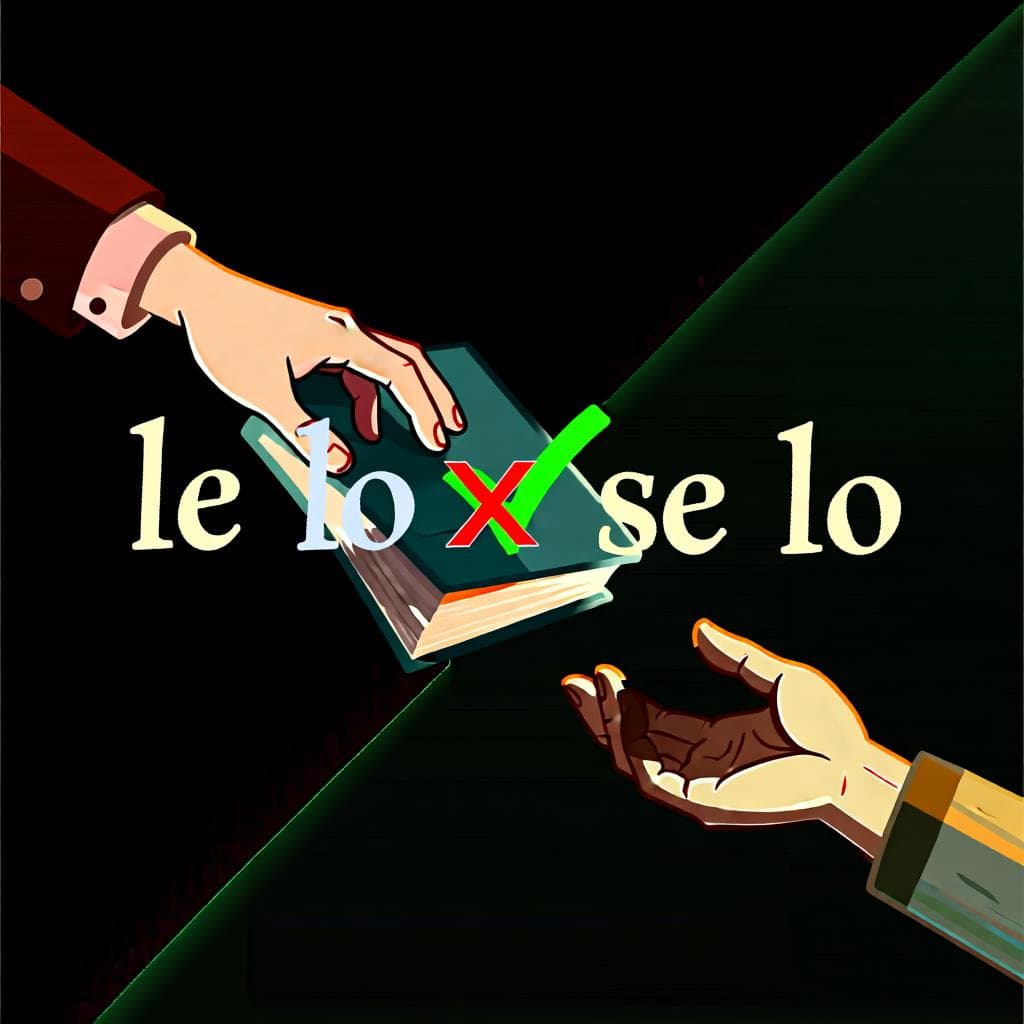
Mistake: “Quiero darles lo. (I want to give it to them.)”
Correction: Quiero dárselo. To avoid the clunky 'les lo' sound, Spanish changes 'les' to 'se' whenever it's followed by 'lo', 'la', 'los', or 'las'. It's a sound rule, but 'se' here still means 'to them'!
Mixing up 'les' and 'los'
Mistake: “Yo los doy un libro. (I give them a book.)”
Correction: Yo les doy un libro. Use 'les' for the person *receiving* the book. Use 'los' for the people or things *being seen, known, or wanted* directly (e.g., 'Yo los veo' - I see them).
se
sehse
Examples
Les di el libro a ellos. -> Se lo di.
I gave the book to them. -> I gave it to them.
Le di el libro a Juan. -> Se lo di.
I gave the book to Juan. -> I gave it to him.
Les compré flores a mis padres. -> Se las compré.
I bought flowers for my parents. -> I bought them for them.
¿Le escribiste la carta a ella? —Sí, se la escribí anoche.
Did you write the letter to her? —Yes, I wrote it to her last night.
The 'Double L' Rule Fixer
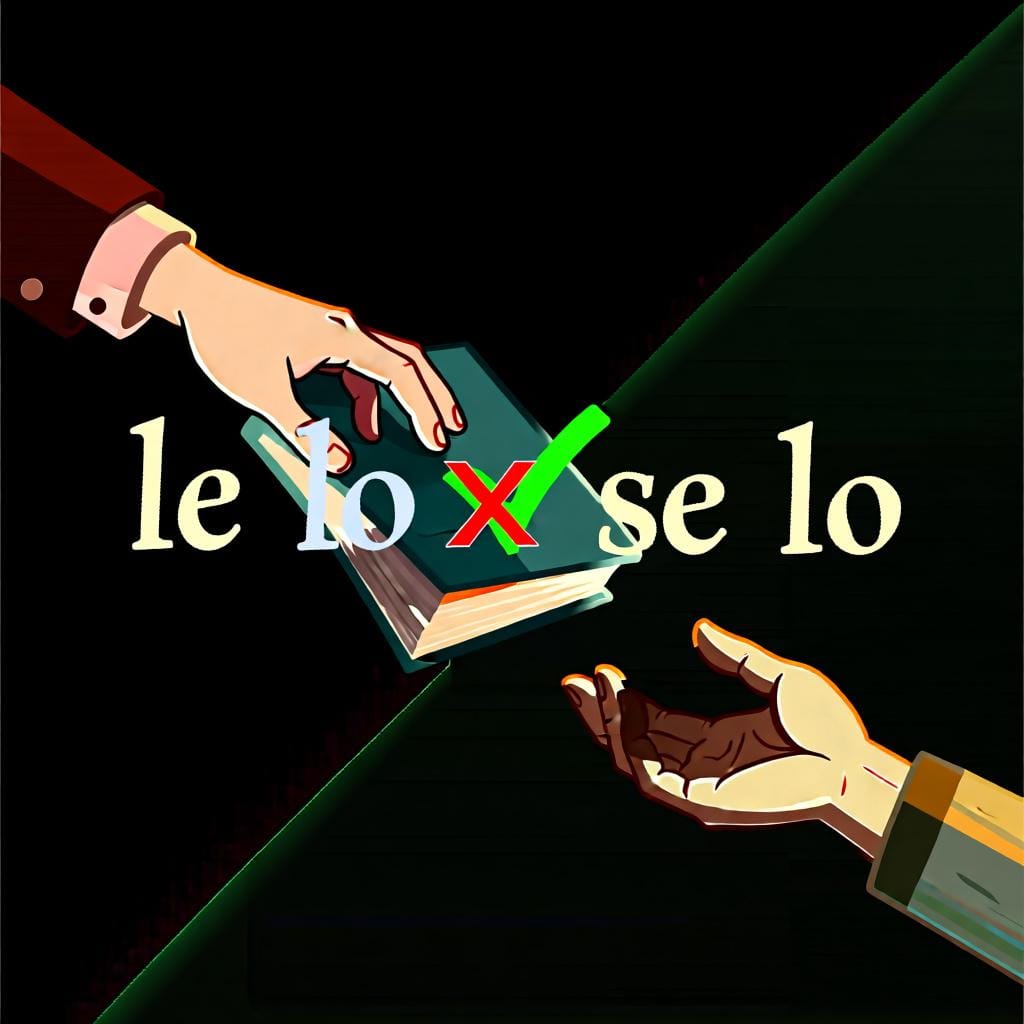
Spanish doesn't like the sound of 'le lo' or 'les la'. To fix this, 'le' and 'les' automatically change to 'se' when they come before 'lo', 'la', 'los', or 'las'.
Saying 'Le Lo'
Mistake: “Yo le lo doy a mi hermano.”
Correction: Yo se lo doy a mi hermano. (I give it to my brother.) Always remember to change 'le' to 'se' in this situation. It's a rule that never changes.
Confusing 'les' and 'se'
Learn Spanish with Inklingo
Interactive stories, personalized learning, and more.