
Afuera vs Fuera
Use `afuera` for movement outward. Use `fuera` for location outside.
afuera
Outside (often implying movement toward the outside)
ah-FWEH-rahfuera
Outside (often implying a static location)
FWEH-rahQuick Rule
Use `afuera` for movement outward. Use `fuera` for location outside.
Think: `A`fuera has an `A` for `A`ction or moving `A`way. `Fuera` is for a `F`ixed location.
- In many regions, especially in Latin America, they are used interchangeably. `Fuera` is more versatile and can often replace `afuera`.
Comparison Table
| Context | afuera | fuera | Why? |
|---|---|---|---|
| Action vs. State | Lleva la silla afuera. | La silla está fuera. | `Afuera` emphasizes the action of moving it out. `Fuera` describes its current location. |
| Commands | Sal afuera, por favor. | ¡Fuera! | `Afuera` is a neutral direction ('go outdoors'). `Fuera` can be a sharp command ('get out!'). |
| Relative Location | La vida afuera es cara. (Less common) | La vida fuera de la ciudad es cara. | To say 'outside of' something specific, the standard phrase is `fuera de`. |
| Regional Preference | ¿Comemos afuera hoy? (Latin America) | ¿Comemos fuera hoy? (Spain) | For 'eating out', `afuera` is very common in Latin America, while `fuera` is standard in Spain. |
When to Use "afuera / fuera"
afuera
Outside (often implying movement toward the outside)
ah-FWEH-rah
Direction of movement (outward)
Vamos afuera a tomar aire.
Let's go outside to get some air.
Referring to 'outdoors'
Los niños están jugando afuera.
The kids are playing outside.
Telling someone to take something out
Por favor, saca la basura afuera.
Please, take the trash outside.
fuera
Outside (often implying a static location)
FWEH-rah
Static location
Dejé mis zapatos fuera.
I left my shoes outside.
Figurative 'out'
Tu comentario está fuera de lugar.
Your comment is out of line.
As a command ('Get out!')
¡Fuera de aquí ahora mismo!
Get out of here right now!
With 'de' to mean 'outside of'
Hay una farmacia fuera del hotel.
There is a pharmacy outside of the hotel.
Contrast Examples
With "afuera":
Cenamos afuera esta noche.
We're dining outside (outdoors/al fresco) tonight.
With "fuera":
Cenamos fuera esta noche.
We're eating out (at a restaurant) tonight.
The Difference: This is a key regional difference. In many places, `afuera` means 'outdoors', while `fuera` means 'out of the house' (e.g., at a restaurant). However, in Spain `fuera` covers both meanings.
With "afuera":
Te espero afuera.
I'll wait for you outside. (Implies you should come out.)
With "fuera":
Él está fuera.
He is out. (He's not here/at home.)
The Difference: `Afuera` specifically means outdoors, right outside the building. `Fuera` can be more general, simply meaning 'not in' or 'away'.
Common Mistakes
Estoy afuera de la tienda.
Estoy fuera de la tienda.
When specifying 'outside of' a place, the most correct and common phrase is 'fuera de'. While you might hear 'afuera de', it's better to stick with 'fuera de'.
El perro duerme en la casa afuera.
El perro duerme fuera de la casa.
`Afuera` and `fuera` are adverbs, they tell you *where* an action happens. To say 'outside of the house', use the phrase 'fuera de la casa'.
Quick Practice
Quick Quiz: Afuera vs Fuera
Question 1 of 2
Which sentence means 'The cat is outside the house'?
Related Grammar
Want to understand the grammar behind this pair? Explore these lessons for a deep dive:
Key Words



Tags
Build the instinct, not just the rule
Rules help you get it right; context makes it automatic. Read 200+ illustrated and narrated Spanish stories to see confusing pairs chosen correctly — over and over — until you stop thinking about it.
Frequently Asked Questions
Is it ever wrong to use 'fuera' instead of 'afuera'?
Almost never. 'Fuera' is the more versatile and classic term. In Spain, 'fuera' is used for almost everything. In Latin America, where 'afuera' is very common, using 'fuera' would still be perfectly understood. When in doubt, 'fuera' is a safe bet.
What about 'adentro' and 'dentro'?
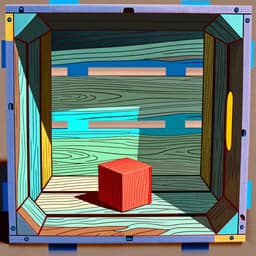
They follow a very similar logic! 'Adentro' often implies movement inward ('Vamos adentro' - Let's go inside), while 'dentro' refers to a static location inside ('El libro está dentro de la caja' - The book is inside the box). Just like with 'fuera de', the correct phrase is 'dentro de'.