
Arriba vs Encima
Arriba = general direction 'up'. Encima = 'on top of' a specific surface.
arriba
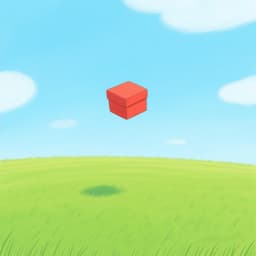
Up, above, upstairs. Refers to a higher position or direction, generally not touching something else.
ah-RREE-bahencima
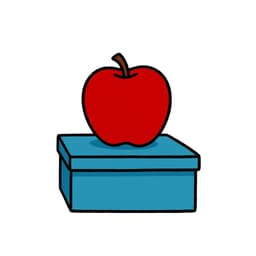
On, on top of, over. Usually implies direct physical contact or being directly aligned over something.
en-SEE-mahQuick Rule
Arriba = general direction 'up'. Encima = 'on top of' a specific surface.
Think: Arriba = Arrow pointing up. Encima = Cima (peak/top) of a mountain you're standing on.
- In some regions, 'arriba de' is used like 'encima de', but 'encima' is more universally understood for direct contact.
Comparison Table
| Context | arriba | encima | Why? |
|---|---|---|---|
| Object Placement | El cuadro está más arriba. | El libro está encima de la caja. | Arriba is a general higher position. Encima specifies it's resting on a surface. |
| Relative Position | El pájaro vuela arriba. | El nido está encima del árbol. | Arriba means 'up in the air'. Encima means 'on the very top of the tree'. |
| Apartment Floors | Vivo en el piso de arriba. | Mi apartamento está encima del tuyo. | Arriba is a general 'upstairs'. Encima implies direct vertical alignment. |
| Figurative Meaning | ¡Arriba ese ánimo! | Y encima, ¡empezó a llover! | Arriba is used for encouragement ('up!'). Encima is used to add another fact, usually a negative one ('on top of that!'). |
When to Use "arriba / encima"
arriba
Up, above, upstairs. Refers to a higher position or direction, generally not touching something else.
ah-RREE-bah
General direction 'up'
Mira arriba, ¡un pájaro!
Look up, a bird!
Higher position (not touching)
El avión vuela muy arriba.
The plane flies very high up.
Upstairs
Mi habitación está arriba.
My room is upstairs.
In a text (above)
Como vimos en el gráfico de arriba...
As we saw in the chart above...
encima
On, on top of, over. Usually implies direct physical contact or being directly aligned over something.
en-SEE-mah
On a surface (touching)
Tus llaves están encima de la mesa.
Your keys are on top of the table.
Directly over (not touching)
La lámpara está justo encima de la silla.
The lamp is right over the chair.
Figuratively 'on top of that'
Llegué tarde y, encima, olvidé la cartera.
I arrived late and, on top of that, I forgot my wallet.
Wearing something
Ponte una chaqueta encima.
Put a jacket on over that.
Contrast Examples
With "arriba":
La lámpara está colgada arriba.
The lamp is hanging up above.
With "encima":
La lámpara está encima de la mesa.
The lamp is on top of the table.
The Difference: Arriba gives a general location (somewhere high in the room). Encima specifies its position relative to another object (the table).
With "arriba":
El pájaro vuela arriba de la casa.
The bird is flying above the house.
With "encima":
El pájaro está encima del techo.
The bird is on top of the roof.
The Difference: Arriba de implies the bird is in the air, higher than the house but not touching it. Encima del means the bird has landed and is physically on the roof.
Common Mistakes
Mira encima para ver las estrellas.
Mira arriba para ver las estrellas.
For the general direction 'up' towards the sky, always use 'arriba'. 'Encima' needs a reference point (on top of what?).
El gato duerme arriba de la cama.
El gato duerme encima de la cama.
When something is touching a surface, 'encima de' is the clearest and most common choice. 'Arriba de' is used in some regions but can be ambiguous.
Quick Practice
Quick Quiz: Arriba vs Encima
Question 1 of 2
Dejé mi teléfono ___ de la mesita de noche.
Related Grammar
Want to understand the grammar behind this pair? Explore these lessons for a deep dive:
Key Words


Tags
Build the instinct, not just the rule
Rules help you get it right; context makes it automatic. Read 200+ illustrated and narrated Spanish stories to see confusing pairs chosen correctly — over and over — until you stop thinking about it.
Frequently Asked Questions
Can I use 'arriba de' instead of 'encima de'?
Sometimes, but it's tricky. 'Encima de' is always clear for 'on top of/touching'. 'Arriba de' usually means 'above but not touching' (like a plane above a city). In some regions, people use 'arriba de' for touching, but it's safer to stick with 'encima de' to be understood everywhere.
What about the word 'sobre'? How is it different?
'Sobre' is a very close synonym for 'encima de' and often means 'on top of'. In many situations, they are interchangeable ('el libro está sobre/encima de la mesa'). 'Encima' can sometimes add a little more emphasis on being right on the very top surface.