
Despertar vs Despertarse
Despertar is to wake someone else up. Despertarse is to wake yourself up.
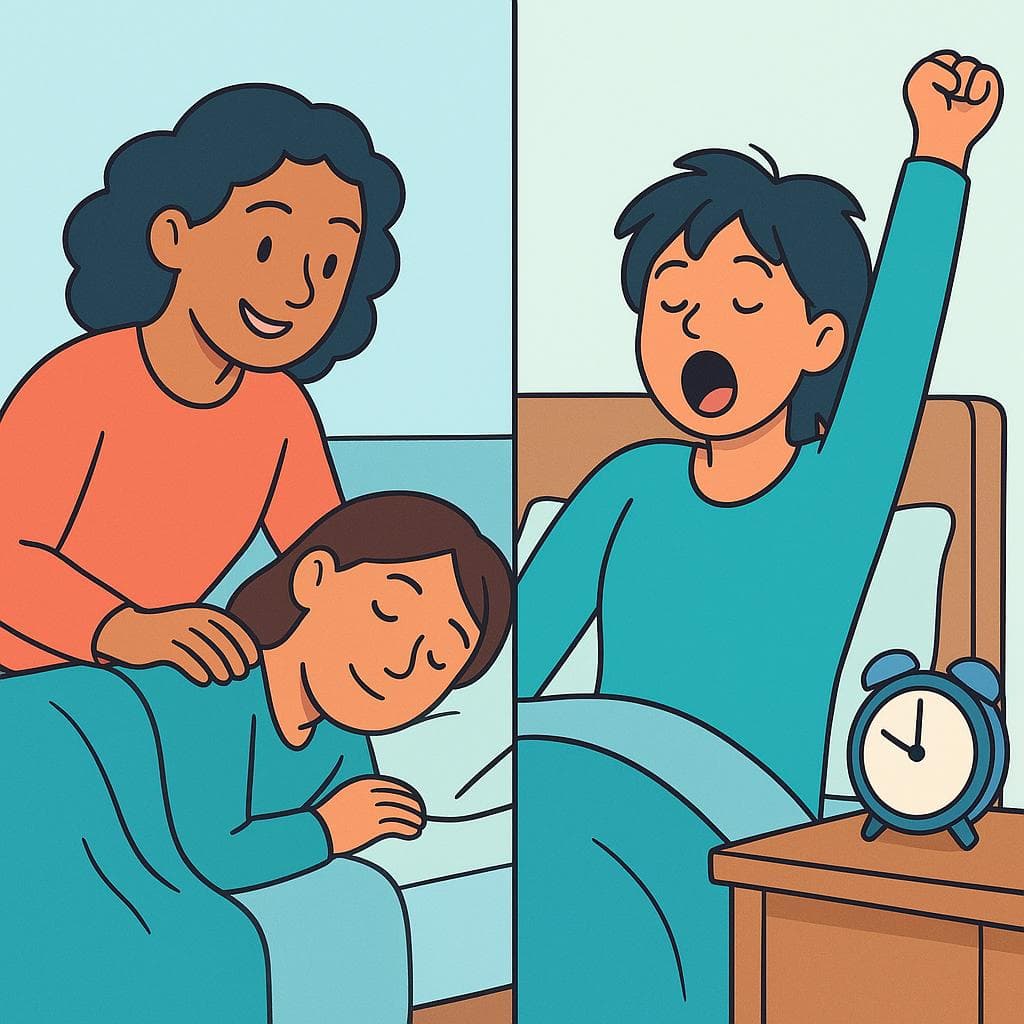
despertar
To wake someone or something up. It's an action you do TO another person or thing.
dess-pehr-TARdespertarse
To wake up (oneself). It's the action of you, yourself, stopping sleeping.
dess-pehr-TAR-sehQuick Rule
Despertar is to wake someone else up. Despertarse is to wake yourself up.
Think: 'se' = self. You use despertarSE for yourSElf.
- This 'se = self' pattern applies to many other verbs: levantar/levantarse (to lift/to get up), acostar/acostarse (to put to bed/to go to bed), etc.
Comparison Table
| Context | despertar | despertarse | Why? |
|---|---|---|---|
| Morning Routine | El gallo despierta a la granja. | Yo me despierto con el gallo. | Despertar acts on something else (the farm). Despertarse is what you do yourself. |
| Who is doing the action? | Mi madre me despierta. | Yo me despierto. | In the first sentence, 'madre' is the actor. In the second, 'yo' is the actor doing it to themself. |
| Cause and Effect | La luz del sol despertó a Ana. | Ana se despertó con la luz del sol. | Both are correct. The first focuses on the sun as the cause. The second focuses on Ana's action of waking up. |
When to Use "despertar / despertarse"
despertar
To wake someone or something up. It's an action you do TO another person or thing.
dess-pehr-TAR
Waking up another person
Despierto a mi hijo a las siete.
I wake my son up at seven.
When something causes you to wake up
El ruido de la calle me despertó.
The noise from the street woke me up.
Evoking feelings (figurative)
Esa canción despierta viejos recuerdos.
That song awakens old memories.
despertarse
To wake up (oneself). It's the action of you, yourself, stopping sleeping.
dess-pehr-TAR-seh
Waking up (yourself)
Me despierto a las siete.
I wake up at seven.
Describing the act of waking
¿A qué hora te despertaste?
What time did you wake up?
Becoming alert (figurative)
La ciudad se despierta lentamente.
The city slowly awakens (wakes itself up).
Contrast Examples
With "despertar":
El trueno despertó al bebé.
The thunder woke the baby up.
With "despertarse":
El bebé se despertó con el trueno.
The baby woke up because of the thunder.
The Difference: Both sentences describe the same event. 'Despertó' focuses on the thunder as the actor. 'Se despertó' focuses on the baby as the one experiencing the waking.
With "despertar":
Yo despierto a mi hermano para ir a la escuela.
I wake my brother up to go to school.
With "despertarse":
Yo me despierto a las seis para ir a la escuela.
I wake myself up at six to go to school.
The Difference: Despertar is an action you do *to someone else*. Despertarse is an action you do *to yourself*.
Common Mistakes
Yo despierto a las 7.
Yo me despierto a las 7.
When you are the one waking up, you need the reflexive pronoun 'me'. 'Yo despierto' sounds incomplete, as if you're about to say who you wake up (e.g., 'Yo despierto a los niños').
El ruido se despertó a mí.
El ruido me despertó.
The noise is the subject doing the waking, and 'me' is the object being woken up. You don't use the reflexive 'se' because the noise isn't waking itself up.
Quick Practice
Quick Quiz: Despertar vs Despertarse
Question 1 of 2
Mi alarma no sonó, así que mi mamá me ___.
Related Grammar
Want to understand the grammar behind this pair? Explore these lessons for a deep dive:
Key Words

Tags
Build the instinct, not just the rule
Rules help you get it right; context makes it automatic. Read 200+ illustrated and narrated Spanish stories to see confusing pairs chosen correctly — over and over — until you stop thinking about it.
Frequently Asked Questions
Why does Spanish have two versions of this verb?
This is a common pattern in Spanish with reflexive verbs. One version of the verb is for doing the action to someone/something else (transitive), and the reflexive version ('-se') is for doing the action to oneself. It allows for more precision than in English, where 'I wake up' and 'I wake the dog up' use the same verb form.
Can I just say 'Yo despierto' and be understood?
People might understand you from context, but it will sound incorrect and incomplete. It's like saying 'I wake...' in English. The listener is left wondering '...who?'. Saying 'Yo me despierto' is the complete, correct thought for waking yourself up.