
Encender vs Prender
Encender is for electronics & emotions. Prender is for fire & 'catching on'.
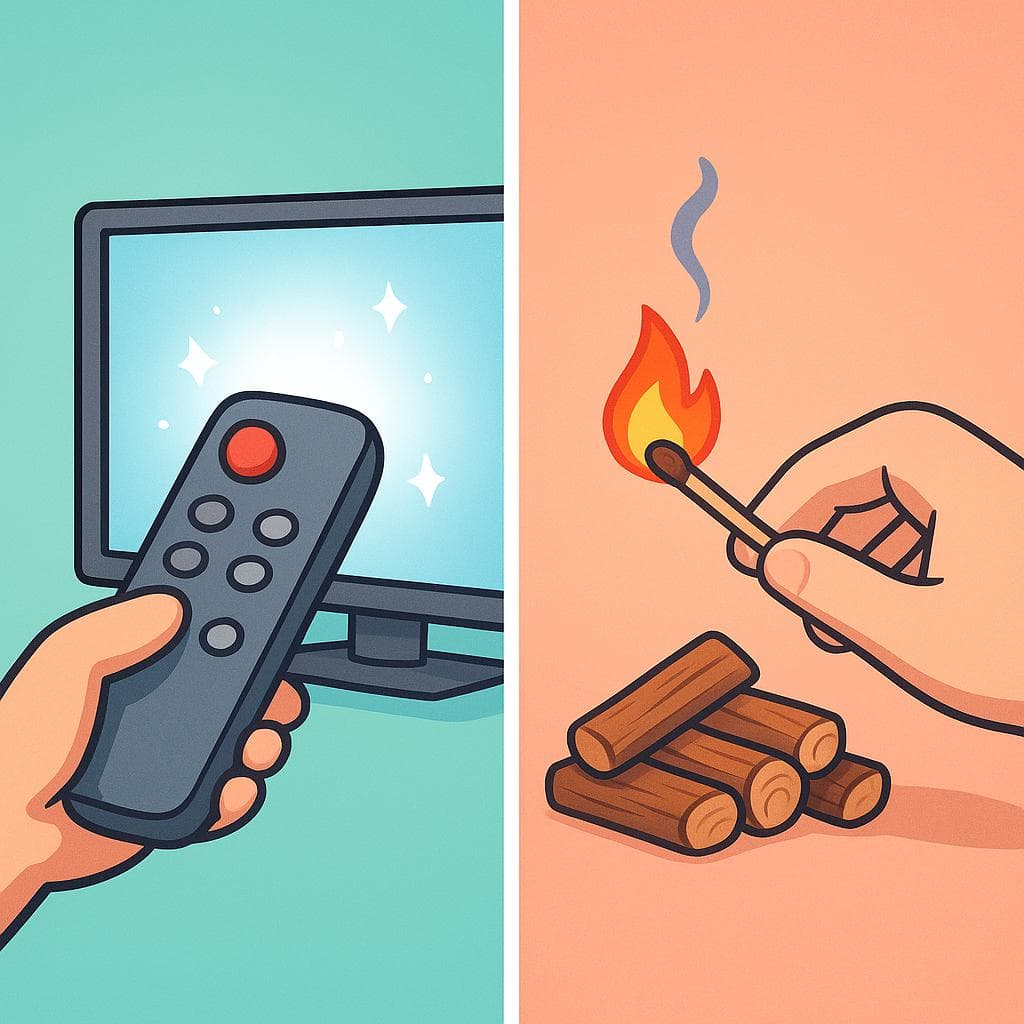
encender
To turn on (electronics), to light (a fire, more formally), to ignite (emotions, debates)
en-sen-DEHRprender
To light (a fire), to turn on (colloquial, esp. Latin America), to catch on/take root
pren-DEHRQuick Rule
Encender is for electronics & emotions. Prender is for fire & 'catching on'.
Think: Encender = Electronics. Prender = Pyre (a pile of wood for a fire).
- In many parts of Latin America, 'prender' is used for everything, including electronics.
- 'Encender la luz' is the most common phrase for 'turn on the light' everywhere.
- Both can be used for lighting a fire, but 'prender' is often more common for bonfires or grills.
Comparison Table
| Context | encender | prender | Why? |
|---|---|---|---|
| Electronics | Encendí el ordenador. | Prendí la compu (LatAm). | Encender is the standard verb. Prender is a very common colloquial alternative in Latin America. |
| Fire | Encendió la vela. | Prendió la fogata. | Both work for fire. Prender is more common for starting a fire (bonfire, grill); encender can feel slightly more formal or delicate (candle, match). |
| Figurative Meaning | Su mirada encendió mi corazón. | La idea no prendió entre los jefes. | Encender ignites passions or conflict. Prender means an idea 'catches on' or gains traction. |
| Lights | Enciende la luz. | Prende la luz (less common). | Encender is the most standard and universally understood verb for turning on lights. |
When to Use "encender / prender"
encender
To turn on (electronics), to light (a fire, more formally), to ignite (emotions, debates)
en-sen-DEHR
Electronics & Appliances
¿Puedes encender la televisión?
Can you turn on the television?
Lights
Voy a encender la luz del salón.
I'm going to turn on the living room light.
Igniting Emotions or Debates
Su discurso encendió el debate.
His speech ignited the debate.
Formally Lighting Something
Encendió un cigarrillo con calma.
He calmly lit a cigarette.
prender
To light (a fire), to turn on (colloquial, esp. Latin America), to catch on/take root
pren-DEHR
Lighting a Fire
Vamos a prender una fogata.
Let's light a bonfire.
Turning On (Colloquial, LatAm)
Prende la radio, por favor.
Turn on the radio, please.
To Catch Fire / Catch On
La leña está mojada y no prende.
The firewood is wet and won't catch fire.
To Take Root (Plants)
La nueva planta prendió bien en el jardín.
The new plant took root well in the garden.
Contrast Examples
With "encender":
No puedo encender el coche.
I can't start the car. (Standard)
With "prender":
No puedo prender el carro.
I can't start the car. (Colloquial, mainly Latin America)
The Difference: Both mean the same thing, but 'encender' is the universal, standard term. 'Prender' is a regional variation common in Latin America. If in doubt, use 'encender'.
With "encender":
La idea encendió un debate.
The idea ignited a debate.
With "prender":
La idea prendió entre la gente.
The idea caught on with the people.
The Difference: Here, the meanings are completely different. 'Encender' starts something intense and immediate (a debate, a passion). 'Prender' means something gradually gains acceptance or popularity.
Common Mistakes
La idea encendió muy bien.
La idea prendió muy bien.
When an idea 'catches on' or becomes popular, the correct verb is 'prender'. 'Encender' is for igniting something, like a debate.
En España, se dice 'prender la tele'.
En España, se dice 'encender la tele'.
Using 'prender' for electronics is characteristic of Latin American Spanish. In Spain, 'encender' is used almost exclusively for electronics and lights.
Quick Practice
Quick Quiz: Encender vs Prender
Question 1 of 2
Which verb is best for saying 'I'm going to light a bonfire'?
Related Grammar
Want to understand the grammar behind this pair? Explore these lessons for a deep dive:
Key Words



Tags
Build the instinct, not just the rule
Rules help you get it right; context makes it automatic. Read 200+ illustrated and narrated Spanish stories to see confusing pairs chosen correctly — over and over — until you stop thinking about it.
Frequently Asked Questions
So if I'm in Mexico, can I just use 'prender' for everything?
You'll be understood, and it's very common colloquially for electronics, cars, and fires. However, 'encender la luz' (for lights) is still more common, and for figurative uses like 'igniting a debate', 'encender' is the only correct option. When in doubt, 'encender' is always a safe and universally correct choice.
What's the opposite of these verbs?
The opposite for both is 'apagar'. You say 'apagar la luz' (turn off the light), 'apagar la televisión' (turn off the TV), and 'apagar el fuego' (put out the fire).