
Fuerte vs Duro
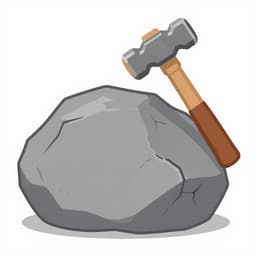
Fuerte = strength (like a person or flavor). Duro = hardness (like a rock or a difficult task).

fuerte
Strong, powerful, intense, loud. Describes inherent strength or high intensity.
FWER-tehduro
Hard, tough, difficult, harsh. Describes physical texture or a challenging situation.
DOO-rohQuick Rule
Fuerte = strength (like a person or flavor). Duro = hardness (like a rock or a difficult task).
Think: Fuerte is for Force. Duro is for Durable.
- Both 'un golpe fuerte' and 'un golpe duro' can mean 'a hard hit'.
- 'Trabajar duro' (to work hard) is a fixed expression for effort, not physical hardness.
Comparison Table
| Context | fuerte | duro | Why? |
|---|---|---|---|
| Describing People | Es un hombre fuerte. | Es un hombre duro. | Fuerte = physically strong. Duro = tough, harsh, or unfeeling personality. |
| Describing Objects | Es una cuerda fuerte. | Es una roca dura. | Fuerte = resists breaking under pressure. Duro = resists being scratched or dented. |
| Describing Experiences | Sentí un dolor fuerte. | Tuve un día duro. | Fuerte = describes the intensity of a sensation. Duro = describes the difficulty of an experience. |
| Describing Food | Un queso de sabor fuerte. | Un pan duro. | Fuerte = intense flavor. Duro = stale or hard texture. |
When to Use "fuerte / duro"
fuerte
Strong, powerful, intense, loud. Describes inherent strength or high intensity.
FWER-teh
Physical strength
Mi abuela es una mujer muy fuerte.
My grandmother is a very strong woman.
Intense flavor or smell
Este café es demasiado fuerte para mí.
This coffee is too strong for me.
Loud volume
La música está muy fuerte, no puedo oírte.
The music is very loud, I can't hear you.
Emotional or character strength
Tienes que ser fuerte para superar esto.
You have to be strong to get through this.
duro
Hard, tough, difficult, harsh. Describes physical texture or a challenging situation.
DOO-roh
Physical hardness (texture)
El pan de ayer está duro como una piedra.
Yesterday's bread is hard as a rock.
Difficult task or situation
Ha sido un año muy duro para todos.
It has been a very hard year for everyone.
Harsh or unfeeling person
No seas tan duro con él, solo es un niño.
Don't be so hard on him, he's just a kid.
Effort (in 'trabajar duro')
Trabaja muy duro para mantener a su familia.
He works very hard to support his family.
Contrast Examples
With "fuerte":
Ella es una persona fuerte.
She is a strong person. (Emotionally resilient, can handle a lot.)
With "duro":
Ella es una persona dura.
She is a hard/tough person. (Unsympathetic, severe, perhaps unkind.)
The Difference: 'Fuerte' is almost always a compliment, implying resilience. 'Duro/a' is often negative, implying a lack of compassion.
With "fuerte":
Fue una crítica fuerte.
It was strong criticism. (Impactful, intense, powerful.)
With "duro":
Fue una crítica dura.
It was harsh criticism. (Severe, difficult to hear, unkind.)
The Difference: Both are possible here. 'Fuerte' focuses on the intensity and impact of the criticism, while 'dura' focuses on its severity and the negative feeling it caused.
With "fuerte":
Este es un plástico muy fuerte.
This is a very strong plastic. (It won't break easily.)
With "duro":
Este es un plástico muy duro.
This is a very hard plastic. (It's difficult to scratch or dent.)
The Difference: A material can be strong but not hard (like a rope) or hard but not strong (like glass, which is brittle).
Common Mistakes
El pan está muy fuerte.
El pan está muy duro.
To describe stale or hard-textured food, use 'duro'. 'Fuerte' would mean it has a very intense flavor, which is strange for plain bread.
El examen de matemáticas fue muy fuerte.
El examen de matemáticas fue muy duro.
To say something was difficult or challenging, use 'duro'. 'Fuerte' isn't typically used for this kind of difficulty.
Mi jefe es muy fuerte, siempre me critica.
Mi jefe es muy duro, siempre me critica.
If you mean your boss is harsh or severe, use 'duro'. 'Fuerte' would mean he is physically strong.
Quick Practice
Quick Quiz: Fuerte vs Duro
Question 1 of 3
Para levantar esas cajas, necesitas ser muy ___.
Related Grammar
Want to understand the grammar behind this pair? Explore these lessons for a deep dive:
Key Words



Tags
Build the instinct, not just the rule
Rules help you get it right; context makes it automatic. Read 200+ illustrated and narrated Spanish stories to see confusing pairs chosen correctly — over and over — until you stop thinking about it.
Frequently Asked Questions
Can 'fuerte' and 'duro' ever be interchangeable?
Yes, in a few cases. For example, you can say 'un golpe fuerte' or 'un golpe duro' for a 'hard hit'. However, for most situations, the distinction is clear: 'fuerte' is for strength/intensity and 'duro' is for hardness/difficulty.
What about 'trabajar duro' (to work hard)? Why not 'trabajar fuerte'?
'Trabajar duro' is a very common set expression that means to work with a lot of effort. While you might hear 'trabajar fuerte' in some regions, 'trabajar duro' is the standard and most widely understood way to say 'to work hard'.