
Mismo vs Igual
Mismo = the very same one (identity). Igual = alike or similar (characteristics).
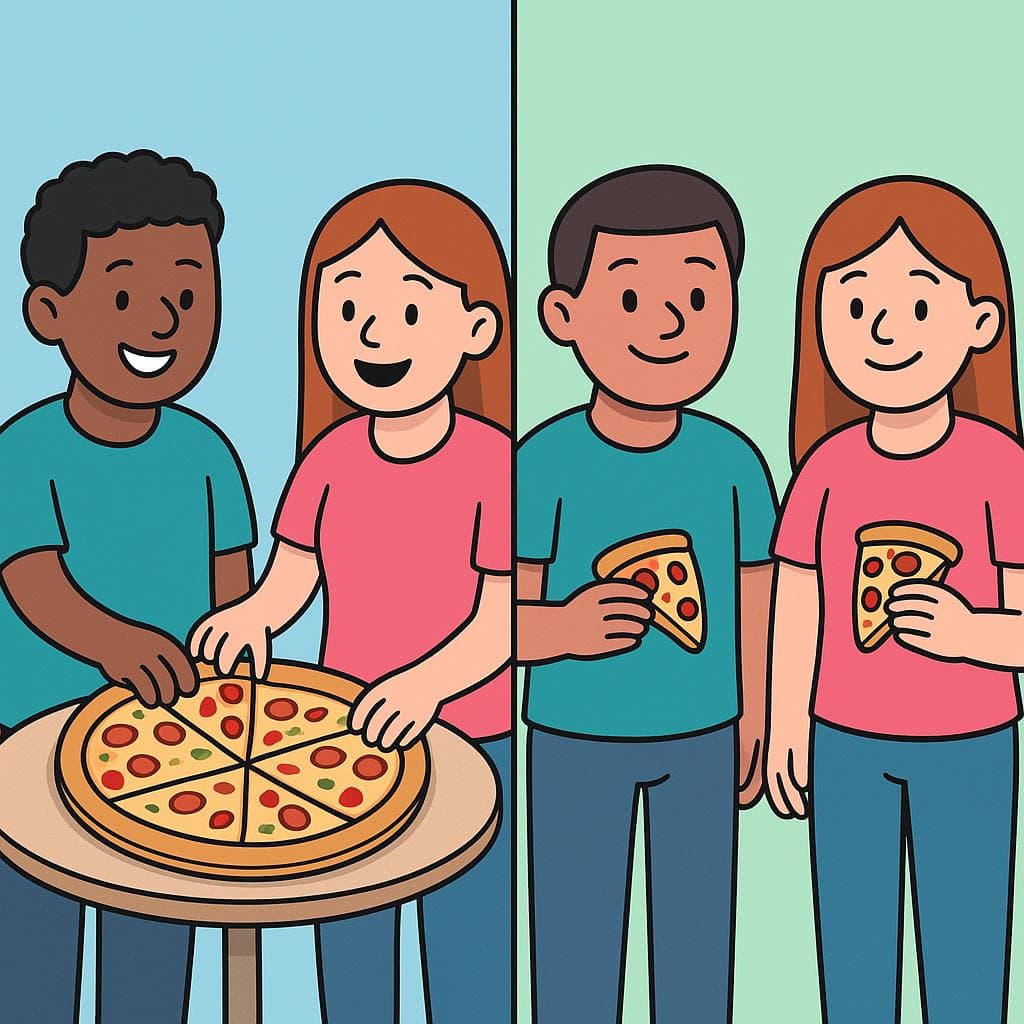
mismo
Same (referring to the exact same entity), self, itself
MEES-mohigual
Equal, alike, similar, the same (in characteristics)
ee-GWALQuick Rule
Mismo = the very same one (identity). Igual = alike or similar (characteristics).
Think: Mismo = Me, myself (the one and only). Igual = Equal (two things that are alike).
- The phrase 'me da igual' means 'I don't care / It's all the same to me'.
- 'Igual' can be used informally to mean 'maybe' or 'perhaps' in some regions.
- 'Lo mismo' can refer to 'the same thing' in a general, abstract sense.
Comparison Table
| Context | mismo | igual | Why? |
|---|---|---|---|
| Describing Objects | Es el mismo vestido. | Es un vestido igual. | Mismo: It's the very same dress (that we saw before). Igual: It's an identical dress (a copy). |
| Comparing People | Es el mismo de siempre. | Son iguales, parecen gemelos. | Mismo for an unchanged personality. Igual for comparing two different people's appearances. |
| Expressing Opinions | Pienso lo mismo que tú. | Nuestras opiniones son iguales. | Mismo for sharing one singular thought. Igual for comparing two separate but similar thoughts. |
| Indifference vs. Equivalence | Hacerlo ahora o después es lo mismo. | Me da igual hacerlo ahora o después. | Lo mismo states a fact of equivalence. Me da igual expresses a personal feeling of indifference. |
When to Use "mismo / igual"
mismo
Same (referring to the exact same entity), self, itself
MEES-moh
Identity (the very same one)
Vivimos en la misma casa.
We live in the same house.
Emphasis (self/itself)
Lo haré yo mismo.
I'll do it myself.
Agreement (sharing one opinion/idea)
Opino lo mismo.
I think the same thing.
Specific time or place
Nos vemos mañana a la misma hora.
See you tomorrow at the same time.
igual
Equal, alike, similar, the same (in characteristics)
ee-GWAL
Similarity (two things are alike)
Tenemos coches iguales.
We have similar/identical cars.
Equality (in value or measure)
Un euro es igual a un dólar ahora.
One euro is equal to one dollar now.
Indifference (it doesn't matter)
Me da igual si vamos al cine o al parque.
I don't care if we go to the movies or the park.
Comparison (as...as)
Ella es igual de inteligente que su hermana.
She is as smart as her sister.
Contrast Examples
With "mismo":
Tenemos el mismo coche.
We have the same car. (We share ownership of one car.)
With "igual":
Tenemos coches iguales.
We have identical cars. (I have one, you have one, and they are the same model.)
The Difference: This is the classic distinction. 'Mismo' points to one single entity. 'Igual' compares two separate entities that share characteristics.
With "mismo":
Este es el mismo libro que leí ayer.
This is the same book I read yesterday. (This specific physical copy.)
With "igual":
Este libro es igual al que leí ayer.
This book is the same as the one I read yesterday. (Same title, different copy.)
The Difference: 'El mismo que' specifies identity. 'Igual a' or 'igual que' specifies similarity in type or content.
With "mismo":
Siento lo mismo.
I feel the same thing. (I share your exact feeling.)
With "igual":
Me da igual.
It's all the same to me / I don't care. (Expressing indifference.)
The Difference: The meaning changes completely. 'Lo mismo' indicates empathy or agreement, while 'me da igual' indicates a lack of preference or interest.
Common Mistakes
Compramos el mismo suéter en la tienda.
Compramos suéteres iguales en la tienda.
Use 'iguales' to say you bought two separate items that look alike. 'El mismo suéter' implies you both bought one single sweater together.
Mi casa es misma que la tuya.
Mi casa es igual que la tuya.
When comparing two separate things to say they are similar, use 'igual que'. 'La misma que' implies they are one and the same entity.
No es igual. Es diferente.
No es lo mismo. Es diferente.
When talking about situations or concepts being different, the common phrase is 'no es lo mismo' (it's not the same thing).
Quick Practice
Quick Quiz: Mismo vs Igual
Question 1 of 3
My sister and I bought two dresses that look exactly alike. We bought...
Related Grammar
Want to understand the grammar behind this pair? Explore these lessons for a deep dive:
Key Words



Tags
Build the instinct, not just the rule
Rules help you get it right; context makes it automatic. Read 200+ illustrated and narrated Spanish stories to see confusing pairs chosen correctly — over and over — until you stop thinking about it.
Frequently Asked Questions
Can I say 'somos los mismos'?
Yes, but it has a specific meaning. 'Somos los mismos' means 'We are the same people (we haven't changed)'. If you want to say 'We are alike', you should say 'Somos iguales'.
Why do people say 'igualmente' when I say 'mucho gusto'?
'Igualmente' is an adverb that means 'likewise' or 'equally'. It's a polite way of returning a greeting or good wish. So, 'Mucho gusto' (Nice to meet you) is answered with 'Igualmente' (Likewise).
What's the difference between 'igual a' and 'igual que'?
They are often interchangeable when making comparisons. 'Igual que' is more common in general conversation ('Mi coche es igual que el tuyo'). 'Igual a' is often used in more formal or mathematical contexts ('Dos más dos es igual a cuatro'). For most learners, 'igual que' is a safe bet.