
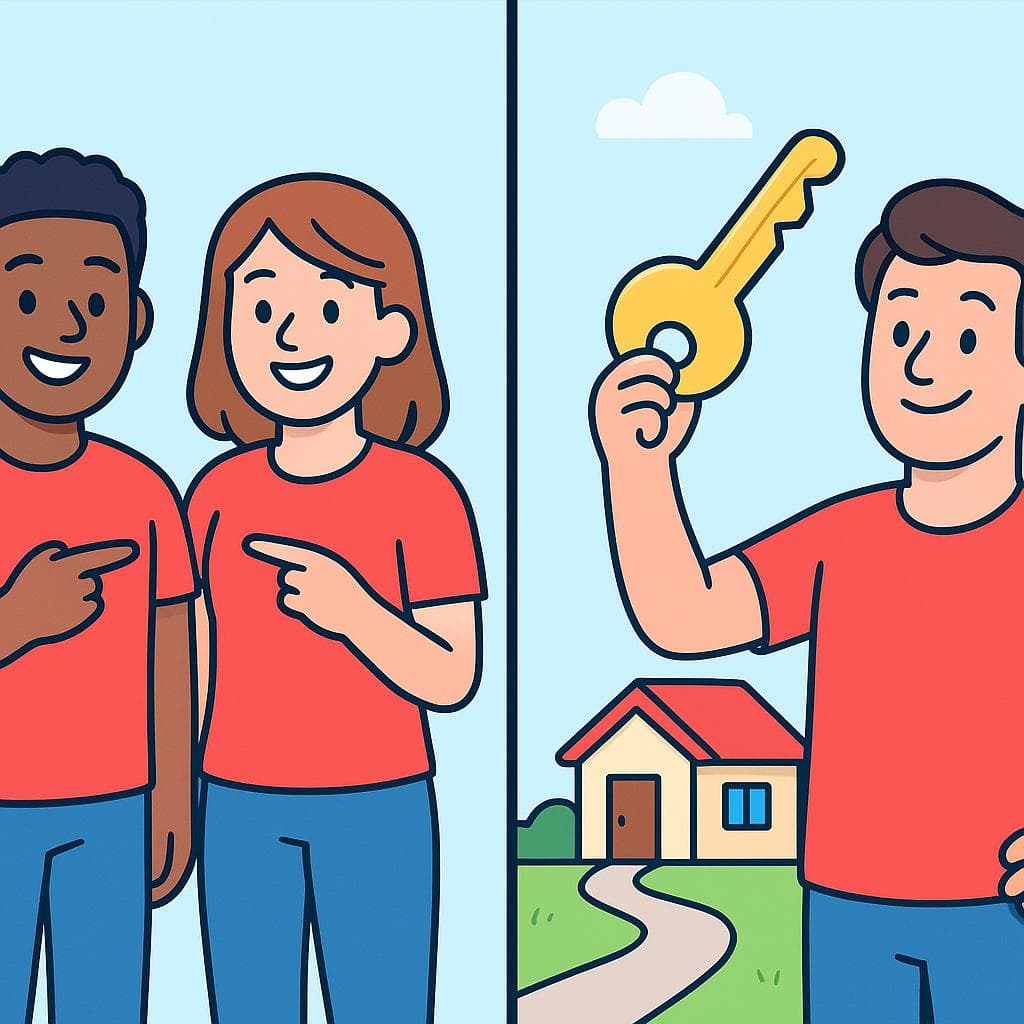
mismo
Same, very, -self, itself. Used to emphasize identity or sameness.
MEES-mohpropio
One's own, proper, typical of. Used to emphasize ownership or inherent characteristics.
PROH-pyohQuick Rule
Mismo = the same / -self. Propio = one's own.
Think: Mismo for 'Me too!' (sameness). Propio for 'Property' (ownership).
- 'Propio' can also mean 'typical' or 'characteristic of', as in 'Es propio de los niños' (That's typical of children).
Comparison Table
| Context | mismo | propio | Why? |
|---|---|---|---|
| Talking about a car | Tenemos el mismo coche. | Tengo mi propio coche. | Mismo = identical car. Propio = my own, separate car. |
| Referring to a person | El chef mismo lo cocinó. | El restaurante tiene su propio chef. | Mismo emphasizes *who* did it (the chef himself). Propio emphasizes ownership (the restaurant's own chef). |
| Describing a problem | Es el mismo problema de ayer. | Es un problema propio de este modelo. | Mismo identifies it as the identical problem. Propio describes it as a characteristic problem. |
| Actions | Yo misma construí la mesa. | Usé mis propias herramientas. | Mismo emphasizes the doer of the action (I myself). Propio emphasizes the ownership of the tools used. |
When to Use "mismo / propio"
mismo
Same, very, -self, itself. Used to emphasize identity or sameness.
MEES-moh
To say 'the same'
Vivimos en la misma calle.
We live on the same street.
To add emphasis like '-self' or '-selves'
Lo haré yo mismo.
I'll do it myself.
To say 'the very thing'
El problema mismo es la solución.
The problem itself is the solution.
As an adverb for 'right' (here/there/now)
Te veo ahora mismo.
I'll see you right now.
propio
One's own, proper, typical of. Used to emphasize ownership or inherent characteristics.
PROH-pyoh
To say 'one's own' (usually with mi, tu, su)
Quiero tener mi propio negocio.
I want to have my own business.
To mean 'typical of' or 'characteristic of'
Esa curiosidad es propia de los gatos.
That curiosity is typical of cats.
To mean 'proper' or 'appropriate'
No usó las palabras propias.
He didn't use the proper words.
To add emphasis to ownership
Lo vi con mis propios ojos.
I saw it with my own eyes.
Contrast Examples
With "mismo":
Vivo en la misma casa que mi hermano.
I live in the same house as my brother.
With "propio":
Ahora tengo mi propia casa.
Now I have my own house.
The Difference: Mismo means it's the one, identical house. Propio means you possess a separate house that belongs only to you.
With "mismo":
La directora misma tomó la decisión.
The director herself made the decision.
With "propio":
Fue su propia decisión.
It was her own decision.
The Difference: Mismo emphasizes *who* made the decision (no one else). Propio emphasizes ownership of the decision (it belonged to her, she wasn't forced).
With "mismo":
Hablamos el mismo idioma.
We speak the same language.
With "propio":
El país tiene su propio idioma.
The country has its own language.
The Difference: Mismo indicates a shared, identical language. Propio indicates a language that belongs to or is characteristic of that specific country.
Common Mistakes
Quiero mi mismo apartamento.
Quiero mi propio apartamento.
To express 'my own', you need to pair the possessive ('mi') with 'propio'. 'Mismo' is used to say 'the same apartment' ('el mismo apartamento').
Ella tiene un estilo mismo.
Ella tiene un estilo propio.
When describing a unique style that belongs to someone, use 'propio'. It means a style of her own. 'Mismo' doesn't fit here.
Quick Practice
Quick Quiz: Mismo vs Propio
Question 1 of 3
My brother and I have the same car. 'Tenemos el ___ coche.'
Related Grammar
Want to understand the grammar behind this pair? Explore these lessons for a deep dive:
Key Words


Tags
Build the instinct, not just the rule
Rules help you get it right; context makes it automatic. Read 200+ illustrated and narrated Spanish stories to see confusing pairs chosen correctly — over and over — until you stop thinking about it.
Frequently Asked Questions
Can I say 'mi mismo coche'?
Not really, it sounds unnatural. If you mean 'my own car', you should say 'mi propio coche'. If you mean 'my same car' (as in, the one I always use), you would say 'mi coche de siempre' or just 'mi coche'.
When does 'mismo' go before the noun vs. after?
When it means 'same', it almost always goes before the noun ('la misma casa'). When it means '-self', it usually follows the noun or pronoun it refers to ('el presidente mismo', 'yo mismo').
Is there a difference between 'propio' and just using a possessive like 'mi' or 'su'?
Yes, adding 'propio' adds emphasis. 'Mi casa' means 'my house'. 'Mi propia casa' means 'my *own* house', often implying that you didn't have one before or that it's separate from someone else's.