
Morir vs Morirse
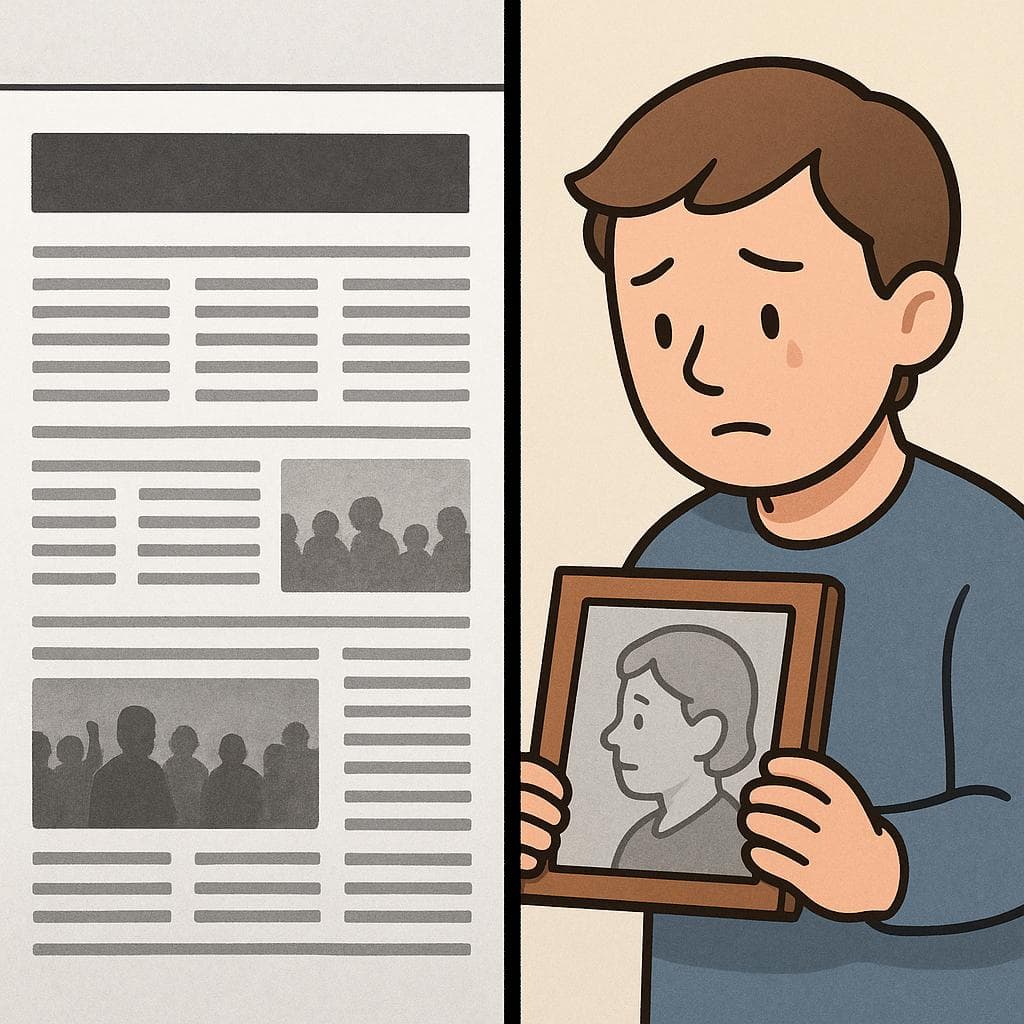
Morir = to die (the factual event). Morirse = to pass away (the personal process).
morir
To die (used for the event itself, often in a factual, formal, sudden, or violent context)
moh-REERmorirse
To pass away (used for natural death, the process of dying, or to add personal/emotional weight)
moh-REER-sehQuick Rule
Morir = to die (the factual event). Morirse = to pass away (the personal process).
Think: 'Morir' is a newspaper headline. 'Morirse' is a family story.
- In the past tense (murió/se murió), they are often used interchangeably.
- The phrase 'morirse de...' (dying of...) is a fixed expression and always uses 'morirse'.
Comparison Table
| Context | morir | morirse | Why? |
|---|---|---|---|
| Context | El soldado murió en combate. | Mi tío se murió de cáncer. | Morir is for factual, impersonal events. Morirse is for personal situations, often involving a process like an illness. |
| Subject | La batería de mi móvil murió. | Se murió mi abuela. | Morir can be used for inanimate objects or concepts. Morirse is almost exclusively for people or beloved animals. |
| Idiomatic Use | — (Not used this way) | Me muero de la risa. | The structure 'morirse de + [feeling]' (dying of laughter, hunger, etc.) is a very common idiom that always uses the reflexive form. |
| Emotional Tone | Murieron tres personas. | Se me murió el pez. | Morir is neutral and reports a fact. Morirse, especially with an indirect object (se me), adds emotional weight and shows it affected the speaker. |
When to Use "morir / morirse"
morir
To die (used for the event itself, often in a factual, formal, sudden, or violent context)
moh-REER
Formal news or historical facts
El rey murió en 1492.
The king died in 1492.
Sudden or violent death
Murió en un accidente de coche.
He died in a car accident.
Figurative or non-personal death
La planta murió por falta de agua.
The plant died from lack of water.
In fiction or literature
El héroe muere al final del libro.
The hero dies at the end of the book.
morirse
To pass away (used for natural death, the process of dying, or to add personal/emotional weight)
moh-REER-seh
Natural death or from illness
Mi abuelo se murió de viejo.
My grandfather died of old age.
Personal or emotional context
Se nos murió el perrito.
Our little dog died (on us).
Idiomatic expressions ('dying of...')
¡Me muero de hambre!
I'm starving! (Literally: I'm dying of hunger!)
Referring to one's own death
No quiero morirme todavía.
I don't want to die yet.
Contrast Examples
With "morir":
El general murió en la batalla.
The general died in the battle.
With "morirse":
Mi abuelo se murió en paz, en su cama.
My grandfather passed away peacefully in his bed.
The Difference: 'Morir' states a fact, like a historical record. 'Morirse' tells a more personal story, focusing on the person and the manner of their passing.
With "morir":
El gato del vecino murió.
The neighbor's cat died.
With "morirse":
Se me murió el gato.
My cat died (on me).
The Difference: Using 'morir' is a detached observation. 'Se me murió' is deeply personal; the 'se me' part emphasizes that this was a loss that happened *to me*.
With "morir":
— (Not used this way)
—
With "morirse":
Me muero de ganas de ir a la playa.
I'm dying to go to the beach.
The Difference: This figurative, hyperbolic use to mean 'I really want to' or 'I'm very...' is exclusive to 'morirse'. You can't use 'morir' for this.
Common Mistakes
Moro de sed.
Me muero de sed.
To say you are 'dying of' a feeling like thirst, hunger, or boredom, you must use the reflexive form 'morirse'.
El presidente se murió en un atentado.
El presidente murió en un atentado.
For sudden, violent deaths reported as news, the non-reflexive 'morir' is more common because it's direct and factual. 'Se murió' sounds a bit too personal for a news report.
Quick Practice
Quick Quiz: Morir vs Morirse
Question 1 of 2
Which is the most natural way to say 'I'm dying of boredom'?
Related Grammar
Want to understand the grammar behind this pair? Explore these lessons for a deep dive:
Key Words


Tags
Build the instinct, not just the rule
Rules help you get it right; context makes it automatic. Read 200+ illustrated and narrated Spanish stories to see confusing pairs chosen correctly — over and over — until you stop thinking about it.
Frequently Asked Questions
Are 'morir' and 'morirse' ever interchangeable?
Yes, frequently. In everyday conversation, especially when talking about a death in the past (e.g., 'murió' vs 'se murió'), native speakers often use them interchangeably. However, 'morirse' is generally more common for natural deaths, while 'morir' is preferred for sudden or violent ones.
Why does adding 'se' change the meaning of so many verbs?
That little 'se' is a reflexive pronoun. While its main job is to show an action done to oneself (like 'lavarse', to wash oneself), it can also add nuances. It often makes an action feel more personal, complete, or intense. Think of 'comer' (to eat) vs 'comerse' (to eat up) – the 'se' adds a sense of completion.