
Pronto vs Temprano
Pronto = soon (in the future). Temprano = early (on the clock).
pronto
Soon; quickly. Refers to something happening in the near future or with speed.
PRON-tohtemprano
Early. Refers to something happening at an early time of day or before it was expected.
tem-PRA-nohQuick Rule
Pronto = soon (in the future). Temprano = early (on the clock).
Think: Pronto Points to the future. Temprano is about Time on the clock.
- The phrase 'de pronto' means 'suddenly', not 'soon'.
- 'Más temprano que tarde' means 'sooner rather than later', using 'temprano' for a future idea.
Comparison Table
| Context | pronto | temprano | Why? |
|---|---|---|---|
| Arriving somewhere | Llegaré pronto. | Llegué temprano. | Pronto promises a future arrival soon. Temprano describes a past arrival that was before the scheduled time. |
| Waking up | ¡Despiértate pronto! | Me despierto temprano. | Pronto is a command to wake up soon (from now). Temprano describes the habit of waking up early in the morning. |
| Finishing a task | Espero terminar pronto. | Hoy terminé temprano. | Pronto expresses the hope to finish soon. Temprano states that you finished earlier than usual today. |
| General time reference | La película empieza pronto. | La primera función es muy temprano. | Pronto is relative to now (in a few minutes). Temprano refers to a specific time of day (early in the morning). |
When to Use "pronto / temprano"
pronto
Soon; quickly. Refers to something happening in the near future or with speed.
PRON-toh
Referring to the near future
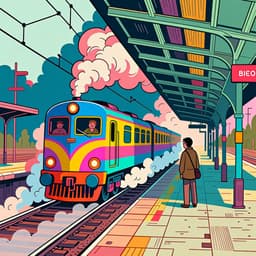
El tren llegará pronto.
The train will arrive soon.
As a synonym for 'quickly'
Por favor, termina pronto.
Please, finish quickly.
In farewells
¡Hasta pronto!
See you soon!
Meaning 'suddenly' (as 'de pronto')
De pronto, se fue la luz.
Suddenly, the power went out.
temprano
Early. Refers to something happening at an early time of day or before it was expected.
tem-PRA-noh
Referring to an early time of day
Me levanto temprano todos los días.
I get up early every day.
Arriving before the scheduled time
Llegaste diez minutos temprano.
You arrived ten minutes early.
Contrasting with 'tarde' (late)
Es demasiado temprano para cenar.
It's too early to have dinner.
Describing the season
Este año, la primavera llegó temprano.
This year, spring arrived early.
Contrast Examples
With "pronto":
¡Vuelve pronto!
Come back soon!
With "temprano":
¡Vuelve temprano!
Come back early!
The Difference: 'Pronto' is a wish for a quick return, without specifying a time. 'Temprano' is a request to be back at an early hour, like before a curfew.
With "pronto":
El chef preparó la comida pronto.
The chef prepared the food quickly.
With "temprano":
El chef preparó la comida temprano.
The chef prepared the food early.
The Difference: 'Pronto' describes the speed of the action (it was fast). 'Temprano' describes the timing of the action (it was done early in the day or ahead of schedule).
With "pronto":
La reunión empezará pronto.
The meeting will start soon.
With "temprano":
La reunión empezó temprano.
The meeting started early.
The Difference: 'Pronto' looks forward from the present moment. 'Temprano' describes a past event that happened before the planned time.
Common Mistakes
Me levanto pronto por la mañana.
Me levanto temprano por la mañana.
To talk about a time of day (like early morning), use 'temprano'. 'Pronto' means soon, which doesn't fit the context of a daily routine.
Nos vemos temprano.
Nos vemos pronto.
When you mean 'See you soon', the correct phrase is 'Nos vemos pronto'. 'Nos vemos temprano' means 'We'll see each other early (in the morning/at the event)'.
Quick Practice
Quick Quiz: Pronto vs Temprano
Question 1 of 3
If you wake up at 6 AM every day, you wake up ____.
Related Grammar
Want to understand the grammar behind this pair? Explore these lessons for a deep dive:
Key Words


Tags
Build the instinct, not just the rule
Rules help you get it right; context makes it automatic. Read 200+ illustrated and narrated Spanish stories to see confusing pairs chosen correctly — over and over — until you stop thinking about it.
Frequently Asked Questions
Can 'pronto' ever mean 'early'?
Not really. 'Pronto' is almost always about 'soon' or 'quickly'. The confusion comes because in English, 'soon' can sometimes feel similar to 'early', but in Spanish, the line is very clear. Stick to 'temprano' for 'early'.
What's the opposite of 'temprano'?
The direct opposite of 'temprano' (early) is 'tarde' (late). For example, 'Me levanto temprano' (I get up early) vs. 'Me levanto tarde' (I get up late).
Is 'prontamente' the same as 'pronto'?
They are very similar, but 'prontamente' more strongly means 'quickly' or 'promptly'. 'Pronto' is more versatile and much more common in everyday conversation for both 'soon' and 'quickly'.