
Próximo vs Siguiente
Próximo = upcoming in time or near in space. Siguiente = next in a sequence.
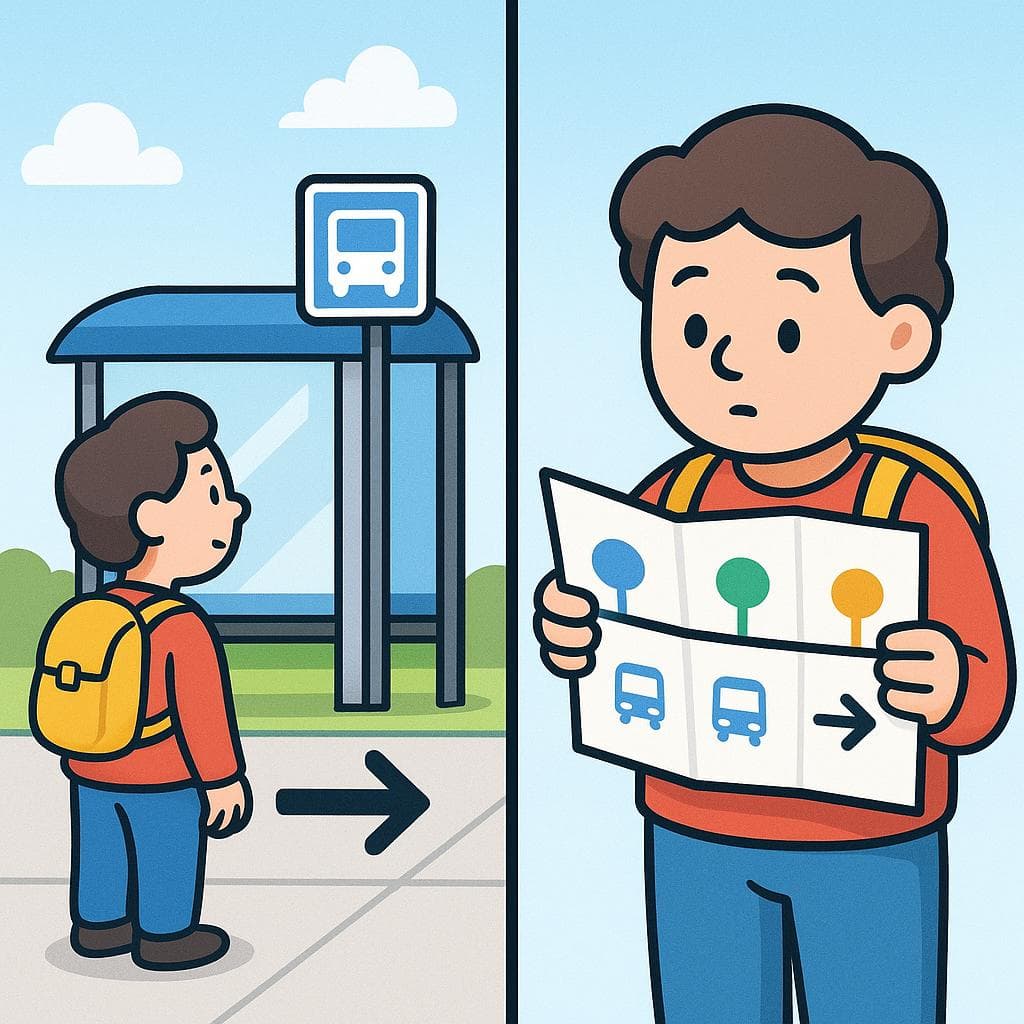
próximo
Next (upcoming in time, near in space)
PROK-see-mohsiguiente
Next (following in a sequence or order)
see-GYEHN-tehQuick Rule
Próximo = upcoming in time or near in space. Siguiente = next in a sequence.
P de Próximo, P de Proximidad (nearness). S de Siguiente, S de Secuencia (sequence).
- For days, weeks, months, etc., they are often used interchangeably (el próximo lunes / el siguiente lunes).
- 'La próxima vez' (next time) is far more common than 'la siguiente vez'.
Comparison Table
| Context | próximo | siguiente | Why? |
|---|---|---|---|
| Time Reference | El próximo verano iremos a la playa. | El verano siguiente a su boda, se mudaron. | Próximo points forward from now. Siguiente points forward from any reference point (past or present). |
| Giving Directions | La próxima parada es la mía. | Pasa el semáforo y gira en la siguiente. | Próximo emphasizes nearness ('the upcoming stop'). Siguiente emphasizes order ('the one after the traffic light'). |
| In a Series | ¿Quién es el próximo en la fila? | El siguiente capítulo es mi favorito. | While 'próximo' can be used for 'who's next', 'siguiente' is better for items in a defined sequence like chapters or steps. |
When to Use "próximo / siguiente"
próximo
Next (upcoming in time, near in space)
PROK-see-moh
Upcoming time periods
El próximo año, viajaré a España.
Next year, I will travel to Spain.
Physical nearness/closeness
La farmacia más próxima está a dos calles.
The nearest/closest pharmacy is two blocks away.
The next event from the present
Nuestra próxima reunión es el viernes.
Our next meeting is on Friday.
siguiente
Next (following in a sequence or order)
see-GYEHN-teh
Next in an ordered sequence
Toma la siguiente calle a la derecha.
Take the next street on the right.
Following a specific reference point
En la página siguiente, encontrarás el mapa.
On the following page, you'll find the map.
The next item in a past sequence
Llegué el lunes y me fui al día siguiente.
I arrived on Monday and left the following day.
Contrast Examples
With "próximo":
La próxima reunión es el martes.
The next meeting is on Tuesday. (The upcoming one.)
With "siguiente":
Tuvimos una reunión el lunes. La siguiente fue el martes.
We had a meeting Monday. The following one was on Tuesday.
The Difference: Próximo almost always means 'upcoming' from right now. Siguiente means 'the one that follows' from any point of reference, including one in the past.
With "próximo":
La próxima salida es la nuestra.
The next exit is ours. (Emphasizes that it's coming up soon.)
With "siguiente":
Pasa el puente y toma la siguiente salida.
Go over the bridge and take the following exit. (Emphasizes the exit that comes *after* the bridge in sequence.)
The Difference: While often interchangeable, 'próximo' focuses on nearness ('it's coming up!'), while 'siguiente' focuses on the order of events ('after X, then Y').
Common Mistakes
La tienda más siguiente está cerrada.
La tienda más próxima está cerrada.
For physical distance ('nearest' or 'closest'), you must use 'próximo'. 'Siguiente' only refers to order, not proximity.
Termina este ejercicio y después haz el próximo.
Termina este ejercicio y después haz el siguiente.
When moving through a clear sequence of items (like exercises, pages, or steps), 'siguiente' is the most natural and correct choice.
Quick Practice
Quick Quiz: Próximo vs Siguiente
Question 1 of 2
Which word best fits? 'Para llegar, pasa la biblioteca y toma la ___ calle a la izquierda.'
Related Grammar
Want to understand the grammar behind this pair? Explore these lessons for a deep dive:
Key Words



Tags
Build the instinct, not just the rule
Rules help you get it right; context makes it automatic. Read 200+ illustrated and narrated Spanish stories to see confusing pairs chosen correctly — over and over — until you stop thinking about it.
Frequently Asked Questions
Can I just always use 'próximo' for 'next'?
In many casual conversations, especially about time (like 'la próxima semana'), it will be understood. However, you'll sound more natural if you use 'siguiente' for sequences (like steps in a recipe) and 'próximo' for physical closeness ('the nearest bank').
Is 'el siguiente' the same as 'lo siguiente'?
They're slightly different. 'El siguiente' refers to the next specific thing ('el siguiente coche' - the next car). 'Lo siguiente' is more abstract and means 'the following thing' or 'what's next' on a list or agenda ('Lo siguiente en la lista es...').