
Tardar vs Demorar
Use 'tardar' for everyday 'taking time.' Use 'demorar' for formal 'delays,' like with flights or official business.
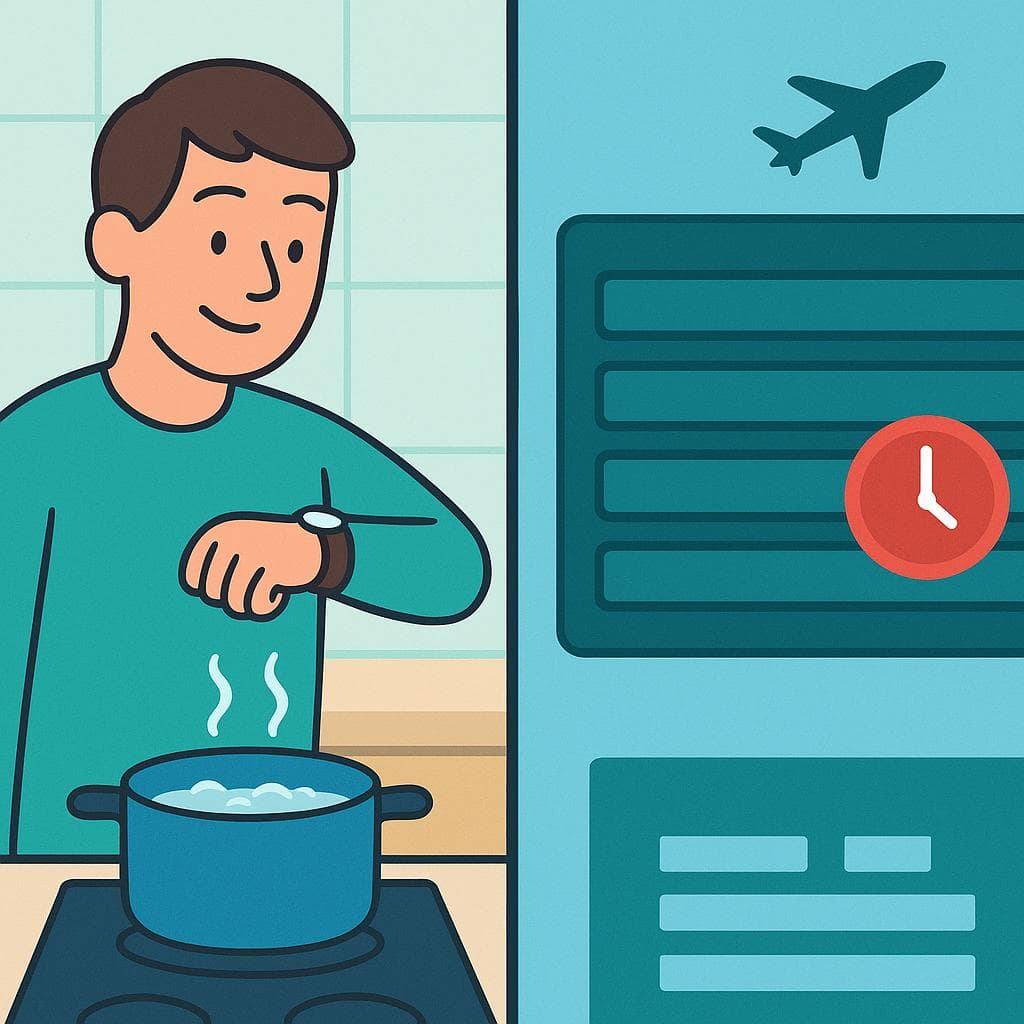
tardar
To take time, to be long, to be late. The common, everyday word for how long something takes.
tar-DARdemorar
To delay, to hold up, to be delayed. A more formal word, often implying an external cause for the delay.
deh-moh-RARQuick Rule
Use 'tardar' for everyday 'taking time.' Use 'demorar' for formal 'delays,' like with flights or official business.
Think: Tardar is for Talking. Demorar is for Documents and Departures.
- In many everyday situations, especially with the reflexive form 'demorarse', they can be used interchangeably, but 'tardar' is always the more common and natural-sounding choice.
Comparison Table
| Context | tardar | demorar | Why? |
|---|---|---|---|
| Daily Commute | ¿Cuánto tardas en llegar? | El metro se demoró 15 minutos. | 'Tardar' asks about the usual duration. 'Demorar' explains an unexpected delay. |
| Completing a Task | Tardé toda la tarde en limpiarlo. | Me demoré porque no encontraba las herramientas. | 'Tardar' states the total time spent. 'Demorar(se)' often implies a reason for the delay. |
| Official Processes | El envío tarda de 3 a 5 días. | La entrega se demoró en la aduana. | 'Tardar' describes the standard timeframe. 'Demorar' is used for official hold-ups. |
| Asking Someone to Hurry | ¡No tardes, que perdemos la película! | Le ruego que no se demore. | 'Tardar' is common and informal. 'Demorar' is much more formal and polite. |
When to Use "tardar / demorar"
tardar
To take time, to be long, to be late. The common, everyday word for how long something takes.
tar-DAR
Stating how long something takes
El viaje en tren tarda tres horas.
The train journey takes three hours.
Describing personal time spent on an activity
Tardé mucho en encontrar mis llaves.
I took a long time to find my keys.
Telling someone not to be long (informal)
Date prisa, ¡no tardes!
Hurry up, don't be long!
Used with 'en' + infinitive
Siempre tardo 20 minutos en llegar al trabajo.
I always take 20 minutes to get to work.
demorar
To delay, to hold up, to be delayed. A more formal word, often implying an external cause for the delay.
deh-moh-RAR
Official or transport-related delays
El vuelo se demoró por el mal tiempo.
The flight was delayed due to bad weather.
Bureaucratic or procedural delays
El trámite puede demorar hasta seis semanas.
The process can be delayed for up to six weeks.
Formal apologies for being late
Disculpe por demorar la respuesta.
Sorry for delaying the response.
Reflexive 'demorarse' (similar to 'tardarse')
No te demores mucho, por favor.
Don't take too long, please.
Contrast Examples
With "tardar":
Voy a tardar dos horas más en terminar el informe.
I'm going to take two more hours to finish the report.
With "demorar":
Me voy a demorar porque el sistema está muy lento.
I'm going to be delayed because the system is very slow.
The Difference: 'Tardar' simply states the amount of time needed. 'Demorar' emphasizes that you are behind schedule due to an external problem.
With "tardar":
Normalmente, el paquete tarda una semana.
Normally, the package takes a week.
With "demorar":
El paquete se demoró por una huelga de transportistas.
The package was delayed by a truckers' strike.
The Difference: 'Tardar' describes the standard, expected duration. 'Demorar' explains an abnormal delay and often implies a specific cause.
Common Mistakes
Demoré mucho en la ducha esta mañana.
Tardé mucho en la ducha esta mañana.
While not technically incorrect, 'demorar' sounds overly formal and a bit strange for a simple, personal activity like taking a shower. 'Tardar' is the natural, everyday choice.
El sistema tardó y no pude comprar las entradas.
El sistema se demoró y no pude comprar las entradas.
'Demorar' is a better fit here because it implies an external, impersonal cause (a system failure) that held you up. It focuses on the 'delay' rather than just the 'time taken'.
Quick Practice
Quick Quiz: Tardar vs Demorar
Question 1 of 2
Which word is best for an official flight announcement? 'El vuelo a Madrid se ha ___.'
Related Grammar
Want to understand the grammar behind this pair? Explore these lessons for a deep dive:
Key Words



Tags
Build the instinct, not just the rule
Rules help you get it right; context makes it automatic. Read 200+ illustrated and narrated Spanish stories to see confusing pairs chosen correctly — over and over — until you stop thinking about it.
Frequently Asked Questions
Can I just always use 'tardar' and forget 'demorar'?
In casual conversation, yes, you can get by almost exclusively with 'tardar'. However, you will frequently hear and see 'demorar' in formal contexts like news reports, travel announcements, and business emails, so it's very important to understand it.
What about the verb 'retrasar'?
'Retrasar' is another close synonym, meaning 'to postpone' or 'to make late'. It often implies someone or something actively caused the delay. For example, 'La reunión se retrasó' (The meeting was postponed/delayed). 'Demorar' often implies a more passive delay, while 'retrasar' can feel more active.