
Tirar vs Tirarse
Tirar is to throw *something*. Tirarse is to throw *yourself*.
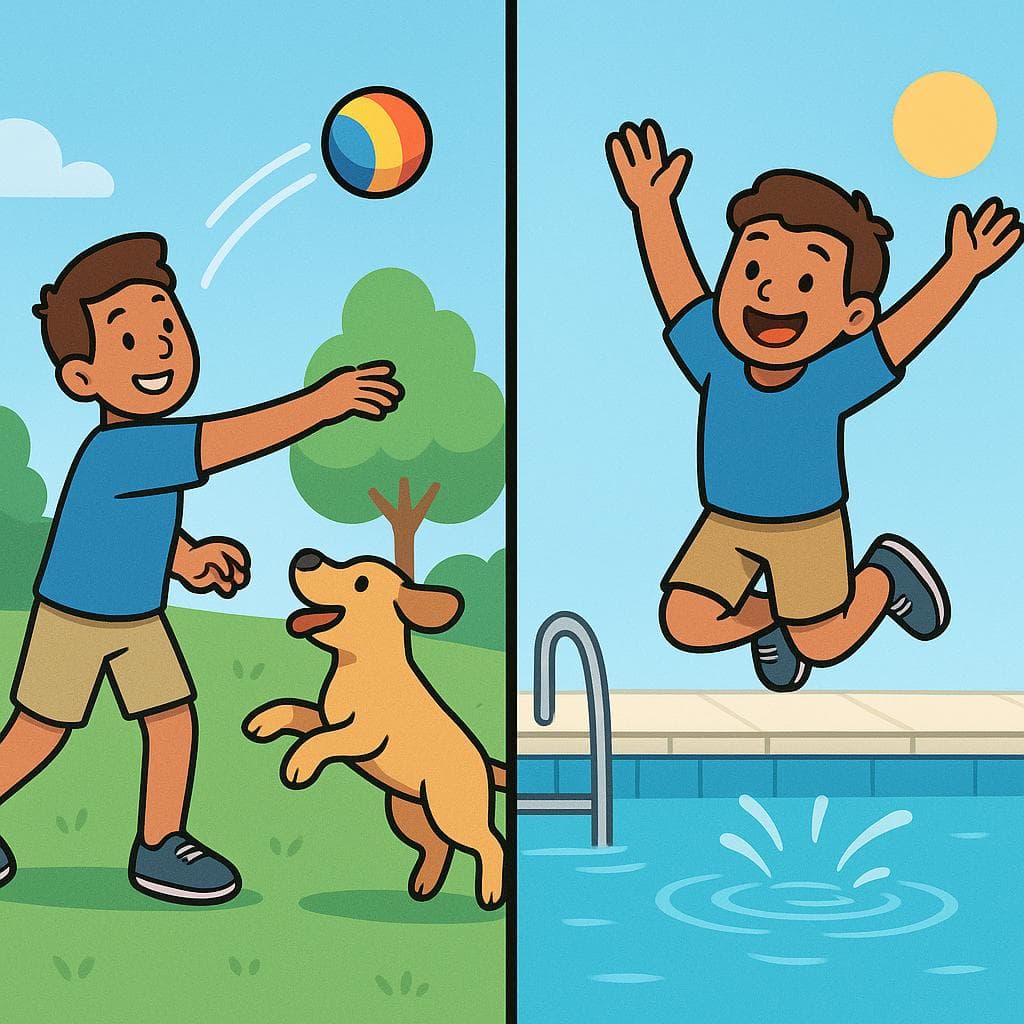
tirar
To throw, to pull, to knock over, to waste
tee-RAHRtirarse
To throw oneself, to jump, to lie down, to spend (time)
tee-RAHR-sehQuick Rule
Tirar is to throw *something*. Tirarse is to throw *yourself*.
Think: Tirar = Target (you throw at a target). Tirarse = Self (the action is on yourself).
- Tirarse can mean 'to spend time' (Me tiré dos horas esperando)
- In slang, 'tirarse a alguien' means 'to hit on' or 'to sleep with' someone.
Comparison Table
| Context | tirar | tirarse | Why? |
|---|---|---|---|
| Physical Action | Tiró la piedra al río. | Se tiró al río. | Tirar: Threw an object (the stone). Tirarse: Threw himself in. |
| Using Furniture | Tiró la silla al suelo. | Se tiró en la silla. | Tirar: Knocked the chair over. Tirarse: Flopped down onto the chair. |
| Concept of Time | Tiró el tiempo a la basura. | Se tiró dos horas esperando. | Tirar: To waste time. Tirarse: To spend a long time doing something. |
| Interpersonal (Slang) | Le tiró una indirecta. | Se le tiró a ella. | Tirar: To drop a hint. Tirarse: To hit on someone. |
When to Use "tirar / tirarse"
tirar
To throw, to pull, to knock over, to waste
tee-RAHR
Throwing an object
Voy a tirar la pelota.
I'm going to throw the ball.
Getting rid of something
Tira esos papeles viejos.
Throw away those old papers.
Knocking something down
El viento tiró la valla.
The wind knocked down the fence.
Wasting something
No tires tu dinero en eso.
Don't waste your money on that.
tirarse
To throw oneself, to jump, to lie down, to spend (time)
tee-RAHR-seh
Jumping or diving
Se tiró al agua sin pensar.
He jumped into the water without thinking.
Lying down (often quickly)
Me tiré en el sofá para descansar.
I flopped down on the sofa to rest.
Spending a period of time
Se tiró toda la tarde viendo series.
He spent the whole afternoon watching shows.
Hitting on someone (slang)
Juan se le tiró a María en la fiesta.
Juan hit on María at the party.
Contrast Examples
With "tirar":
Tiró la toalla al lado de la piscina.
He threw the towel next to the pool.
With "tirarse":
Se tiró a la piscina.
He threw himself / jumped into the pool.
The Difference: 'Tirar' requires an object that is thrown (the towel). With 'tirarse', the person doing the action is also the one being thrown.
With "tirar":
Tiró la manta sobre el sofá.
She threw the blanket onto the sofa.
With "tirarse":
Se tiró en el sofá.
She threw herself / flopped onto the sofa.
The Difference: Use 'tirar' when placing an object onto the sofa. Use 'tirarse' when you yourself are collapsing onto the sofa.
With "tirar":
¡No tires tu tiempo con ese videojuego!
Don't waste your time on that video game!
With "tirarse":
Se tiró toda la mañana con ese videojuego.
He spent the whole morning on that video game.
The Difference: 'Tirar tiempo' specifically means to waste it. 'Tirarse tiempo' means to spend a (usually long) period of time doing something, which could be productive or not.
Common Mistakes
Tiré en la cama para descansar.
Me tiré en la cama para descansar.
When you are the one lying down, the action is on yourself, so you must use the reflexive form 'tirarse'.
Se tiró la basura.
Tiró la basura.
The garbage is the object being thrown, not the person. 'Se tiró' would mean 'he threw himself away,' which is not the intended meaning.
Quick Practice
Quick Quiz: Tirar vs Tirarse
Question 1 of 2
Choose the correct verb: 'No ___ comida, hay gente que no tiene qué comer.'
Related Grammar
Want to understand the grammar behind this pair? Explore these lessons for a deep dive:
Key Words

Tags
Build the instinct, not just the rule
Rules help you get it right; context makes it automatic. Read 200+ illustrated and narrated Spanish stories to see confusing pairs chosen correctly — over and over — until you stop thinking about it.
Frequently Asked Questions
So 'tirarse' is just the reflexive form of 'tirar'?
Yes, exactly. A reflexive verb is one where the person doing the action is also the person receiving it. When you 'tirar' something, you throw an object. When you 'te tiras', you are throwing yourself.
Is the 'spending time' meaning of 'tirarse' common?
Yes, it's very common in conversational Spanish, especially in Spain. It often has a slightly lazy or casual connotation, like you 'spent' or 'killed' a few hours doing something. For example, 'Me tiré toda la tarde en el parque' (I spent the whole afternoon at the park).