
Todavía vs Ya
Todavía = still happening (continuation). Ya = it changed (it happened or stopped happening).
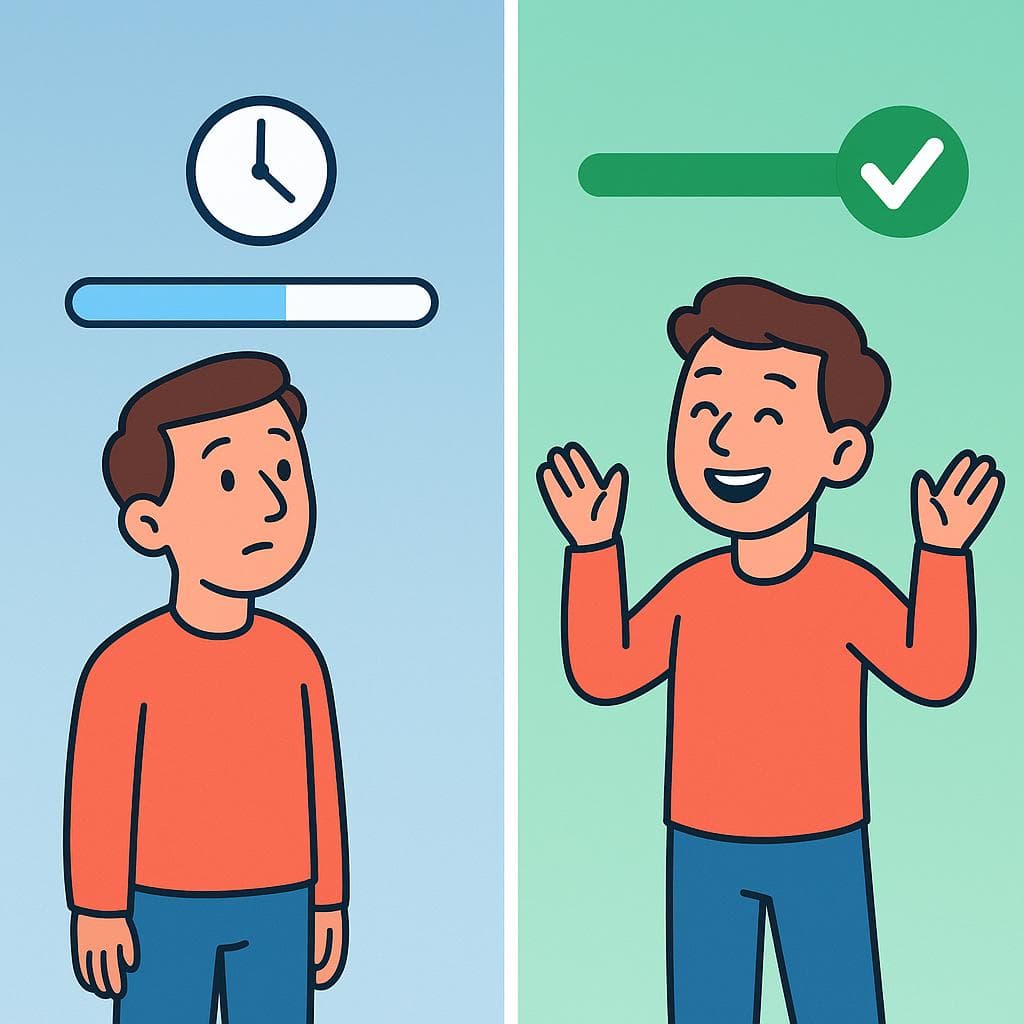
todavía
Still / yet. Use it to say that a situation or action is continuing.
toh-dah-VEE-ahya
Already / now / no longer. Use it to say that a situation or action has changed.
YAHQuick Rule
Todavía = still happening (continuation). Ya = it changed (it happened or stopped happening).
Think: Todavía = To-this-day (it continues). Ya = Yep, done! (it changed).
- In questions, 'ya' means 'yet': ¿Ya comiste? (Did you eat yet?)
- 'Ya no' is a team that means 'no longer' or 'not anymore'.
Comparison Table
| Context | todavía | ya | Why? |
|---|---|---|---|
| Eating Lunch | ¿Todavía no has comido? | Sí, ya comí. | Todavía (no) asks if the state of *not eating* continues. Ya confirms the state has changed to *having eaten*. |
| Living Situation | ¿Todavía vives en Madrid? | No, ya no vivo allí. | Todavía asks about continuation. Ya no marks the end of that continuation. |
| Finishing Work | Todavía estoy trabajando. | Ya terminé de trabajar. | Todavía describes a state that hasn't changed. Ya describes a state that has changed (completion). |
| Waiting for someone | Todavía no ha llegado. | ¡Por fin! Ya llegó. | Todavía no for something expected that hasn't happened. Ya for something that just happened. |
When to Use "todavía / ya"
todavía
Still / yet. Use it to say that a situation or action is continuing.
toh-dah-VEE-ah
An action continues into the present
Todavía estoy en la oficina.
I'm still at the office.
Something hasn't happened yet (with 'no')
Todavía no he terminado.
I haven't finished yet.
Asking if a situation is unchanged
¿Todavía vives en el mismo lugar?
Do you still live in the same place?
ya
Already / now / no longer. Use it to say that a situation or action has changed.
YAH
An action is completed ('already')
Ya terminé mi trabajo.
I already finished my work.
An action has stopped ('no longer', with 'no')
Ya no como carne.
I don't eat meat anymore.
To give an order with urgency ('now')
¡Vete ya!
Go now!
Contrast Examples
With "todavía":
¿Todavía estás haciendo la tarea?
Are you still doing the homework?
With "ya":
¿Ya hiciste la tarea?
Did you already do the homework?
The Difference: Todavía focuses on the ongoing action (continuation). Ya focuses on the result or completion (change).
With "todavía":
La película todavía no empieza.
The movie hasn't started yet.
With "ya":
La película ya empezó.
The movie already started.
The Difference: These are direct opposites showing the state before and after a change. 'Todavía no' = not yet, 'ya' = already happened.
With "todavía":
Ella todavía vive con sus padres.
She still lives with her parents.
With "ya":
Ella ya no vive con sus padres.
She no longer lives with her parents.
The Difference: Here 'ya' teams up with 'no' to mean the opposite of 'todavía'. Todavía = continues. Ya no = stopped continuing.
Common Mistakes
Ya estoy trabajando.
Todavía estoy trabajando.
If you mean 'I'm still working', use todavía. 'Ya estoy trabajando' means 'I'm working now' (I just started).
Todavía no fumo.
Ya no fumo.
To say you quit something, use 'ya no'. 'Todavía no fumo' means 'I don't smoke yet', which sounds strange.
¿Has terminado todavía?
¿Ya has terminado?
To ask if a completed action has happened 'yet', use 'ya' in the question. 'Todavía' is for asking if an action is 'still' happening.
Quick Practice
Quick Quiz: Todavía vs Ya
Question 1 of 3
How do you say 'I'm still hungry'?
Related Grammar
Want to understand the grammar behind this pair? Explore these lessons for a deep dive:
Key Words



Tags
Build the instinct, not just the rule
Rules help you get it right; context makes it automatic. Read 200+ illustrated and narrated Spanish stories to see confusing pairs chosen correctly — over and over — until you stop thinking about it.
Frequently Asked Questions
Can I use 'aún' instead of 'todavía'?
Yes, most of the time! 'Aún' is a perfect synonym for 'todavía' when it means 'still'. For example, 'Aún estoy aquí' is the same as 'Todavía estoy aquí'. 'Todavía' is a bit more common in everyday conversation.
Why does 'ya' sometimes mean 'now'?
Think of 'ya' as a marker of change or immediacy. When someone says '¡Hazlo ya!' (Do it now!), they want the change from 'not doing it' to 'doing it' to happen immediately. It adds a sense of urgency.