
vestir vs vestirse
Vestir = dress someone/something else. Vestirse = dress yourself.
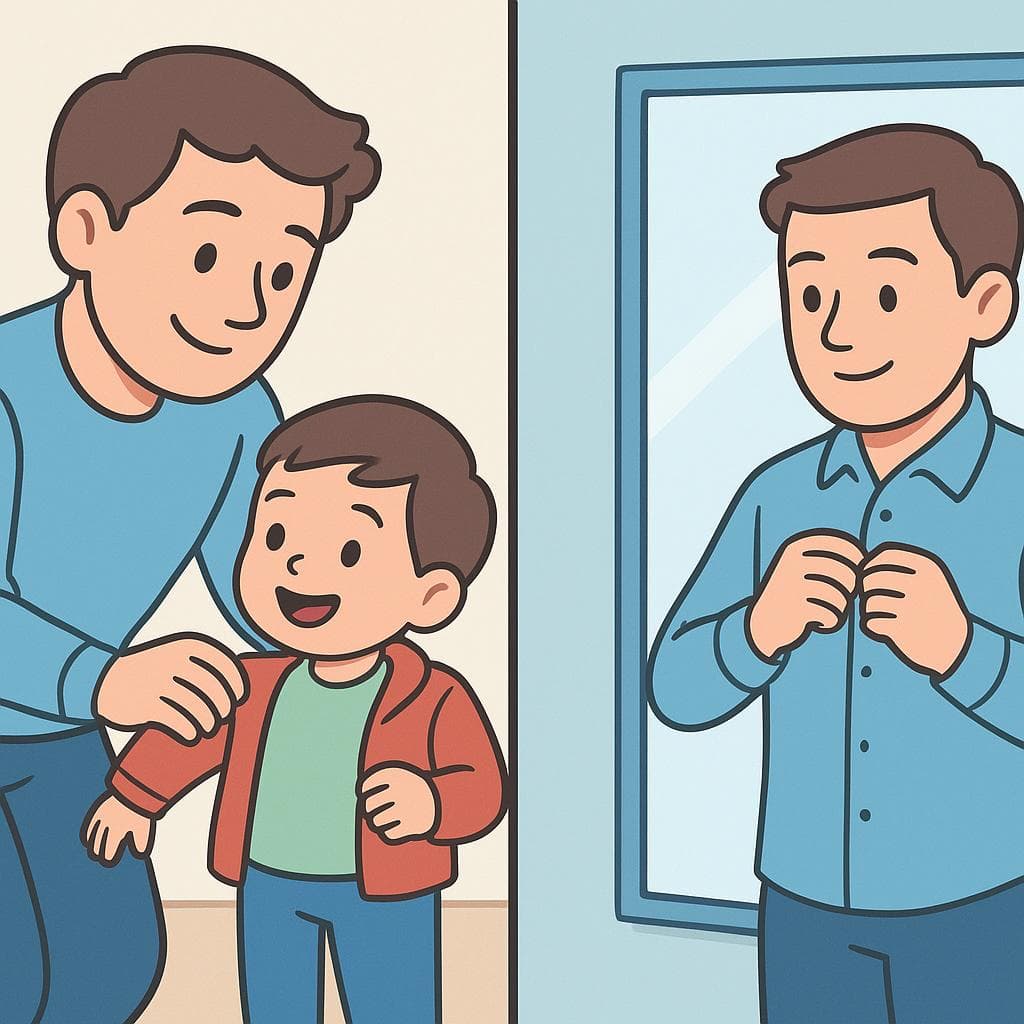
vestir
To dress someone or something else; to provide clothing for.
behs-TEERvestirse
To get dressed; to dress oneself.
behs-TEER-sehQuick Rule
Vestir = dress someone/something else. Vestirse = dress yourself.
Think: 'se' is for 'self'. Vestir-SE = dress your-SE-lf.
- In formal or literary contexts, 'vestir' can mean 'to wear', as in 'Ella viste de seda' (She wears silk), but 'llevar' is much more common for everyday use.
Comparison Table
| Context | vestir | vestirse | Why? |
|---|---|---|---|
| The action | Visto a mi bebé. | Me visto por la mañana. | 'Vestir' is an action done TO someone else. 'Vestirse' is an action you do TO yourself. |
| Giving a command | ¡Viste a tu hermano! | ¡Vístete ahora! | The command form changes depending on who is being dressed: your brother (vestir) or yourself (vestirse). |
| Describing roles | La estilista viste a la actriz. | La actriz se viste en su camerino. | 'Vestir' can describe a professional service. 'Vestirse' describes the personal action. |
When to Use "vestir / vestirse"
vestir
To dress someone or something else; to provide clothing for.
behs-TEER
Dressing another person
La madre viste a su hijo para la escuela.
The mother dresses her son for school.
Dressing an object (like a doll or mannequin)
El diseñador viste al maniquí en el escaparate.
The designer dresses the mannequin in the window display.
Providing clothes for a group
Esa marca viste al equipo olímpico.
That brand outfits the Olympic team.
vestirse
To get dressed; to dress oneself.
behs-TEER-seh
Getting dressed (yourself)
Me visto todas las mañanas a las siete.
I get dressed every morning at seven.
Describing your style
Generalmente, me visto con ropa cómoda.
Generally, I dress in comfortable clothes.
Dressing up for an occasion
Tenemos que vestirnos elegantemente para la boda.
We have to dress elegantly for the wedding.
Contrast Examples
With "vestir":
El padre viste a su hija pequeña.
The father dresses his little daughter.
With "vestirse":
El padre se viste para ir a trabajar.
The father gets dressed to go to work.
The Difference: Vestir is an action you do *to* someone else. Vestirse is the action you do *to yourself*.
With "vestir":
Mi trabajo es vestir a los actores.
My job is to dress the actors.
With "vestirse":
Tengo que vestirme con un uniforme para el trabajo.
I have to get dressed in a uniform for work.
The Difference: Vestir focuses on the service of putting clothes on another person. Vestirse focuses on what you put on yourself.
Common Mistakes
Yo visto en la mañana.
Yo me visto en la mañana.
When you're talking about dressing yourself, you must use the reflexive pronoun ('me', 'te', 'se', etc.). 'Yo visto' sounds incomplete, like you're about to say who or what you are dressing.
Ella se viste la muñeca.
Ella viste a la muñeca.
The action is being done *to the doll*, not to herself. Since the object of the action is something else, you use the non-reflexive 'vestir'.
Quick Practice
Quick Quiz: vestir vs vestirse
Question 1 of 2
Cada mañana, yo ___ para ir a la universidad.
Related Grammar
Want to understand the grammar behind this pair? Explore these lessons for a deep dive:
Key Words


Tags
Build the instinct, not just the rule
Rules help you get it right; context makes it automatic. Read 200+ illustrated and narrated Spanish stories to see confusing pairs chosen correctly — over and over — until you stop thinking about it.
Frequently Asked Questions
Is this pattern of a verb and its reflexive version common in Spanish?
Yes, very! This is a core concept in Spanish. Many verbs change meaning when you add the '-se' ending. For example, 'ir' is 'to go', but 'irse' is 'to leave'. 'Poner' is 'to put', but 'ponerse' is 'to put on' (clothing) or 'to become' (an emotion).
What's the difference between 'vestirse' and 'ponerse la ropa'?
They are very similar and often interchangeable. 'Vestirse' is a general term for 'to get dressed'. 'Ponerse la ropa' literally means 'to put on the clothes' and can be used to talk about specific items, like 'Me pongo los zapatos' (I'm putting on my shoes). You can't say 'Me visto los zapatos'.