colapsar Conditional Conjugation
colapsar — to collapse
The conditional forms like 'colapsaría' (yo) express hypothetical situations ('would'), polite requests, or future-in-the-past.
colapsar Conditional Forms
When to Use the Conditional
Use the conditional for hypothetical situations ('I would collapse if...'), polite requests, or to talk about something that would happen in the future from a past perspective. For 'colapsar,' you could say 'Me colapsaría de cansancio si hiciera ese trabajo.' (I would collapse from exhaustion if I did that job.)
Notes on colapsar in the Conditional
Colapsar is regular in the conditional tense. The stem is the infinitive ('colapsar-') and you add the standard conditional endings.
Example Sentences
Si no comiera, me colapsaría.
If I didn't eat, I would collapse.
yo
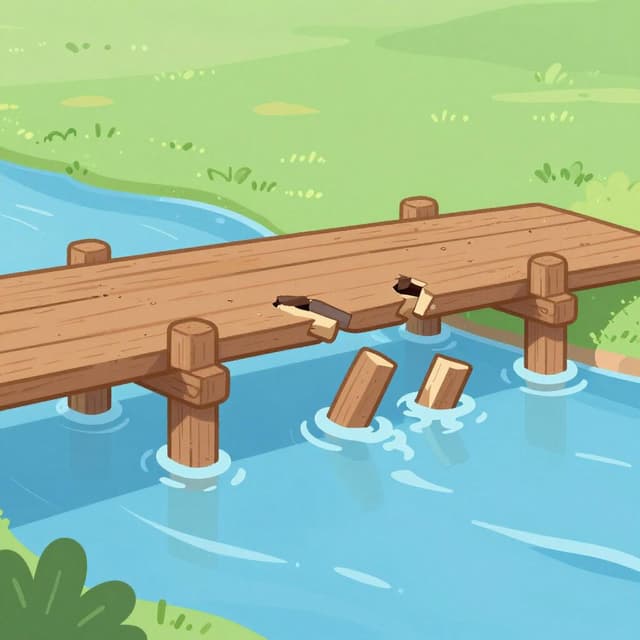
El puente colapsaría con ese peso adicional.
The bridge would collapse with that additional weight.
él/ella/usted
No colapsaríamos la red si tuviéramos más ancho de banda.
We wouldn't collapse the network if we had more bandwidth.
nosotros
¿Colapsarían ustedes si les dijera la verdad?
Would you all collapse if I told you the truth?
Common Mistakes
Mistake: Confusing the conditional ('colapsaría') with the future ('colapsará').
Correct: Use the conditional for hypotheticals ('would collapse') and the future for predictions ('will collapse').
Why: The conditional expresses an outcome dependent on a condition, while the future expresses a more certain prediction.
Master Spanish verbs in context
Memorizing tables only gets you so far. Read 200+ illustrated and narrated Spanish stories to see verbs like 'colapsar' used naturally — in the tenses you're learning.
Related Tenses
Present
yo: colapso
The present tense forms like 'colapso' (yo) and 'colapsan' (ellos/ellas/ustedes) describe current actions or general truths.
Preterite
yo: colapsé
The preterite of 'colapsar' is regular: 'colapsé', 'colapsaste', 'colapsó', 'colapsamos', 'colapsasteis', 'colapsaron'.
Imperfect
yo: colapsaba
The imperfect forms like 'colapsaba' (yo) describe ongoing or habitual past actions or set the scene.
Future
yo: colapsaré
The future tense forms like 'colapsaré' (yo) and 'colapsarán' (ellos/ellas/ustedes) predict or express probability about future events.
Present Subjunctive
yo: colapse
The present subjunctive forms like 'colapse' (él/ella/usted) are used for wishes, doubts, emotions, and recommendations.
Imperfect Subjunctive
yo: colapsara
The imperfect subjunctive forms like 'colapsara' (él/ella/usted) express hypothetical or unlikely past situations or wishes.
Affirmative Imperative
yo: colapsa
Use the imperative forms like 'colapsa' (tú) and 'colapsen' (ustedes) for direct commands.
Negative Imperative
yo: no colapses
Negative commands for 'colapsar' use the present subjunctive with 'no', like 'no colapses' (tú) or 'no colapsen' (ustedes).