colapsar Present Subjunctive Conjugation
colapsar — to collapse
The present subjunctive forms like 'colapse' (él/ella/usted) are used for wishes, doubts, emotions, and recommendations.
colapsar Present Subjunctive Forms
When to Use the Present Subjunctive
Use the present subjunctive after expressions of doubt, desire, emotion, or uncertainty. For 'colapsar,' you might say 'Espero que no colapse el sistema' (I hope the system doesn't collapse) or 'Dudo que colapse' (I doubt it will collapse).
Notes on colapsar in the Present Subjunctive
Colapsar is regular in the present subjunctive. The stem doesn't change, and it follows the standard -ar verb pattern.
Example Sentences
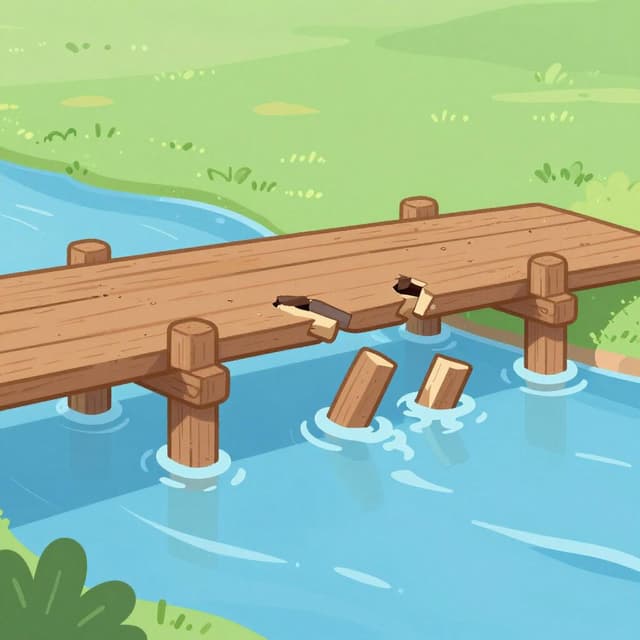
Espero que el puente no colapse con el peso.
I hope the bridge doesn't collapse with the weight.
él/ella/usted
No creo que colapsemos la red con este tráfico.
I don't think we will collapse the network with this traffic.
nosotros
Me sorprende que colapsen tan fácilmente.
It surprises me that they collapse so easily.
ellos/ellas/ustedes
Te pido que no colapses mi paciencia.
I ask you not to collapse my patience.
tú
Common Mistakes
Mistake: Using the present indicative instead of the present subjunctive.
Correct: After phrases like 'espero que' or 'dudo que,' use the subjunctive: 'Espero que colapse' (I hope it collapses), not 'Espero que colapsa'.
Why: These trigger phrases require the subjunctive mood to express uncertainty or emotion.
Master Spanish verbs in context
Memorizing tables only gets you so far. Read 200+ illustrated and narrated Spanish stories to see verbs like 'colapsar' used naturally — in the tenses you're learning.
Related Tenses
Present
yo: colapso
The present tense forms like 'colapso' (yo) and 'colapsan' (ellos/ellas/ustedes) describe current actions or general truths.
Preterite
yo: colapsé
The preterite of 'colapsar' is regular: 'colapsé', 'colapsaste', 'colapsó', 'colapsamos', 'colapsasteis', 'colapsaron'.
Imperfect
yo: colapsaba
The imperfect forms like 'colapsaba' (yo) describe ongoing or habitual past actions or set the scene.
Future
yo: colapsaré
The future tense forms like 'colapsaré' (yo) and 'colapsarán' (ellos/ellas/ustedes) predict or express probability about future events.
Conditional
yo: colapsaría
The conditional forms like 'colapsaría' (yo) express hypothetical situations ('would'), polite requests, or future-in-the-past.
Imperfect Subjunctive
yo: colapsara
The imperfect subjunctive forms like 'colapsara' (él/ella/usted) express hypothetical or unlikely past situations or wishes.
Affirmative Imperative
yo: colapsa
Use the imperative forms like 'colapsa' (tú) and 'colapsen' (ustedes) for direct commands.
Negative Imperative
yo: no colapses
Negative commands for 'colapsar' use the present subjunctive with 'no', like 'no colapses' (tú) or 'no colapsen' (ustedes).