colapsar Imperfect Conjugation
colapsar — to collapse
The imperfect forms like 'colapsaba' (yo) describe ongoing or habitual past actions or set the scene.
colapsar Imperfect Forms
When to Use the Imperfect
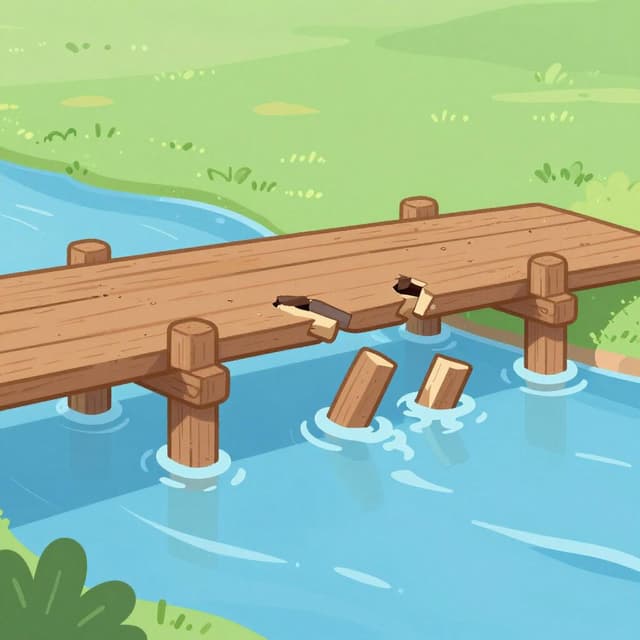
Use the imperfect for descriptions in the past, habitual actions, or ongoing situations. For 'colapsar,' you might describe a bridge that was always collapsing or a system that used to collapse regularly: 'El viejo puente colapsaba con cada tormenta.' (The old bridge used to collapse with every storm.)
Notes on colapsar in the Imperfect
Colapsar is regular in the imperfect tense. Both the yo and él/ella/usted forms share 'colapsaba'.
Example Sentences
El edificio colapsaba lentamente durante el terremoto.
The building was collapsing slowly during the earthquake.
él/ella/usted
Cuando era niño, colapsaba de sueño después de jugar.
When I was a child, I used to collapse from sleepiness after playing.
yo
Antes, colapsábamos el sistema cada vez que actualizábamos.
Before, we used to collapse the system every time we updated.
nosotros
Los viejos túneles colapsaban a menudo.
The old tunnels often used to collapse.
ellos/ellas/ustedes
Common Mistakes
Mistake: Using the preterite ('colapsó') to describe a background situation or a repeated action in the past.
Correct: For ongoing or habitual past situations, use the imperfect: 'El sistema colapsaba a menudo' (The system used to collapse often).
Why: The imperfect describes the setting or continuous actions, whereas the preterite describes a single, completed event.
Master Spanish verbs in context
Memorizing tables only gets you so far. Read 200+ illustrated and narrated Spanish stories to see verbs like 'colapsar' used naturally — in the tenses you're learning.
Related Tenses
Present
yo: colapso
The present tense forms like 'colapso' (yo) and 'colapsan' (ellos/ellas/ustedes) describe current actions or general truths.
Preterite
yo: colapsé
The preterite of 'colapsar' is regular: 'colapsé', 'colapsaste', 'colapsó', 'colapsamos', 'colapsasteis', 'colapsaron'.
Future
yo: colapsaré
The future tense forms like 'colapsaré' (yo) and 'colapsarán' (ellos/ellas/ustedes) predict or express probability about future events.
Conditional
yo: colapsaría
The conditional forms like 'colapsaría' (yo) express hypothetical situations ('would'), polite requests, or future-in-the-past.
Present Subjunctive
yo: colapse
The present subjunctive forms like 'colapse' (él/ella/usted) are used for wishes, doubts, emotions, and recommendations.
Imperfect Subjunctive
yo: colapsara
The imperfect subjunctive forms like 'colapsara' (él/ella/usted) express hypothetical or unlikely past situations or wishes.
Affirmative Imperative
yo: colapsa
Use the imperative forms like 'colapsa' (tú) and 'colapsen' (ustedes) for direct commands.
Negative Imperative
yo: no colapses
Negative commands for 'colapsar' use the present subjunctive with 'no', like 'no colapses' (tú) or 'no colapsen' (ustedes).