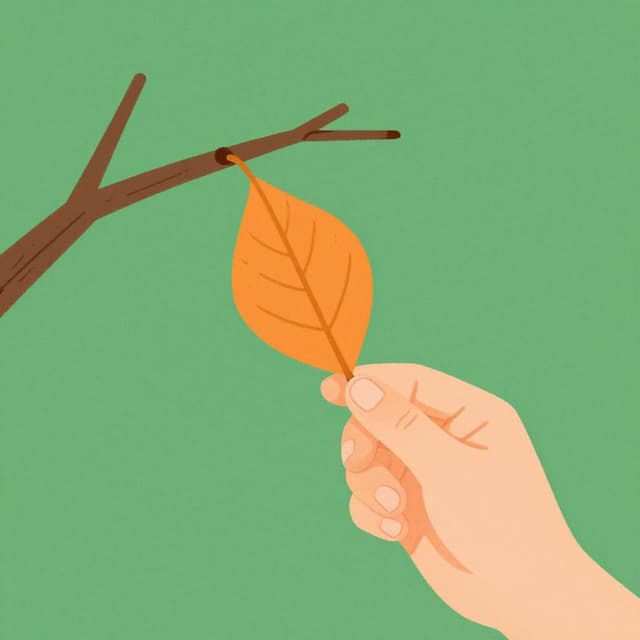
desprender Future Conjugation
desprender — to detach
The future tense 'desprenderé' indicates actions that will happen.
desprender Future Forms
When to Use the Future
Use the future tense to talk about something that will definitely happen in the future. For example, 'El próximo año, desprenderemos el viejo sistema' (Next year, we will detach the old system). It can also express probability or conjecture about the present.
Notes on desprender in the Future
Desprender is regular in the future tense. The entire infinitive 'desprender' is used as the stem, and the standard future endings (-é, -ás, -á, -emos, -éis, -án) are added.
Example Sentences
Yo desprenderé la etiqueta del producto antes de tirarlo.
I will detach the product's label before throwing it away.
yo
¿Tú desprenderás el componente dañado?
Will you detach the damaged component?
tú
El gobierno desprenderá fondos para el proyecto.
The government will release funds for the project.
él/ella/usted
Nosotros desprenderemos las alas del avión para el mantenimiento.
We will detach the airplane's wings for maintenance.
nosotros
Ellos desprenderán el módulo espacial mañana.
They will detach the space module tomorrow.
ellos/ellas/ustedes
Common Mistakes
Mistake: Using the present tense 'desprendo' to express a future action.
Correct: Use the future: 'Desprenderé la pieza' (I will detach the piece).
Why: While the present can sometimes imply future, the dedicated future tense is clearer and more precise.
Mistake: Forgetting the accent on the 'yo' form: 'desprenderé'.
Correct: The correct form is 'desprenderé'.
Why: The accent is crucial for correct pronunciation and spelling.
Master Spanish verbs in context
Memorizing tables only gets you so far. Read 200+ illustrated and narrated Spanish stories to see verbs like 'desprender' used naturally — in the tenses you're learning.
Related Tenses
Present
yo: desprendo
The present tense 'desprendo' is for actions happening now, habits, or general truths.
Preterite
yo: desprendí
The preterite of desprender is regular: desprendí, desprendiste, desprendió, desprendimos, desprendisteis, desprendieron.
Imperfect
yo: desprendía
The imperfect 'desprendía' describes ongoing or habitual past actions or background details.
Conditional
yo: desprendería
The conditional 'desprendería' is for hypotheticals ('would'), polite requests, or future-in-the-past.
Present Subjunctive
yo: desprenda
The present subjunctive 'desprenda' is used for wishes, doubts, emotions, and after impersonal expressions.
Imperfect Subjunctive
yo: desprendiera
The imperfect subjunctive 'desprendiera'/'desprendiese' is used for past hypotheticals, wishes, or doubts.
Affirmative Imperative
yo: desprende
Use the tú form 'desprende' for direct commands; 'desprenda' for usted; 'desprendamos' for nosotros; 'desprendan' for ustedes; 'desprended' for vosotros.
Negative Imperative
yo: no desprendas
Negative commands use 'no' + present subjunctive: 'no desprendas' (tú), 'no desprenda' (usted), 'no desprendamos' (nosotros), 'no desprendan' (ustedes), 'no desprendáis' (vosotros).