desprender Negative Imperative Conjugation
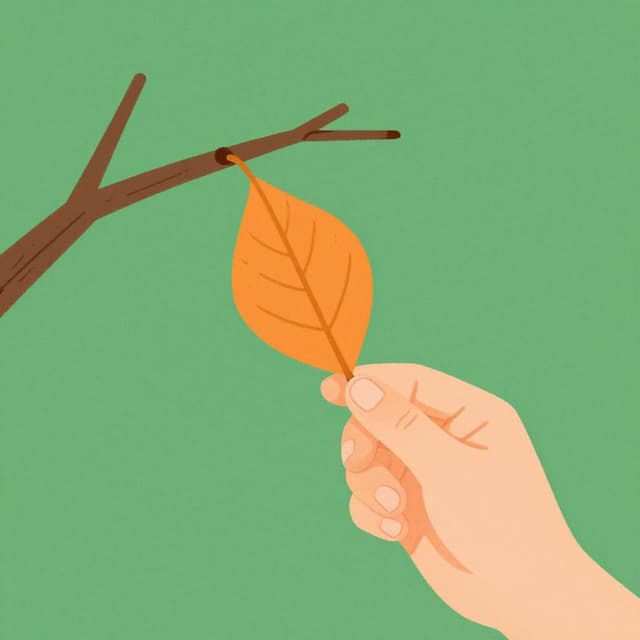
desprender — to detach
Negative commands use 'no' + present subjunctive: 'no desprendas' (tú), 'no desprenda' (usted), 'no desprendamos' (nosotros), 'no desprendan' (ustedes), 'no desprendáis' (vosotros).
desprender Negative Imperative Forms
When to Use the Negative Imperative
Use the negative imperative when you want to tell someone *not* to do something. For example, 'No desprendas la etiqueta' means 'Don't detach the label.'
Notes on desprender in the Negative Imperative
All negative commands in Spanish are formed using the present subjunctive. So, the 'irregularity' here is inherent to how negative commands work in Spanish, not specific to 'desprender'. The forms are derived from the present subjunctive: no desprendas, no desprenda, no desprendamos, no desprendáis, no desprendan.
Example Sentences
No desprendas el cable hasta que te diga.
Don't detach the cable until I tell you.
tú
Por favor, no desprenda el papel de seguridad.
Please, do not detach the security paper.
usted
No desprenda las piezas antes de tiempo.
Don't detach the pieces ahead of time.
ustedes
No desprendáis el anillo del dedo todavía.
Don't detach the ring from your finger yet.
vosotros
Common Mistakes
Mistake: Using the infinitive instead of the subjunctive: 'No desprender el cable'.
Correct: Use 'No desprendas el cable'.
Why: Negative commands require the subjunctive mood.
Mistake: Confusing the tú and usted negative commands: 'No desprenda' when talking to a friend.
Correct: Use 'No desprendas' for tú and 'No desprenda' for usted.
Why: They are distinct forms, just like in the affirmative imperative.
Master Spanish verbs in context
Memorizing tables only gets you so far. Read 200+ illustrated and narrated Spanish stories to see verbs like 'desprender' used naturally — in the tenses you're learning.
Related Tenses
Present
yo: desprendo
The present tense 'desprendo' is for actions happening now, habits, or general truths.
Preterite
yo: desprendí
The preterite of desprender is regular: desprendí, desprendiste, desprendió, desprendimos, desprendisteis, desprendieron.
Imperfect
yo: desprendía
The imperfect 'desprendía' describes ongoing or habitual past actions or background details.
Future
yo: desprenderé
The future tense 'desprenderé' indicates actions that will happen.
Conditional
yo: desprendería
The conditional 'desprendería' is for hypotheticals ('would'), polite requests, or future-in-the-past.
Present Subjunctive
yo: desprenda
The present subjunctive 'desprenda' is used for wishes, doubts, emotions, and after impersonal expressions.
Imperfect Subjunctive
yo: desprendiera
The imperfect subjunctive 'desprendiera'/'desprendiese' is used for past hypotheticals, wishes, or doubts.
Affirmative Imperative
yo: desprende
Use the tú form 'desprende' for direct commands; 'desprenda' for usted; 'desprendamos' for nosotros; 'desprendan' for ustedes; 'desprended' for vosotros.